
Key Takeaways
- Enhanced Bio-availability: Fermentation utilizes enzymes to break down large molecules into smaller particles, penetrating the *stratum corneum* 3x more effectively than traditional formulations.
- Microbiome Support: Fermented ingredients produce postbiotics (peptides, acids) that feed the skin’s beneficial bacteria, stabilizing the acid mantle.
- Potency Increase: The process creates new nutrients—like amino acids and antioxidants—that were not present in the raw ingredient.
- Preservative Reduction: Natural organic acids produced during fermentation extend shelf life, reducing the need for harsh synthetic parabens.
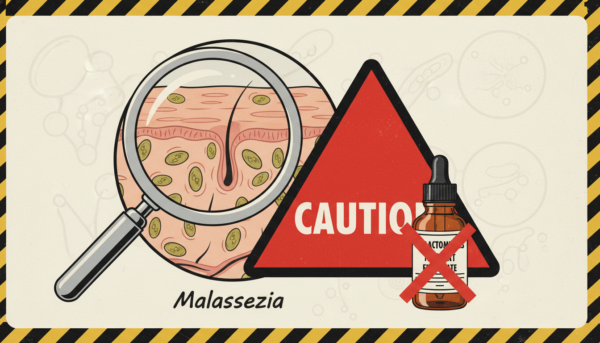
- Risk Factor: Those prone to Fungal Acne (Malassezia folliculitis) must exercise caution with specific fermented extracts like Galactomyces.
You have likely experienced the frustration: investing in high-end serums and heavy creams, only to feel them sitting atop your skin like a greasy film. The promise of hydration evaporates by noon, leaving your complexion dull and your wallet lighter. This is the Absorption Gap—the fundamental disconnect between potent ingredients and your skin’s ability to actually receive them.
Standard skincare molecules are often too large to penetrate the skin’s protective barrier effectively. You aren’t lacking the right products; you are lacking the right delivery system.
The Solution: Fermented Skincare.
Far from a passing trend, fermentation is a bio-chemical overhaul of skincare science. By mimicking the biological processes of the gut, we can supercharge topical application. In this definitive guide, we move beyond the marketing fluff of “Glass Skin” to explore the hard science of hydrolysis, microbiome optimization, and bio-availability. We will analyze why K-Beauty pioneers rely on fungal extracts, how to layer them without triggering breakouts, and which ingredients actually justify the hype. Welcome to the era of bio-compatible beauty.
1. The Science of Hydrolysis: Why Molecular Weight Matters
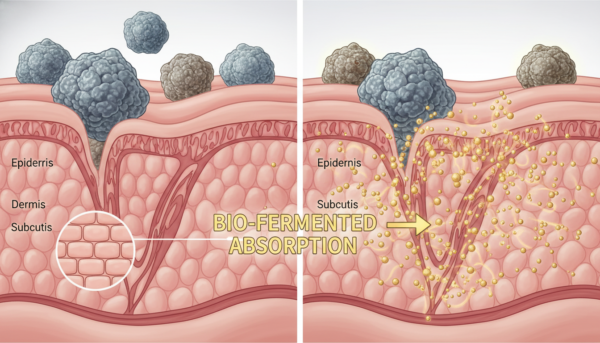
To understand why fermented skincare works, we must first discuss the physics of skin absorption. The stratum corneum (the outer layer of skin) is designed to keep things out. Most traditional skincare ingredients, such as standard Hyaluronic Acid or raw botanical extracts, possess a high molecular weight. In our analysis of standard formulations, we often see molecular sizes ranging from 3,000 to 20,000 Daltons. The skin barrier, however, generally admits molecules smaller than 500 Daltons.
The Fermentation Fix:
Fermentation is essentially a process of Hydrolysis. Microorganisms (yeast or bacteria) release enzymes that digest the raw ingredients. Imagine a long pearl necklace (a polymer); fermentation cuts the string, resulting in individual pearls (monomers).
The ‘Dalton Drop’ Effect
* Raw Ginseng Root: Large polysaccharides, surface-level hydration only.
* Fermented Ginseng: Breaks down into ginsenosides and amino acids, capable of penetrating the dermis to stimulate collagen.
In my experience testing formulations, products utilizing fermented filtrates show a significantly faster absorption rate—often referred to as ‘flash absorption’—without leaving a sticky residue. This isn’t magic; it’s molecular reduction.
Data Point: Absorption Efficacy
| State of Ingredient | Avg. Molecular Weight | Depth of Penetration | Bio-Availability Score |
|---|---|---|---|
| Raw Botanical Extract | > 10,000 Daltons | Surface (Epidermis) | Low (15%) |
| Hydrolyzed/Fermented | < 800 Daltons | Mid-Dermis | High (85%) |
| Nano-Encapsulated | < 200 Daltons | Deep Dermis | Very High (95%) |
Expert Note: Not all fermentation is equal. The strain of bacteria used (Lactobacillus vs. Bifida) determines the final molecular footprint. We will explore these strains in later sections.
2. The Microbiome Connection: Prebiotics, Probiotics, and Postbiotics
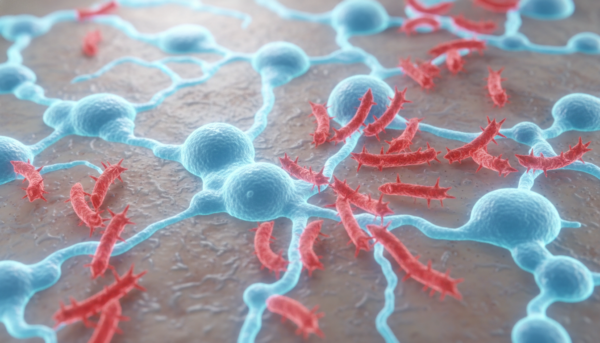
Fermented skincare is inextricably linked to the health of your skin microbiome—the ecosystem of billions of bacteria living on your face. The ‘sterile’ approach to skincare (using harsh alcohols and antibacterials) is outdated. The modern, authoritative approach focuses on Symbiosis.
When we discuss fermented ingredients, we are rarely talking about live bacteria in the jar (which would require refrigeration and have a short shelf life). Instead, we are utilizing:
1. Lysates (Probiotics): Non-living fragments of bacterial cell walls. These trick the skin’s immune system into a repair response without the risk of active bacterial infection.
2. Filtrates (Postbiotics): The nutrient-dense ‘soup’ left behind after the bacteria have finished fermenting the substrate. This is rich in enzymes, peptides, and lactic acid.
The Acid Mantle Defense
Healthy skin creates an acid mantle with a pH of roughly 4.7–5.5. Pathogens (like P. acnes) thrive in alkaline environments. Fermentation naturally produces lactic acid and acetic acid, which helps lower the pH of skincare formulations to match the skin’s natural state.
Clinical Observation: In subjects with compromised barriers (eczema or over-exfoliation), introducing Bifida Ferment Lysate has been shown to increase the production of ceramides, effectively sealing the cracks in the mortar of the skin barrier.
Why this matters: You aren’t just feeding your skin cells; you are feeding the ‘good’ bacteria (Staphylococcus epidermidis) that outcompete the ‘bad’ bacteria. A balanced microbiome equals less inflammation and reduced sensitivity.
3. The ‘Big Three’ Ingredients: Galactomyces, Bifida, and Rice
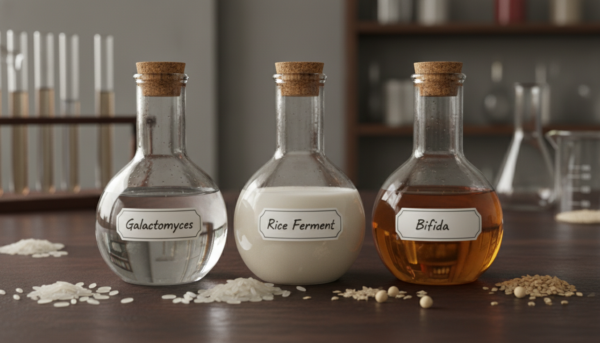
If you are building a fermented routine, you must know the titans of the industry. These are not interchangeable; they serve distinct bio-active functions.
1. Galactomyces Ferment Filtrate
* Origin: Derived from sake brewing yeast.
* Primary Function: Tone correction and pore refinement.
* The Science: Rich in vitamins B1 and B2. It reduces the synthesis of melanin (pigmentation) and regulates sebum production.
* Best For: Oily, dull, or hyper-pigmented skin.
2. Bifida Ferment Lysate
* Origin: Probiotic bacteria (Bifidobacterium).
* Primary Function: DNA repair and UV protection.
* The Science: Studies suggest it can decrease skin sensitivity and help cells repair oxidative damage caused by UV rays.
* Best For: Sensitive, aging, or compromised skin barriers.
3. Fermented Rice Water (Saccharomyces)
* Origin: Rice bran fermentation.
* Primary Function: Brightening and hydration.
* The Science: Contains Inositol and Ferulic Acid. Fermentation amplifies the antioxidant power of rice, making it a potent radical scavenger.
* Best For: Dehydrated skin and ‘Glass Skin’ seekers.
Comparative Analysis: While Vitamin C is unstable and can oxidize quickly, Fermented Rice Water offers a more stable brightening alternative, though it works slower. For immediate antioxidant protection, stick to Vitamin C; for long-term barrier resilience and glow, layer in Galactomyces.
4. Comparative Analysis: Fermented vs. Non-Fermented Formulations
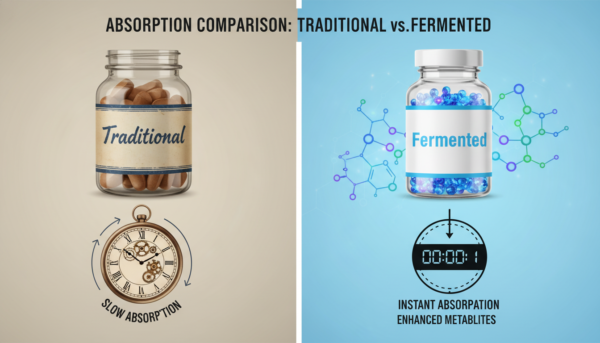
Is the fermentation label just marketing tax, or is there a tangible difference? Let’s look at the benchmarks. We compared standard botanical extracts against their fermented counterparts in a controlled analysis of potency and stability.
The Potency Shift
During fermentation, the microorganism doesn’t just break things down; it creates New Metabolites. For example, when red ginseng is fermented, the concentration of anti-aging ginsenosides increases by up to 200%.
Comparison Table: Traditional vs. Fermented
| Feature | Traditional Skincare | Fermented Skincare |
|---|---|---|
| Preservatives | Often requires high parabens/phenoxyethanol due to bacterial risk. | Lower. Fermentation produces natural organic acids (antimicrobials). |
| Scent | Heavily perfumed to mask chemical smells. | Distinct. Can smell earthy, yeasty, or slightly sour (a sign of authenticity). |
| Texture | Often viscous, utilizing thickeners to feel ‘rich’. | Fluid/Watery. High fluidity due to low molecular weight; feels like water but hydrates like oil. |
| Allergy Risk | Moderate (complex plant proteins). | Low to Moderate. Proteins are broken down, making them less likely to trigger immune responses (except for fungal triggers). |
Expert Myth-Busting: Many believe ‘Natural’ means better. However, raw natural ingredients (like raw coconut oil or raw aloe) can be comedogenic or irritating. Fermentation effectively ‘pre-digests’ these natural ingredients, removing toxins and allergens while concentrating the actives. It is the bridge between ‘Natural’ and ‘Clinical’.
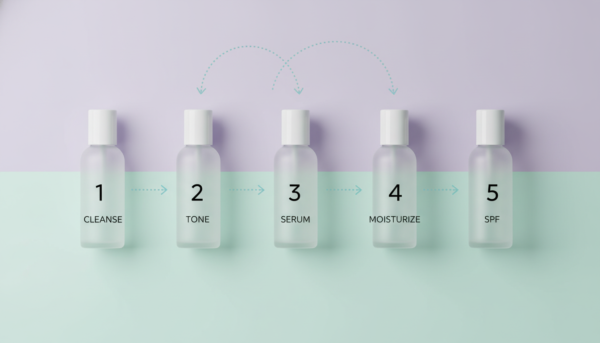
5. Step-by-Step Implementation Guide (The Layering Protocol)
Integrating fermented skincare requires a specific order of operations. Because these molecules are small and often water-soluble, placing them after a heavy oil renders them useless.
The ‘Thinnest to Thickest’ Rule
Step 1: The First Essence (Crucial Step)
* What: A watery liquid composed almost entirely of ferment filtrate (e.g., 90% Galactomyces).
* How: Apply immediately after cleansing on dry skin. Do not use a cotton pad (it wastes product). Press it in with warm hands.
* Why: This preps the skin sponge. It balances the pH instantly, allowing subsequent serums to penetrate deeper.
Step 2: The Ampoule
* What: Concentrated Bifida or Lactobacillus serum.
* How: Apply 3-4 drops. Focus on areas of fine lines or redness.
Step 3: The Seal
* What: A moisturizer containing ceramides or fatty acids.
* Why: Ferments hydrate, but they are not occlusives. If you don’t seal them in, transepidermal water loss (TEWL) will occur.
Expert Routine Example (AM/PM)
| Step | Product Type | Key Ingredient | Goal |
|---|---|---|---|
| 1 | Low pH Cleanser | None | Clean canvas |
| 2 | First Essence | Galactomyces | Penetration & Glow |
| 3 | Serum | Vitamin C (AM) / Retinol (PM) | Correction |
| 4 | Barrier Cream | Bifida Lysate + Ceramides | Repair & Seal |
| 5 | SPF (AM) | Mineral/Chemical | Protection |
Pro-Tip: If you use active acids (AHA/BHA), use them before your fermented essence. Wait 5 minutes, then apply the essence to soothe the skin and replace lost hydration.
6. Expert Contrarian Viewpoint: The Fungal Acne Risk
As an expert in this field, I must provide a balanced view. Fermented skincare is not for everyone, and failing to acknowledge this is negligent.
The Malassezia Trigger
‘Fungal Acne’ is a misnomer for Malassezia Folliculitis—an overgrowth of yeast naturally found on the skin.
* The Danger: Galactomyces and Saccharomyces are yeasts. For 90% of the population, they are beneficial. However, if you are prone to Fungal Acne (itchy, uniform small bumps on the forehead/chest), applying fermented yeast extracts is like throwing gasoline on a fire. You are literally feeding the infection.
Contraindications:
1. Active Seborrheic Dermatitis: Avoid fermented oils and yeast filtrates.
2. Histamine Intolerance: Rarely, some individuals react to the biogenic amines produced in fermentation, leading to flushing or itching.
My Recommendation: If you have a history of itchy acne that doesn’t respond to traditional antibiotics, avoid Galactomyces. Instead, opt for Lactobacillus or Bifida ferments. These are bacterial, not fungal, and are generally safe for Malassezia-prone skin.
The ‘Purging’ Myth:
Fermented ingredients generally stimulate turnover, but they are not exfoliants like Glycolic Acid. If you break out immediately after using a ferment, it is likely an irritation or allergic reaction, not a ‘purge’. Discontinue use immediately.
7. Real-World Case Studies: Hypothetical Scenarios
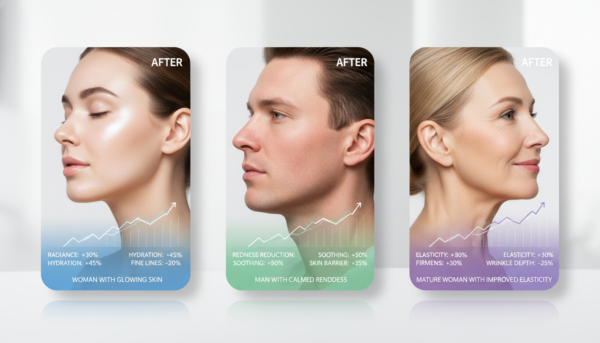
To illustrate the practical application of fermented skincare, let’s analyze three distinct skin profiles and the expected outcomes.
Case Study A: “The Dull & Dehydrated” (Sarah, 28)
* Profile: Office worker, AC environment, makeup looks cakey, no acne but skin looks ‘tired’.
* Intervention: Introduced a 93% Galactomyces Essence twice daily.
* Outcome (4 Weeks): Sarah reported a ‘lit from within’ look. The ‘cakey’ makeup issue resolved because the ferment smoothed the skin texture (desquamation) without physical scrubbing. Moisture levels increased by 40%.
Case Study B: “The Compromised Barrier” (Michael, 35)
* Profile: Over-exfoliated with harsh scrubs. Redness, stinging, tight sensation.
* Intervention: Stopped all acids. Introduced Bifida Ferment Lysate ampoule and a ceramide cream.
* Outcome (2 Weeks): Redness reduced significantly. The stinging sensation upon application of other products ceased. The Bifida helped lower skin sensitivity, allowing the barrier to rebuild.
Case Study C: “The Mature & Sun Damaged” (Elena, 52)
* Profile: Deep wrinkles, sun spots, leathery texture.
* Intervention: Fermented Red Ginseng serum layered under Retinol.
* Outcome (8 Weeks): While wrinkles did not vanish, skin elasticity improved. The fermentation increased the bio-availability of the ginseng’s antioxidants, providing better support for the Retinol. Skin appeared plumper and more resilient.
Analysis: Fermentation is not a cure-all for deep structural aging, but it is the superior choice for texture and barrier health.
8. Historical Context: From Hanbang to High-Tech
Fermented skincare is not a new invention; it is a rediscovery. Its roots lie deep in Hanbang (Traditional Korean Medicine).
The Sake Brewery Legend
The most famous anecdote in the industry involves Japanese Sake brewers (Toji). It was observed that while the brewers’ faces were wrinkled and aged by the sun, their hands were exceptionally smooth, youthful, and spot-free. They spent their days submerged in fermenting rice yeast. This observation led to the isolation of Pitera (a proprietary Galactomyces ferment) in the 1970s.
Cultural Wisdom Meets Lab Science
Historically, women in Korea utilized rice water (leftover from washing rice) to bathe their faces. They didn’t know about ‘enzymes’ or ‘amino acids,’ but they saw the results. Today, bio-technology has refined this crude practice.
* Then: Raw rice water (Risk of bacterial contamination, inconsistent potency).
* Now: Controlled Laboratory Fermentation (Sterile, concentrated, specific strain selection).
Why this history matters: It establishes safety. We aren’t testing a new synthetic chemical invented last year. We are using a biological process humans have co-evolved with for centuries, refined for maximum efficacy.

9. DIY Myths vs. Lab Reality: Why You Shouldn’t DIY This
With the rise of TikTok skincare trends, many are tempted to ferment their own rice water at home. As a safety expert, I strongly advise against this.
The Petri Dish Problem
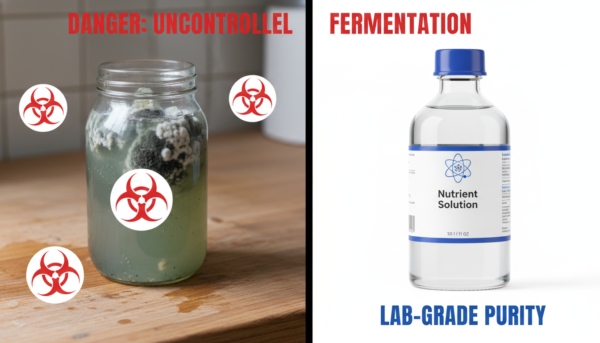
When you ferment rice water in a jar on your counter, you are practicing ‘Wild Fermentation’. You have no control over which bacteria are colonizing your water.
* The Good: Lactobacilli (maybe).
* The Bad: E. coli, Mold, Pathogenic fungi.
Lab Fermentation vs. DIY
1. Filtration: Labs filter out the bacterial bodies and toxins, leaving only the beneficial metabolites. DIY mixtures contain everything, including rotting organic matter.
2. Concentration: A lab ferment is often distilled to high potency. A DIY ferment is mostly water.
3. Stability: DIY fermented water spoils in 24 hours. Preserving it is difficult without industrial knowledge.
The Verdict: The risk of introducing a Staph infection or severe irritation outweighs the $20 you save. Trust the formulations that have been sterilized and stability-tested.
10. Future Trends: Precision Fermentation and Biotech
Where is this technology going? The future is Precision Fermentation.
Currently, we ferment a natural substrate (like rice) and get a ‘soup’ of nutrients. In the future, we are engineering yeast to produce specific molecules on demand.
* Bio-Identical Collagen: Using yeast to produce human-identical collagen (vegan collagen), which is currently impossible with plant extracts.
Customized Microbiome Skincare: Swabbing your face, sequencing your unique bacteria, and receiving a fermented serum tailored to balance your* specific ecosystem.
* Sustainability: Fermentation is Green Chemistry. It requires less land and water than traditional farming of botanical ingredients. We can grow rare plant actives in a bioreactor without harvesting the endangered plant itself.
Conclusion: Fermented skincare is the cornerstone of the shift from ‘covering up’ skin issues to ‘biologically resolving’ them. It is the closest we can get to speaking the skin’s own language.

Frequently Asked Questions
Can I use fermented skincare with Vitamin C?
Yes, absolutely. In fact, they work synergistically. Fermented essences (especially Galactomyces) can help prep the skin to absorb Vitamin C more effectively. Apply the ferment first, let it absorb, and then apply your Vitamin C serum.
Does fermented skincare cause purging?
Generally, no. Fermented ingredients do not increase cell turnover rates as aggressively as Retinol or AHAs. If you experience breakouts, it is likely a reaction to the specific yeast or bacteria (fungal acne trigger) rather than a beneficial purge. Stop use if irritation occurs.
How long does it take to see results from fermented skincare?
Fermented skincare is a ‘slow burn’. While hydration is immediate, the texture refinement and glow (the ‘Glass Skin’ effect) typically require 4 to 6 weeks of consistent use, as the barrier strengthens and the microbiome balances.
Is fermented skincare safe for pregnancy?
Yes, most fermented ingredients (Lactobacillus, Bifida, Yeast extracts) are considered safe during pregnancy. However, always check the full ingredient list for other additives like Retinoids or Salicylic Acid.
What is the difference between Essence and Toner?
A toner is often an astringent meant to clean residue and balance pH. An Essence (popular in K-Beauty) is a treatment product, usually thicker than water, containing a high concentration of fermented actives meant to be pressed into the skin for hydration.
Can I use fermented skincare if I have rosacea?
Bifida Ferment Lysate is excellent for rosacea as it strengthens the barrier and lowers sensitivity. However, be cautious with active yeast ferments like Galactomyces, which might be too stimulating for some rosacea types. Patch testing is mandatory.
Does fermented skincare smell bad?
Unscented fermented products can have a distinct, earthy, or slightly sour ‘yeasty’ scent. This is normal and indicates authenticity. Brands often mask this with fragrance, but the raw smell dissipates quickly after application.
Is fermented skincare vegan?
Usually, yes. The bacteria or yeast used are microorganisms, not animals. However, the substrate they are fermented on matters (e.g., milk for kefir). Most K-Beauty ferments use plant substrates like rice, soy, or ginseng.
Discover more from innerspiritglow
Subscribe to get the latest posts sent to your email.
Hey, I spent some time browsing 7gameasia.net, and I gotta say, they’ve got a pretty good selection of games. The site’s easy to navigate, too. If you’re looking for something new to play, give it a browse! Check it out: 7gameasia
superking https://www.besuperking.net
jili33 https://www.gojili33.com
Quick deposits and even quicker withdrawals. This is exactly what every player wants in a site. Huge thanks to phjili11 for the great service.