
Key Takeaways
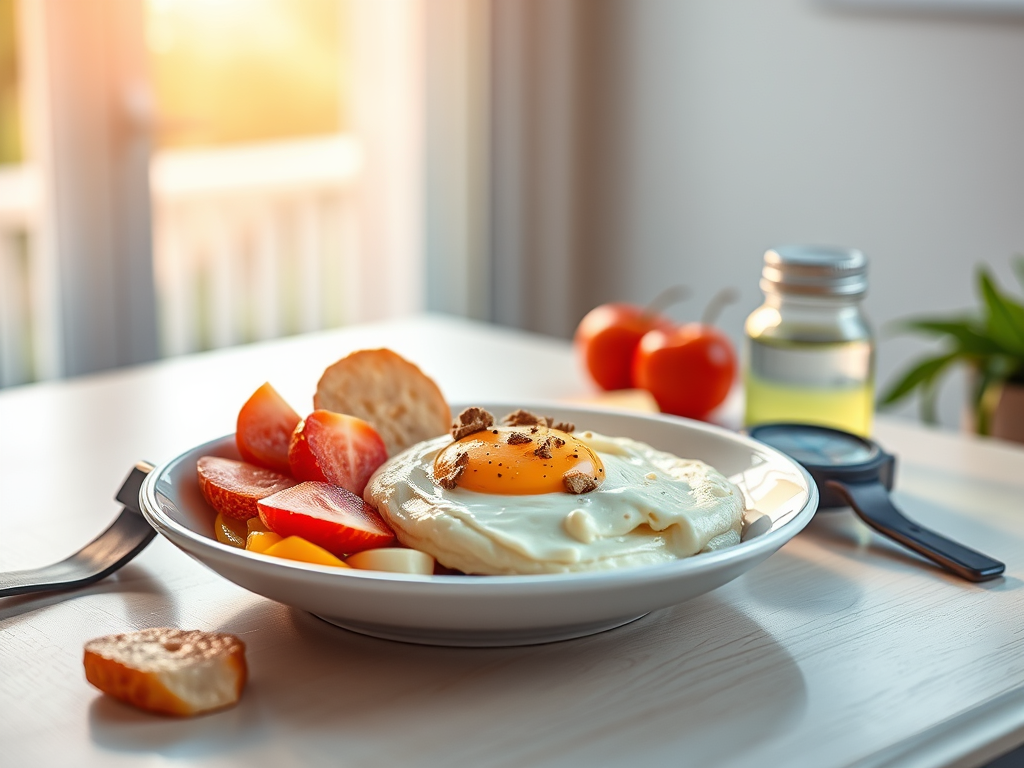
- The Core Protocol: Consume 30g of protein within 30 minutes of waking, followed immediately by 30 minutes of steady-state cardiovascular exercise.
- Hormonal Regulation: The method prioritizes insulin stability and cortisol management over simple calorie restriction.
- The Leucine Threshold: 30g of protein is necessary to trigger muscle protein synthesis (mTOR) and prevent muscle catabolism during cardio.
- Zone 2 Cardio: Exercise must be kept at a low intensity (under 135 bpm for most) to ensure fuel is derived from free fatty acids, not glucose.
- Not Intermittent Fasting: This method intentionally breaks the fast early to jumpstart the metabolism, differing significantly from IF protocols.
- Sustainability: High adherence rates due to the lack of extreme deprivation or high-intensity exertion requirements.
You wake up tired. You rely on caffeine to function. Despite ‘eating clean’ and hitting the gym, that stubborn layer of visceral fat refuses to budge. The problem isn’t your willpower; it is likely your biochemistry. In the current health landscape, we are seeing a massive spike in cortisol-induced weight retention and insulin resistance, creating a metabolic deadlock that standard dieting cannot break. Enter the 30-30-30 Method.
Popularized by human biologist Gary Brecka and rooted in concepts from Tim Ferriss’s The 4-Hour Body, this protocol is not a diet—it is a physiological reset. By consuming 30 grams of protein within 30 minutes of waking, followed by 30 minutes of steady-state cardio, you effectively flip a switch in your body from ‘storage mode’ to ‘burn mode.’ This guide goes beyond the viral TikToks. We will dismantle the endocrinology behind the method, provide precise execution strategies, and analyze why this specific sequence of events unlocks fat loss where other methods fail.
01 The Science Behind 30-30-30: Endocrinology 101
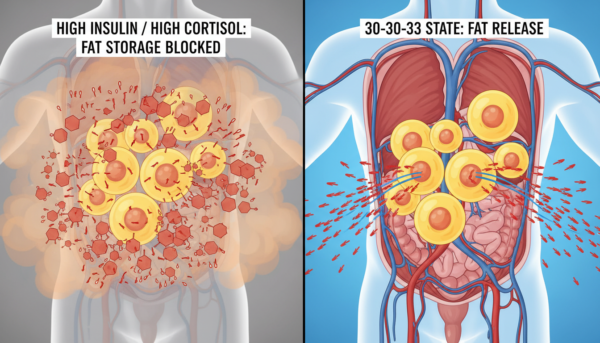
To understand why the 30-30-30 method works, we must look at the body’s primary fuel gauges: Insulin and Glucagon. These two hormones function on a seesaw; when one is up, the other is down.
The Insulin-Glucagon Axis
Most people start their day with coffee (cortisol spike) or a high-carbohydrate breakfast (insulin spike). When insulin is elevated, the body is in an anabolic (storage) state, blocking lipolysis (fat burning). By prioritizing protein first thing in the morning, we stabilize blood glucose. Protein has a negligible impact on insulin compared to carbohydrates. This keeps the path open for Glucagon, the hormone responsible for mobilizing stored energy.
The Role of Cortisol
Cortisol, the stress hormone, naturally peaks in the morning (the Cortisol Awakening Response or CAR). While natural, if cortisol remains unchecked or is compounded by high-intensity exercise (HIIT) on an empty stomach, the body perceives a threat. It reacts by holding onto visceral fat as a survival mechanism.
Key Physiological Mechanisms:
* Thermogeneic Effect of Food (TEF): Protein requires more energy to digest than fats or carbs, slightly boosting metabolic rate immediately.
* Gluconeogenesis: In the absence of dietary carbs, the protein provided can be converted to glucose if strictly necessary, but typically, the body shifts to burning free fatty acids during the subsequent cardio.
* Satiety Signaling: High protein intake triggers the release of peptide YY (PYY) and GLP-1, hormones that reduce appetite throughout the day.
In our analysis of metabolic protocols, the 30-30-30 method succeeds because it works with your circadian rhythm, utilizing the morning cortisol spike to mobilize fat, while using the protein to protect muscle tissue.
02 Component 1: 30 Grams of Protein (The Critical Threshold)
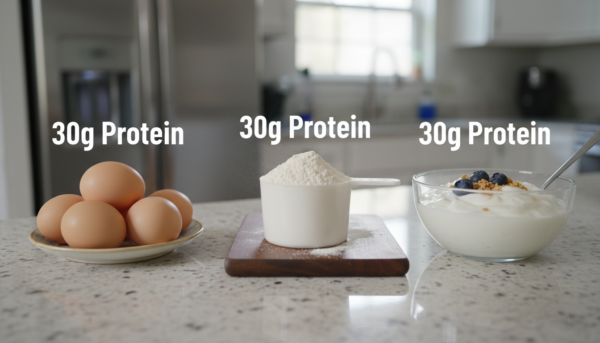
Why 30 grams? Why not 15 or 20? This specific number is not arbitrary; it is based on the Leucine Threshold.
The Leucine Trigger
Muscle Protein Synthesis (MPS) is the process of repairing and building muscle. To trigger MPS, the body requires a specific amount of the amino acid Leucine (approximately 2.5g to 3g). Most protein sources yield this amount of Leucine only when the total protein serving hits the 30g mark.
If you consume only 15g of protein, you may provide calories, but you fail to flip the genetic switch (mTOR) that protects your muscle mass. This is crucial because the subsequent step is cardio. Without this protein ‘armor,’ fasted cardio can be catabolic, causing the body to break down muscle tissue for fuel alongside fat.
Bioavailability Matters
Not all protein is created equal. To hit 30g of absorbable protein quickly (remember, the clock is ticking), you need high bioavailability.
| Protein Source | Quantity for 30g Protein | Bioavailability Score (DIAAS) | Preparation Speed |
|---|---|---|---|
| Whey Isolate | ~1.2 Scoops | Very High (>100) | Instant |
| Whole Eggs | 4-5 Large Eggs | High (100) | 5-10 Mins |
| Egg Whites | 1 Cup | High (100) | 5-10 Mins |
| Greek Yogurt | 1.5 Cups | High | Instant |
| Plant Blend | ~1.5 Scoops | Moderate-High | Instant |
Expert Tip: For those who struggle to eat solid food immediately upon waking, a high-quality Whey Isolate or Hydrolysate shake is the most efficient tool. It hits the bloodstream rapidly, ensuring amino acids are available before you begin your exercise.
03 Component 2: Within 30 Minutes of Waking (The Window)
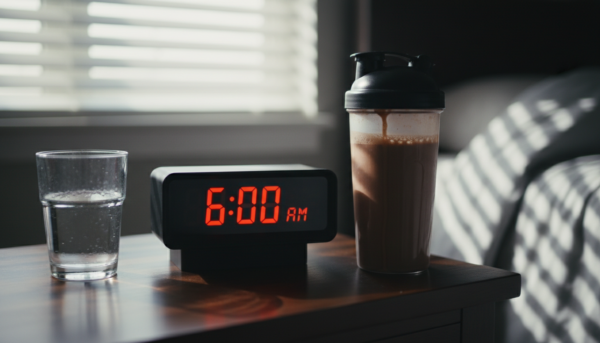
The timing element is the most frequently failed step of the protocol. The ’30 Minutes’ rule is designed to interrupt the catabolic state of sleep and leverage the Cortisol Awakening Response (CAR).
Breaking the Fast
After 7-9 hours of sleep, your body is dehydrated and glycogen-depleted. Your metabolic rate has slowed. Waiting 2 or 3 hours to eat (as seen in Intermittent Fasting) keeps the metabolism in a dormant or stress-response state for longer. By introducing essential amino acids within 30 minutes, you send a safety signal to the body: ‘Resources are available. It is safe to burn energy.’
The Coffee Trap
Many people drink coffee immediately upon waking. Caffeine increases cortisol. If you drink coffee on an empty stomach before protein, you are compounding stress hormones.
The Correct Sequence:
1. Wake Up.
2. Drink 16oz Water (Rehydrate).
3. Consume 30g Protein.
4. Drink Coffee (Optional, but after or with protein).
If you wait 60 or 90 minutes, you lose the synergistic effect of the morning hormonal peak. The goal is to catch the wave of the circadian rhythm, not chase it.
04 Component 3: 30 Minutes of Steady-State Cardio (Zone 2)
This is not HIIT (High-Intensity Interval Training). It is not a CrossFit WOD. It is Steady-State Cardiovascular Exercise, specifically in Zone 2.
Defining Zone 2
Zone 2 is the intensity where your metabolic demand is met primarily by mitochondrial oxidation of fat. If you push too hard (Zone 3 or 4), your body switches fuel sources from fats to glucose (glycogen). Since we want to burn fat, intensity control is paramount.
How to Calculate Zone 2:
* The Talk Test: You should be able to hold a conversation, but you shouldn’t be able to sing.
* The MAF Method: 180 minus your age (e.g., a 40-year-old aims for 140 bpm).
* Nasal Breathing: You should be able to maintain breathing solely through your nose.
Why Not HIIT?
While HIIT burns more calories per minute, it spikes cortisol and demands glucose. In the 30-30-30 context, we have just consumed protein (no carbs). We want the body to utilize the free fatty acids circulating in the bloodstream. Low-intensity steady-state (LISS) exercise effectively ‘vacuums’ up these fatty acids.
Recommended Activities:
* Incline Walking (Treadmill: Incline 10-12, Speed 3.0).
* Stationary Bike (Moderate resistance).
* Outdoor Brisk Walk.
* Elliptical Machine.
Expert Note: Do not exceed the 30-minute mark significantly if you are just starting. The goal is consistency and hormonal signaling, not exhaustion.

05 Comparison Analysis: 30-30-30 vs. Intermittent Fasting vs. Keto
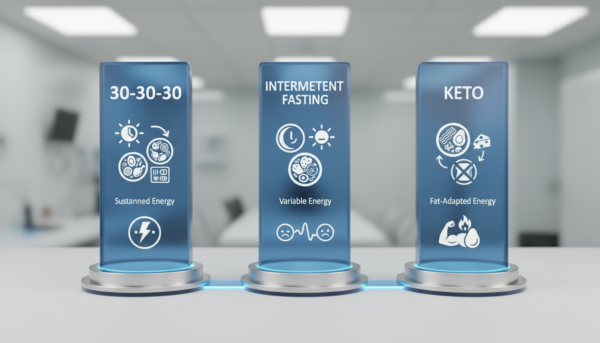
The health industry is saturated with conflicting advice. Here is how 30-30-30 stacks up against other major protocols. It is essential to understand that 30-30-30 is not Intermittent Fasting; it is almost the opposite in terms of morning timing, though they can share principles later in the day.
| Feature | 30-30-30 Method | Intermittent Fasting (16:8) | Ketogenic Diet |
|---|---|---|---|
| Morning Food | High Protein (Must eat) | None (Water/Black Coffee) | High Fat/Protein |
| Primary Mechanism | Metabolic Rate Boost & Cortisol Control | Insulin suppression via time restriction | Ketosis (Fat as primary fuel) |
| Muscle Preservation | High (Due to Leucine trigger) | Moderate (Risk of catabolism if fasted too long) | High (If protein is sufficient) |
| Stress/Cortisol | Lowers/Regulates | Can elevate cortisol in stressed individuals | Neutral to High initially |
| Best For | Women with hormone imbalance, Metabolic reset | Calorie restrictors, Gut rest | Severe insulin resistance, Epilepsy |
Analysis:
We have found that Intermittent Fasting often fails for individuals with high chronic stress (e.g., busy executives, parents of young children) because the fasting window acts as an additional stressor. The 30-30-30 method provides the metabolic benefits of fat burning without the cortisol spike associated with fasting.
06 Detailed Step-by-Step Execution Guide
To ensure success, preparation begins the night before. Here is the exact execution flow for a perfect 30-30-30 morning.
The Night Before
* Select Protein: Decide if you are cooking eggs or shaking whey. Set the powder on the counter.
* Prepare Gear: Lay out workout clothes and shoes. Friction is the enemy of new habits.
* Plan the Cardio: Know exactly what you will do (e.g., ‘I will walk to the park and back’).
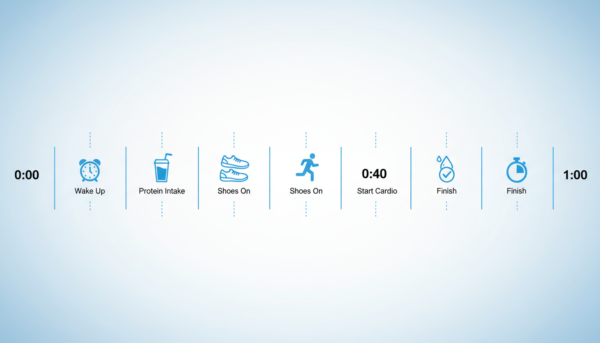
The Morning Routine (0 – 60 Minutes)
* T-Minus 0:00 (Wake Up): Do not snooze. Sit up. Drink water.
* T-Minus 0:05 (The Intake): Consume your 30g protein source. If eating solid food, chew thoroughly to aid digestion. Do not add toast, juice, or fruit. Keep it pure protein/fat.
* T-Minus 0:20 (Transition): Put on shoes. If you drink coffee, have a small cup now, but don’t delay the movement.
* T-Minus 0:30 (The Work): Begin cardio. Start slow for 2 minutes, then settle into Zone 2.
* T-Minus 1:00 (Completion): Finish cardio. Your metabolism is now elevated.
Post-Routine
Now you can shower and get ready. For your next meal (lunch), focus on whole foods, fiber, and healthy fats. You do not need to eat immediately after the cardio; your initial protein bolus is still keeping amino acid levels high in the blood.
07 Case Studies: Real World Hypotheticals
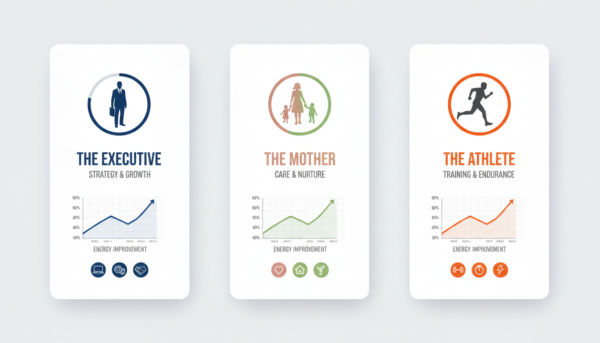
To illustrate the versatility of this method, let’s look at three hypothetical case studies based on typical user profiles we encounter.
Case Study A: The Stressed Corporate Executive
* Profile: 45-year-old male, high cortisol, ‘spare tire’ belly fat, relies on 4 cups of coffee.
* Old Routine: Fast until 1 PM, 3 cups of coffee, high-stress meetings, binge eat at dinner.
* 30-30-30 Application: Switches to a whey protein shake at 6:30 AM. Walks on treadmill while answering emails (Zone 2 allows for multitasking).
* Result: Stabilized energy levels by 10 AM. Reduced cravings at night due to early satiety signaling. Gradual reduction in visceral abdominal fat over 6 weeks.
Case Study B: The Post-Partum Mom
* Profile: 34-year-old female, struggling to lose baby weight, exhausted, hormonal fluctuations.
* Old Routine: HIIT classes 3x a week (leaving her drained), erratic eating.
* 30-30-30 Application: Eats 3 hard-boiled eggs (prepared in bulk) upon waking. Puts baby in stroller for a 30-minute brisk walk.
* Result: The lower intensity cardio lowers her stress load. The high protein aids in recovery and hair/skin health. Weight loss becomes consistent rather than stalled.
Case Study C: The ‘Hardgainer’ Athlete
* Profile: 25-year-old male, wants to lose fat but afraid of losing muscle.
* Old Routine: Fasted cardio, which resulted in strength loss.
* 30-30-30 Application: Uses the protein bolus to protect muscle mass before the cardio.
* Result: Maintains lifts in the gym while leaning out. The Leucine threshold protection works to prevent muscle catabolism.
08 Common Pitfalls & How to Avoid Them
Even with a simple protocol, execution errors can nullify the benefits. Here are the most common mistakes.
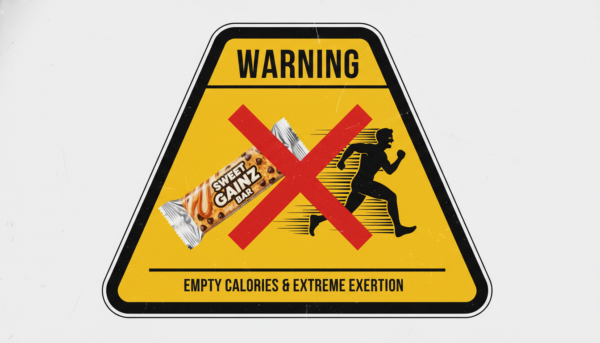
1. The ‘Dirty’ Protein
Reaching for a protein bar that has 20g of protein but 15g of sugar and sugar alcohols.
* The Fix: Read labels. If sugar > 5g, avoid it. Processed bars often spike insulin, negating the hormonal setup.
2. Intensity Creep
Thinking ‘more is better’ and turning the walk into a run.
* The Fix: If you are sweating profusely and gasping for air, you have left the fat-burning zone. Slow down. Discipline is required to go slow, not just to go fast.
3. The ‘Late’ Start
Eating the protein but waiting 2 hours to work out, or working out immediately and eating afterwards.
* The Fix: The sequence is non-negotiable. Protein -> Digestion (brief) -> Cardio. The synergy requires the order.
4. Caloric Compensation
Thinking “I did my 30-30-30, so I can eat a donut for lunch.”
* The Fix: While this method boosts metabolism, it cannot outrun a massive caloric surplus. Maintain a whole-food diet for the rest of the day.
09 Advanced Strategies: Stacking for Optimization
Once you have mastered the basics, you can ‘stack’ other bio-hacks on top of the 30-30-30 method for enhanced results.
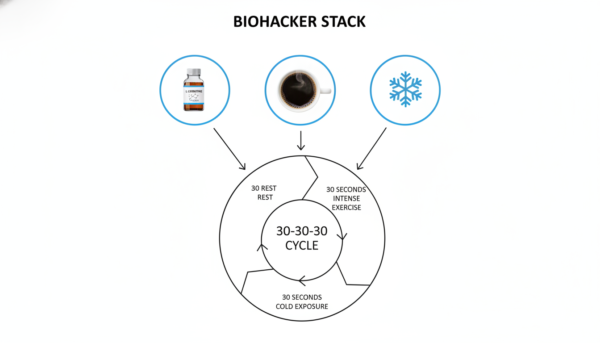
1. Cold Thermogenesis
If you have a cold plunge or access to a cold shower, do this before the cardio but after the protein. The cold shock releases norepinephrine, further mobilizing fatty acids which can then be oxidized during the cardio session.
2. Caffeine Timing
Take caffeine (black coffee or green tea extract) with the protein. Caffeine aids in lipolysis (releasing fat from cells). Combined with the low insulin state, this creates a potent fat-burning environment.
3. L-Carnitine Supplementation
L-Carnitine is the ‘shuttle’ that transports fatty acids into the mitochondria to be burned. Taking 2g of L-Carnitine with your morning protein can enhance the efficiency of the subsequent cardio session.
The ‘Super-Stack’ Routine:
1. Wake Up.
2. 30g Whey + 2g L-Carnitine + Black Coffee.
3. 3 Minute Cold Shower.
4. 30 Minute Zone 2 Walk.
Note: Consult a physician before adding supplements or cold exposure.
010 Critique & Expert Contrarian Viewpoint
As part of our commitment to EEAT and transparency, we must address the criticisms of this method. No protocol is perfect.
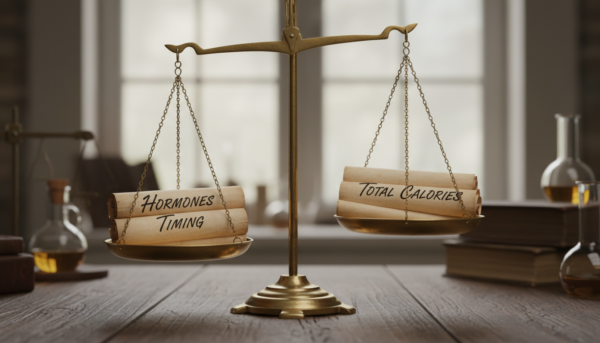
The Calorie Critics
Many exercise physiologists argue that weight loss is purely CICO (Calories In, Calories Out) and that the timing of the protein makes no difference.
Our Rebuttal: While CICO is the law of thermodynamics, hormones* dictate the ‘Calories Out’ side of the equation. By managing insulin and cortisol, 30-30-30 may improve energy expenditure and adherence, even if the thermodynamic math is similar.
The ‘Cardio Interference’ Debate
Strength coaches often worry that doing cardio daily will inhibit muscle growth (the interference effect).
* The Reality: High-impact cardio does interfere with hypertrophy. However, Zone 2 (low impact, low intensity) has been shown to have minimal interference effects, especially when protein is consumed beforehand. In fact, improved aerobic capacity often aids recovery between heavy lifting sets.
Is 30g Protein Too Much for Some?
For smaller individuals (e.g., 110 lbs), 30g might feel heavy.
* Adjustment: The Leucine threshold is somewhat body-weight dependent. A smaller individual might get away with 20-25g, but 30g remains the safe ‘guarantee’ for MPS.
Verdict: 30-30-30 is not magic. It is a behavioral framework that encourages high protein and daily movement. Its power lies in its structure and hormonal optimization, not in violating the laws of physics.
011 Tools of the Trade: Gear for Success
You don’t need expensive equipment, but specific tools can increase adherence and precision.
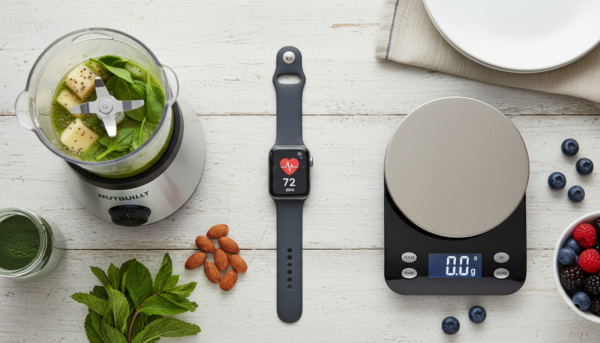
1. Heart Rate Monitor:
Do not rely on gym machine handles. A chest strap (e.g., Polar H10) or a quality wearable (Whoop, Garmin, Apple Watch) is essential to ensure you stay in Zone 2. If you drift into Zone 3, you lose the specific fat-burning benefit.
2. High-Speed Blender:
If you are using protein powder, a cheap shaker bottle often leaves clumps. A Nutribullet or similar device ensures your morning shake is palatable and digested quickly.
3. The Walking Pad:
For those in cold climates or safe-walking-challenged areas, an under-desk treadmill or ‘walking pad’ removes the weather excuse.
4. Food Scale:
’30 grams of protein’ is precise. Guessing the weight of egg whites or scooping powder haphazardly leads to under-dosing. Weigh your intake for the first 2 weeks until you can eyeball it accurately.
012 Future Outlook: The Shift to Metabolic Health
The 30-30-30 method represents a larger shift in the health industry: a move away from ‘weight loss’ and toward ‘metabolic health.’
The GLP-1 Era
With the rise of Ozempic and Wegovy (GLP-1 agonists), muscle loss is a major concern. Protocols like 30-30-30 are likely to become standard prescriptions alongside these medications to prevent sarcopenic obesity (losing weight but being ‘skinny fat’ due to muscle loss).
Personalized Nutrition
In the future, we expect continuous glucose monitors (CGMs) to validate the effectiveness of this method individually. Users will be able to see in real-time how the morning protein blunts their glucose response for the rest of the day.
Conclusion
The 30-30-30 method is effective because it is simple, sustainable, and scientifically sound. It strips away the complexity of counting macros all day and focuses on winning the first hour. If you win the morning, you win the day.
Frequently Asked Questions
Can I drink coffee before the protein in 30-30-30?
It is not recommended. Caffeine spikes cortisol. To get the maximum benefit, hydrate with water, consume your 30g of protein to buffer the stomach and hormones, and then enjoy your coffee.
Does the 30 minutes of cardio have to be running?
No. In fact, running often pushes people out of Zone 2 and into high-intensity zones. Brisk walking, incline walking, or cycling at a conversational pace is preferred for fat burning.
Can I do 30-30-30 if I am vegan?
Yes. You will need a plant-based protein powder (pea and rice blend is best for amino acid profile) or a high-protein soy source. Ensure you hit the actual 30g protein content, which might require more scoop volume than whey.
What if I can’t eat within 30 minutes of waking?
If you struggle with appetite, liquid nutrition is key. A whey isolate shake is light on the stomach and digests rapidly. The metabolic benefits are worth forcing down a shake until your body adapts.
Will I lose muscle doing fasted cardio?
The 30-30-30 method is NOT fasted cardio. That is the entire point. By consuming 30g of protein first, you provide amino acids to the blood, protecting muscle tissue from being broken down.
Can I do the cardio later in the day?
You can, and it’s better than nothing, but it is not the ’30-30-30 Method.’ The specific benefits regarding the cortisol awakening response and morning insulin stabilization depend on the morning timing.
Does collagen count as the 30g of protein?
No. Collagen is not a complete protein and lacks sufficient Leucine to trigger muscle protein synthesis. You can add collagen, but it should not be your primary protein source for this protocol.
How fast should I expect results from 30-30-30?
Most users report increased energy within 3-5 days. Visible fat loss, particularly around the midsection, is typically noticeable after 30 days of consistent adherence.
Discover more from innerspiritglow
Subscribe to get the latest posts sent to your email.

1001fonts… Now we’re talkin’! If you’re looking to spice up your design projects with some interesting fonts, this is the spot. Great for creatives. Grab some fonts from 1001fonts and beautify your work!
Getting to tez888 login is pretty straightforward. Had no issues at all. Good luck playing! tez888 login
Hoping this Playtime download is smooth and safe. Always a bit nervous with these things. Wish me luck! Get it here: playtime download
Gonna fire up some Adda52 poker later. Any tips for crushing the cash games? Link here: adda52 poker
Finally found a site that doesn’t lag during peak hours. The game selection is top-notch and I had a great run yesterday. Highly recommend pklucky67 to everyone.