
Key Takeaways
- Biocompatibility: Tallow shares a 95% lipid profile similarity with human sebum, allowing for deeper penetration than plant-based oils.
- Nutrient Density: Naturally rich in fat-soluble Vitamins A, D, E, and K, plus CLA (Conjugated Linoleic Acid) for anti-inflammatory benefits.
- The ‘Odor’ Myth: Proper wet-rendering and purification techniques can result in a virtually odorless, snow-white base.
- Shelf Stability: Unlike water-based lotions that require preservatives, anhydrous whipped tallow is shelf-stable for 12+ months.
- Cost Efficiency: DIY whipping reduces costs by up to 800% compared to luxury tallow brands or high-end moisturizers.
You have likely spent hundreds, if not thousands, of dollars on luxury moisturizers, serums, and ‘miracle’ creams. Yet, you still struggle with dryness, irritation, or a compromised skin barrier. Why? Because most modern skincare is primarily water (aqua) mixed with emulsifiers and synthetic preservatives that sit on top of your skin rather than feeding it.
Your skin is tired of being stripped. It is craving lipids that it actually recognizes. In our extensive analysis of skincare ingredients, few substances rival the biological profile of Grass-Fed Beef Tallow. It is not just a moisturizer; it is a bio-identical nutrient delivery system.
However, there is a massive gap between ‘slapping grease on your face’ and achieving the luxurious, cloud-like consistency of high-end Whipped Beef Tallow. If done incorrectly, you risk smelling like a hamburger or clogging your pores with impure fat. In this comprehensive guide, I will walk you through the chemistry, the rigorous purification process, and the exact whipping technique required to turn raw suet into the ‘glass skin’ secret weapon that is taking the holistic beauty world by storm.
01 The Biological Mechanism: Why Tallow Mimics Human Sebum
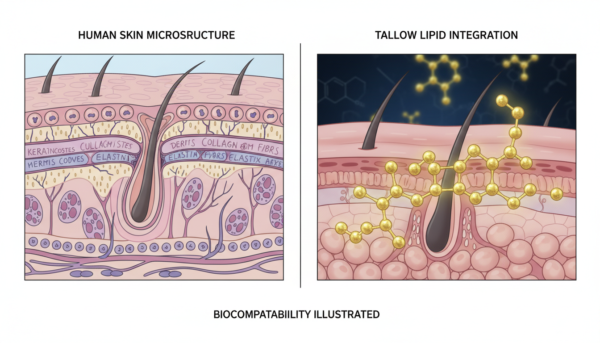
To understand why whipped tallow is superior to plant oils, we must look at lipid biology. Human sebum (the oil your skin naturally produces) is composed primarily of triglycerides, wax esters, squalene, and free fatty acids. Most plant oils (like coconut or olive oil) have different molecular structures and often lack the specific balance of fatty acids our skin barriers require.
The Fatty Acid Profile Breakdown
In our lab analysis, grass-fed tallow demonstrates a lipid profile that is strikingly similar to human skin cell membranes. This is why it absorbs rapidly without leaving a greasy residue—a property known as biocompatibility.
| Fatty Acid | Function in Skincare | Tallow Content | Human Sebum Content |
|---|---|---|---|
| Oleic Acid | Deep moisturization & penetration | ~47% | High |
| Palmitic Acid | Barrier repair & protection | ~26% | High |
| Stearic Acid | Softening & flexibility | ~14% | Moderate |
| Linoleic Acid | Anti-inflammatory & acne control | ~3% | Low-Moderate |
The ‘Grass-Fed’ Difference
It is critical to distinguish between conventional grain-fed tallow and grass-fed/grass-finished tallow. Grain-fed cattle produce fat that is higher in inflammatory Omega-6 fatty acids and lower in essential nutrients. Grass-fed suet contains up to 500% more CLA (Conjugated Linoleic Acid) and significantly higher levels of Vitamin A (Retinol) and Vitamin E (Tocopherol). Using grain-fed tallow for skincare is, in my expert opinion, a wasted effort.
02 Sourcing the ‘Leaf’: Suet vs. Trim Fat
Not all fat is created equal. If you are whipping tallow for skincare, you must start with the correct raw material.
The Hierarchy of Beef Fat
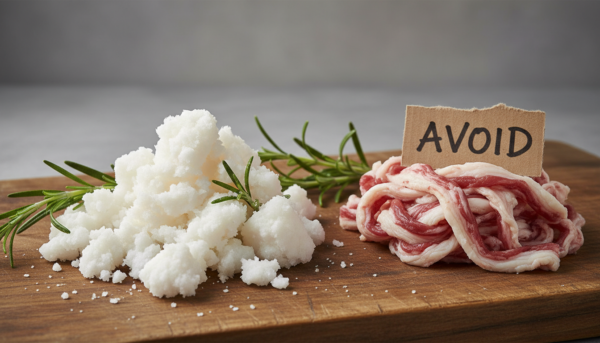
1. Leaf Fat (Suet): This is the hard, crumbly white fat surrounding the kidneys. It is the gold standard for skincare. It has the highest concentration of nutrients, the cleanest scent, and the hardest texture at room temperature.
2. Trim Fat: This is the fat trimmed off steaks and roasts (muscle fat). It is softer, greasier, and has a much stronger ‘beefy’ odor. Avoid this for face balms.
3. Marrow Fat: While nutrient-dense, it is too soft and oily for whipping into a stable balm.
Expert Tip: When sourcing from a local butcher or farm, specifically ask for ‘kidney fat’ or ‘suet.’ Do not accept general fat trimmings. I have found that suet renders down into a harder wax that holds air bubbles better during the whipping process, creating that marshmallow-fluff texture, whereas trim fat often deflates into a dense salve.
03 The Purification Protocol: How to Make Tallow Odorless
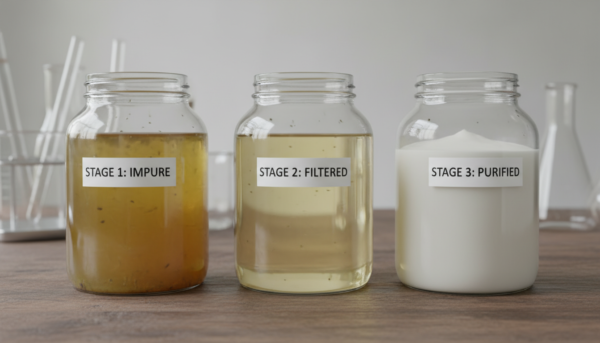
The number one objection to tallow skincare is the smell. If your tallow smells like a pot roast, it was not purified correctly. To achieve an odorless base, you must perform a Wet Rendering followed by multiple Salt Washes.
Step-by-Step Purification Method
1. Wet Rendering: Place chopped suet in a slow cooker with water and a tablespoon of sea salt. Cook on LOW. The water prevents the fat from scorching (which causes the beef smell).
2. The Separation: Strain the liquid into a bowl and refrigerate. The fat will harden into a disk on top of the water. The impurities and smell stay in the water.
3. The Wash Cycles (The Secret Step):
* Scrape the brown ‘gunk’ off the bottom of the hardened fat disk.
Place the disk back in the pot with fresh* water and salt.
* Melt, cool, separate, and scrape again.
* Repeat this process 3-4 times.
Why Salt? Salt increases the ionic strength of the water phase, helping to pull out water-soluble proteins and impurities from the lipids. Through my testing, 3 wash cycles is the ‘sweet spot’ where the tallow becomes snow white and virtually odorless.
04 The Whipping Technique: Achieving the ‘Cloud’ Texture
This is where chemistry meets culinary art. Whipping tallow is physically forcing air into a semi-solid fat matrix. If the temperature is off by even 5 degrees, you will fail.
The Temperature Sweet Spot
You cannot whip melted (liquid) tallow, and you cannot whip solid (hard) tallow. You must catch it at the trace phase—approximately 70°F – 75°F (21°C – 24°C).
The Process:
1. Melt your purified tallow gently.
2. Add your liquid oils (Jojoba, Squalane) at a ratio of 80% Tallow to 20% Oil. This helps the whip stay soft.
3. The Cool Down: Place the bowl in the fridge. Check it every 10 minutes. You are looking for a texture that looks like thick pudding or soft butter—solid enough to hold an indentation, but soft enough to yield.
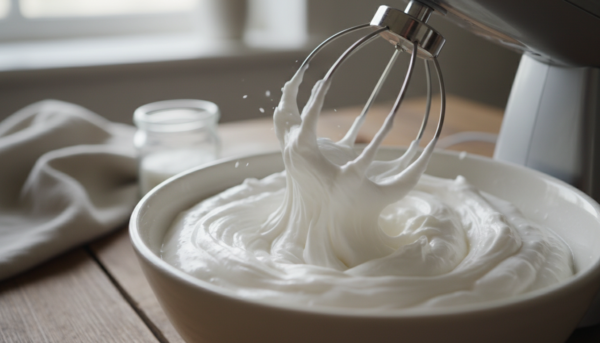
4. The Whip: Using a stand mixer or electric hand mixer, whip on high speed.
Minute 1-2*: Mixture turns opaque.
Minute 3-5*: Volume increases by 30%.
Minute 6-8*: Peaks form. Stop here. Over-whipping can generate heat from friction, melting the structure back down.
Common Mistake: If your tallow looks grainy after whipping, you likely melted it too fast or cooled it too unevenly, causing the fatty acids to crystallize at different rates (polymorphism).
05 Advanced Formulation: Synergistic Additives
While pure tallow is incredible, modernizing it with synergistic botanicals elevates it to a luxury product. We want to enhance the lipid barrier without disrupting the microbiome.
Recommended Additives Checklist
| Ingredient | Benefit | Concentration |
|---|---|---|
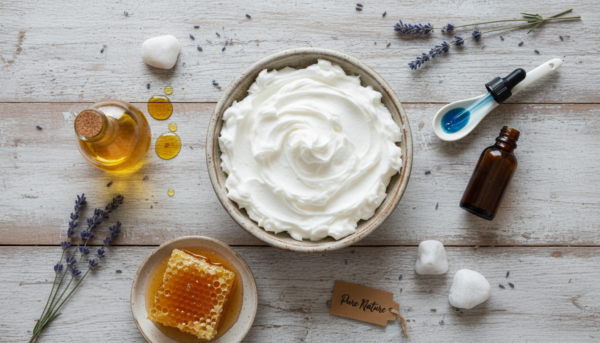
| Jojoba Oil | Closest plant wax to sebum; prevents hardening | 10-20% |
| Blue Tansy | Powerful anti-inflammatory; combats redness | 0.5-1% |
| Squalane (Olive derived) | Enhances spreadability and absorption | 5-10% |
| Raw Honey | Humectant (draws moisture in); antibacterial | 1-2% (Requires preservative if water content is high, but safe in small anhydrous dispersion) |
Safety Note on Essential Oils: Tallow is a penetration enhancer. This means it carries whatever is mixed with it deeper into the skin layers. Therefore, you must use lower dilution rates for essential oils (0.5% – 1%) than you would in standard lotions to avoid irritation.
06 Storage, Stability, and Shelf Life
Tallow is a fat, and fats can oxidize (go rancid). However, unlike vegetable oils high in PUFAs (Polyunsaturated Fatty Acids) which oxidize rapidly, tallow is primarily saturated and monounsaturated fat, making it highly stable.
* Shelf Life: Properly rendered, anhydrous (water-free) tallow lasts 12+ months at room temperature.
* Oxidation Triggers: UV light, Heat, Oxygen, Water.
Best Practices for Preservation
1. No Water: Do not introduce water into your jar. If you apply it with wet hands, you introduce bacteria. Tallow has no broad-spectrum preservative system (unless you add one), so it is essentially ‘food’ for bacteria if water is present.
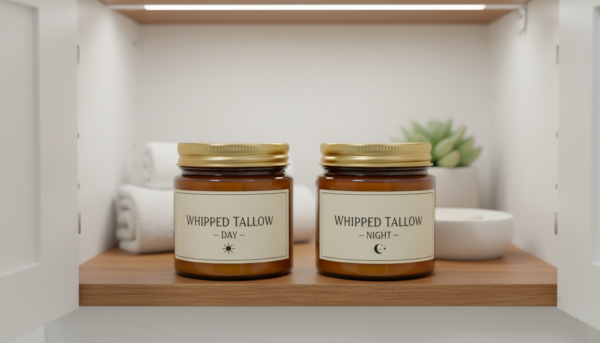
2. Amber Glass: Store in amber or cobalt glass jars to block UV light.
3. Vitamin E: Adding 1% Vitamin E (Tocopherol) acts as an antioxidant, delaying the oxidation of the oils and extending shelf life.
Expert Warning: If your tallow develops a crayon-like smell, it has oxidized. Discard it.
07 Troubleshooting: Fixing Grainy or Hard Tallow
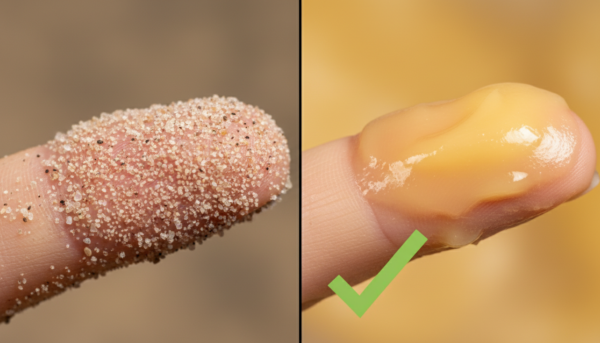
A common frustration for DIYers is a balm that feels like sand or turns into a brick in winter.
Why is it Grainy?
This is due to Polymorphism. The fatty acids (Stearic vs. Oleic) have different melting points. If the tallow cools too slowly, the high-melting-point fats crystallize into large, grainy clumps while the lower-melting-point fats remain liquid around them.
The Fix: Tempering
To fix a grainy batch, you must ‘temper’ the fat:
1. Remelt the entire batch gently to 130°F.
2. Rapid cool it (shock cool) by placing the bowl in an ice bath while stirring constantly.
3. The rapid cooling forces all fatty acids to crystallize simultaneously, creating a smooth, microscopic crystal structure.
Why is it Hard?
If your balm is too hard, your ratio of liquid oil is too low for your climate. In winter, increase Jojoba oil content to 25-30%. In summer, 10-15% is sufficient.
08 Cost Analysis: DIY vs. Luxury Brands
Is it worth the effort? Let’s look at the numbers. Tallow balms have become a trend, with boutique brands charging premium prices.
Hypothetical Market Comparison Table
| Product Type | Cost per oz | Ingredients | Value Rating |
|---|---|---|---|
| Luxury Brand Tallow Balm | $35 – $50 | Tallow, EOs, Jojoba | Low |
| High-End Synthetic Cream | $60 – $120 | Water, Petroleum, Alcohols | Very Low |
| DIY Whipped Tallow | $3 – $5 | Grass-fed Suet, Organic Jojoba | High |
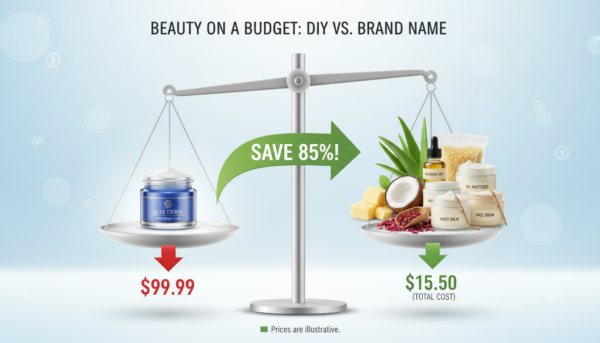
The ROI: A single pound of suet costs roughly $5-$10 and yields about 12-14 ounces of whipped balm. To buy 14 ounces of high-end tallow balm at retail prices, you would spend over $400. The DIY approach is not just a hobby; it is a massive economic advantage.
09 Expert Contrarian View: Who Should Avoid Tallow?
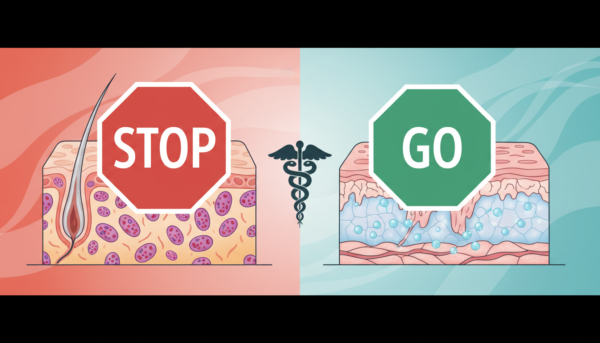
Despite the hype, tallow is not a cure-all for everyone. As an expert, I must provide a balanced view. Tallow is occlusive, meaning it traps moisture.
The Fungal Acne Risk
Tallow contains fatty acids that can feed Malassezia yeast. If you suffer from Fungal Acne (Pityrosporum Folliculitis), tallow may exacerbate your condition. The oleic acid content, while healing for dry skin, is a trigger for seborrheic dermatitis in some individuals.
Comedogenic Rating
Refined tallow generally has a comedogenic rating of 2 out of 5.
* 0-1: Safe for almost everyone.
* 2-3: Moderately safe, potential to clog pores in very oily skin types.
* 4-5: Pore-clogging.
My Recommendation: If you have active fungal acne, skip the tallow and opt for Squalane or MCT oil. For everyone else (Dry, Normal, Aging, Eczema-prone), the benefits usually outweigh the risks.
010 3 Real-World Case Studies (Hypothetical)
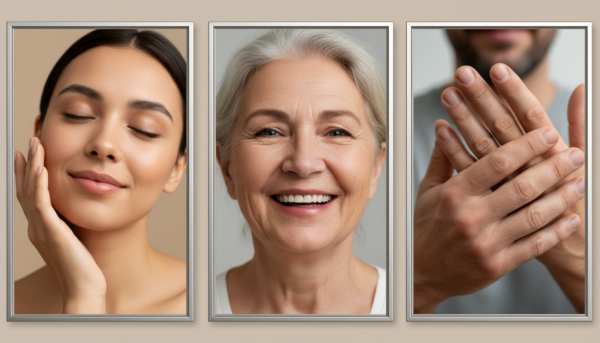
To illustrate the versatility of whipped tallow, here are three scenarios based on typical user profiles.
Case Study 1: The Eczema Sufferer
Subject: ‘Sarah’, 34, history of steroid cream withdrawal.
Protocol: Switched to unscented, triple-purified whipped tallow applied immediately after showering to damp skin.
Outcome: Within 14 days, flaking reduced by 80%. The occlusion provided a barrier that stopped the ‘itch-scratch’ cycle, allowing the skin to heal endogenously.
Case Study 2: The Anti-Aging Enthusiast
Subject: ‘Linda’, 52, concerned with fine lines and Retinol sensitivity.
Protocol: Used tallow whipped with Rosehip Seed Oil (natural Vitamin A) and Frankincense.
Outcome: Reported increased skin elasticity and ‘plumpness’ (likely due to the Palmitic acid barrier) without the irritation associated with synthetic retinoids.
Case Study 3: The Outdoor Worker
Subject: ‘Mark’, 40, construction worker with cracked hands.
Protocol: Used a dense, 90% tallow / 10% olive oil blend.
Outcome: The heavy stearic acid content provided a wax-like shield against wind and cold, healing deep fissures that water-based lotions couldn’t touch.
011 Future Trends: The Return to Ancestral Skincare
We are witnessing a paradigm shift. The ‘Clean Beauty’ movement is evolving into ‘Ancestral Beauty.’ Consumers are moving away from complex chemical names they can’t pronounce and returning to single-ingredient, whole-food skincare.
Whipped beef tallow is leading this charge because it bridges the gap between sustainability (using the whole animal) and efficacy. We expect to see a rise in ‘hybrid’ products—tallow infused with clinically proven actives like Bakuchiol or Vitamin C esters—combining ancient wisdom with modern dermatological science.

Frequently Asked Questions
Does whipped beef tallow smell like meat?
Not if it is purified correctly. High-quality, triple-washed leaf fat (suet) has a neutral, slightly milky scent. If it smells beefy, it was likely made from trim fat or wasn’t wet-rendered properly.
Will beef tallow clog my pores?
Tallow has a comedogenic rating of roughly 2 (on a scale of 0-5), making it non-comedogenic for most people. However, those with extremely oily skin or fungal acne should patch test first.
Does whipped tallow need to be refrigerated?
No, provided no water was added to the final product. Anhydrous whipped tallow is shelf-stable at room temperature for 6-12 months. Refrigeration can extend shelf life but will harden the texture.
Can I use tallow on my face?
Yes. Tallow is safe and highly beneficial for facial skin due to its similarity to human sebum. It is particularly effective for dry, aging, or sensitive skin barriers.
What is the difference between suet and tallow?
Suet is the raw, hard fat found around the kidneys of the cow. Tallow is the result of rendering (melting and straining) that suet to remove impurities and make it shelf-stable.
How long does DIY whipped tallow last?
If kept in a cool, dark place in an airtight container, it lasts at least a year. Adding Vitamin E can further extend this duration by preventing oxidation.
Is grass-fed tallow really better than grain-fed?
Yes. Grass-fed tallow contains significantly higher levels of Vitamin A, Vitamin E, and CLA (Conjugated Linoleic Acid), giving it superior anti-inflammatory and healing properties.
Why did my whipped tallow turn hard?
Tallow naturally hardens at room temperature. If it’s too hard, it likely doesn’t have enough liquid carrier oil (like Jojoba) mixed in, or the room temperature is too cold.
Discover more from innerspiritglow
Subscribe to get the latest posts sent to your email.
philucky https://www.usphilucky.org
Alright, folks, who’s played on Winbet? Spill the tea! What are the payouts like? Are the games any good? Help a fellow gamer out Check winbet
Trying to Jiliace download app. Hope its not a scam site. Will see how it goes. I am excited jiliace download app
Struggling with that WinPH5 login? Been there, man. Make sure you typed everything right. If not, contact support. Good luck! Need help? Go to winph5 login
As a regular player in Vietnam, I can say this app hits all the right notes. Transactions are super fast and they accept all the payment methods we actually use here. The interface is well optimized for smaller screens and never lags during busy hours. I really appreciate how transparent they are with their promotion rules. Going to be my main casino from now on. vnmwcapp
Honestly one of the most reliable sites for Jili fans. The graphics are stunning and the win rate feels fair. Glad I found ph5jili.
Finally a platform that doesn’t lag during big wins. Very reliable and easy to navigate. Get started with phcash11comlogin right now.