
Key Takeaways
- Bio-Fermentation Amplifies Potency: The fermentation process breaks down large curcumin molecules, increasing skin absorption by up to 300%.
- Natural Enzymatic Exfoliation: Unlike harsh scrubs, bio-fermented soap uses lactic acid produced during fermentation to gently dissolve dead skin cells.
- Superior Anti-Inflammatory Action: Targeted relief for cystic acne and eczema without the drying effects of chemical cleansers.
- Microbiome Support: Introduces beneficial postbiotics to the skin barrier, strengthening defense against pathogens.
- Cost-Effective Skincare: Replaces the need for separate exfoliators, cleansers, and brightening serums.
You have likely spent hundreds, if not thousands, of dollars on Vitamin C serums, retinols, and chemical peels, hoping to chase away dark spots and dullness. Yet, you find your skin barrier compromised, red, and sensitive, with the same stubborn pigmentation staring back at you in the mirror. The cycle of buying expensive ‘miracle’ serums that sit on top of the skin without penetrating deep enough is a frustration shared by millions.
What if the solution wasn’t a $150 serum, but a scientifically enhanced version of an ancient root? Enter Bio-Fermented Turmeric Soap. This isn’t just standard soap; it is a bioactive powerhouse where the turmeric has been transformed through fermentation to unlock bioavailability levels that raw turmeric simply cannot achieve. By breaking down the active compound, curcumin, into smaller, more absorbable molecules, this soap acts as a cleanser, treatment, and healer in one. Below, we break down the 7 distinct ways this fermented wonder outperforms your luxury shelf.
1. The Science of Fermentation: Why ‘Bio’ Matters
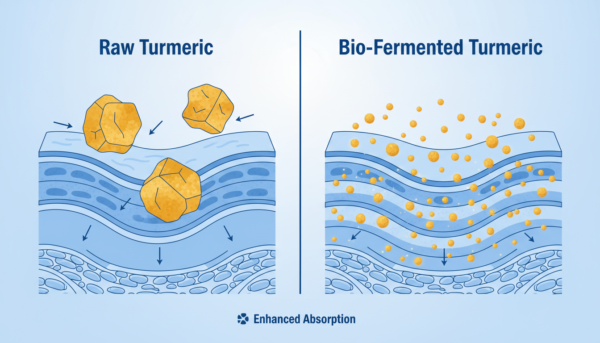
To understand why this soap is superior, we must first look at molecular sizing. Raw turmeric contains curcumin, a powerful antioxidant, but naturally, it has poor bioavailability—meaning your skin struggles to absorb it before it washes off. Bio-fermentation changes the game. During the fermentation process (often using Lactobacillus), the cellular structure of the turmeric root is broken down. This creates ‘bio-active’ compounds.
Key Transformation Mechanisms:
- Molecular Reduction: Large molecules are cleaved into smaller, lipid-soluble particles that can penetrate the stratum corneum (outer skin layer) instantly.
- Synthesis of New Nutrients: The process creates amino acids, organic acids (like lactic acid), and antioxidants that didn’t exist in the raw root.
- Enhanced Potency: Studies suggest fermented extracts can have up to three times the antioxidant capacity of non-fermented counterparts.
When you use bio-fermented turmeric soap, you aren’t just washing dirt away; you are infusing the dermis with activated curcuminoids that are primed for immediate cellular uptake.
2. Maximizing Bioavailability for Deep Tissue Repair
The primary failure of most topical turmeric products is that they sit on the surface, often staining the skin yellow without providing therapeutic benefits. Bio-fermented soaps solve the delivery system issue. Because the lipid barrier of our skin is designed to keep things out, only specific molecular weights get in.
The Absorption Advantage:
- Lipophilic Nature: Fermentation enhances the lipophilic (fat-loving) nature of curcumin, allowing it to bind with the natural oils in the soap base and slip past the skin’s defense barrier.
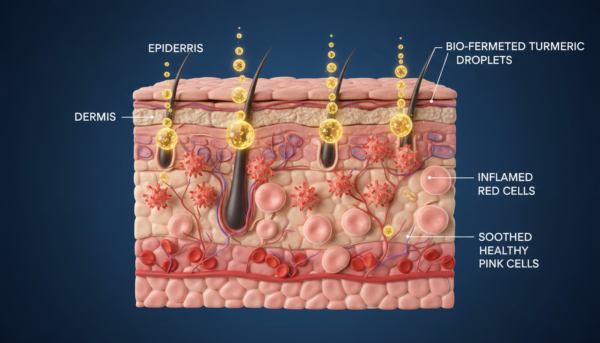
- Carrier Oil Synergy: When formulated with oils like coconut or olive, the bio-fermented turmeric utilizes these fats as a vehicle to transport anti-inflammatory agents directly to inflamed tissues.
This deep tissue penetration allows the soap to address subcutaneous inflammation—the root cause of cystic acne and puffiness—rather than just treating surface-level redness.
3. Acne Annihilation: Antibacterial & Probiotic Defense
Acne is often a battle between bacteria (specifically C. acnes) and your skin’s immune response. Standard acne cleansers use Benzoyl Peroxide, which kills bacteria but also nukes your healthy skin microbiome, leading to peeling and sensitivity. Bio-fermented turmeric soap offers a dual-pronged attack that is lethal to acne but gentle on you.
The Dual Mechanism:
1. Direct Antimicrobial Action: Activated curcumin is a potent antimicrobial agent that disrupts the cell membranes of acne-causing bacteria.
2. Postbiotic Support: The fermentation process produces postbiotics. These compounds lower the skin’s pH to a slightly acidic level (around 4.5-5.5), which creates an environment where acne bacteria cannot thrive, but healthy skin flora flourishes.
By strengthening the skin’s microbiome rather than sterilizing it, this soap prevents the ‘rebound effect’ where acne comes back worse after stopping treatment.

4. Tyrosinase Inhibition: Fading Dark Spots & Scars
Hyperpigmentation—whether from sun damage, melasma, or old acne scars—is caused by an enzyme called tyrosinase, which triggers melanin production. Expensive serums often use Vitamin C or Hydroquinone to stop this. Bio-fermented turmeric is a natural, high-power tyrosinase inhibitor.
How It Brightens:
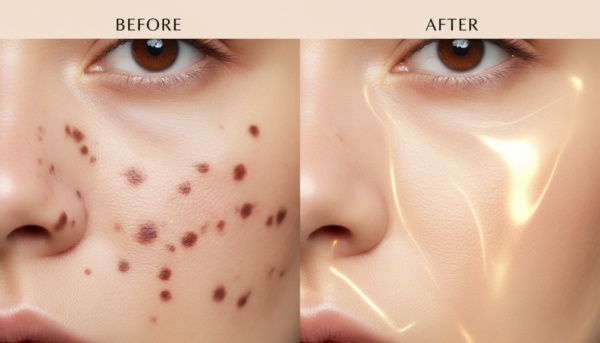
- Interrupting Melanin: The fermented curcuminoids bind to tyrosinase enzymes, effectively turning off the ‘switch’ that tells your skin to produce excess pigment in dark spots.
- Accelerated Turnover: Because fermentation produces natural lactic acid, the soap promotes faster cell turnover. It gently lifts away the melanin-stained dead skin cells on the surface while inhibiting new pigment production underneath.
Users typically report a visible reduction in post-inflammatory hyperpigmentation (PIH) within 4-6 weeks of consistent use, often rivaling prescription creams without the risk of ‘halo’ hypopigmentation.
5. Powerful Anti-Aging: Neutralizing Free Radicals
Oxidative stress is the number one cause of premature aging. UV rays, pollution, and blue light generate free radicals that tear apart collagen fibers, leading to sagging and wrinkles. Bio-fermented turmeric is one of the most potent antioxidant sources available in topical skincare.
The Antioxidant Cascade:
- Scavenging Power: The fermentation process increases the phenolic content of turmeric. These phenols act as scavengers, hunting down and neutralizing free radicals before they can damage DNA or collagen.
- Collagen Preservation: By reducing chronic micro-inflammation (inflammaging), the soap prevents the enzymatic breakdown of existing collagen.
- Elasticity Boost: Regular use helps maintain the extracellular matrix, keeping skin firm and bouncing back from stress lines.
Think of this soap as a daily shield. While a serum works for a few hours, washing with bio-fermented soap deposits a protective antioxidant layer that persists.

6. Gentle Enzymatic Exfoliation Without Tears
Physical scrubs (like walnut or apricot scrubs) cause micro-tears in the skin, inviting infection and causing premature aging. Chemical peels can be too harsh for daily use. Bio-fermented turmeric soap occupies the perfect middle ground through enzymatic and acidic exfoliation.
The Fermentation Byproduct:
During fermentation, enzymes and mild acids (like lactic acid) are produced.
- Lactic Acid: This is an Alpha Hydroxy Acid (AHA) known for being hydrating while it exfoliates. It dissolves the ‘glue’ holding dead skin cells together.
- Enzymatic Action: These enzymes digest the keratin protein of dead cells without affecting the healthy, living cells underneath.
This results in the famous ‘glass skin’ texture—smooth, reflective, and soft—without the redness or stinging associated with high-percentage acid toners.

7. How to Choose the Right Bio-Fermented Soap
Not all turmeric soaps are created equal. The market is flooded with cheap, melt-and-pour soaps that simply add yellow food coloring or a pinch of kitchen turmeric powder. To get the benefits listed above, you must be a detective with the ingredient list.
The Checklist for Efficacy:
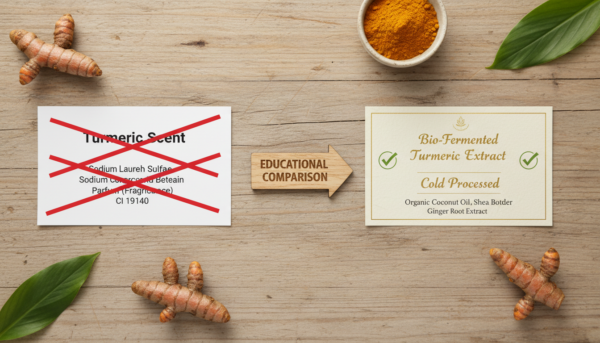
1. Labeling: Look for terms like ‘Bio-Fermented,’ ‘Lactobacillus/Turmeric Ferment Filtrate,’ or ‘Probiotic Turmeric.’
2. Cold Process: Ensure the soap is ‘Cold Processed.’ Heat kills beneficial enzymes and probiotics. Cold processing cures soap over weeks, preserving the bioactive integrity.
3. Supporting Actors: The best soaps combine fermented turmeric with synergistic ingredients.
Black Pepper (Piperine): Increases absorption further.
Raw Honey: Adds humectant properties.
Neem Oil: Boosts antibacterial effects for acne.
4. Avoid: Sodium Lauryl Sulfate (SLS). A harsh surfactant that strips the barrier you are trying to heal. Stick to saponified natural oils (Coconut, Olive, Shea Butter).
Investing in a genuine, cold-processed, bio-fermented bar is the difference between simply coloring your face yellow and truly transforming your skin health.
Frequently Asked Questions
Will bio-fermented turmeric soap stain my skin yellow?
Generally, no. While raw turmeric powder can leave a strong stain, bio-fermented turmeric is often utilized in a saponified oil base that rinses clean. However, if you have very fair skin, you may notice a temporary golden tint that acts as a natural color corrector, which washes off with water.
How often should I use this soap?
It is gentle enough for daily use. Most people use it twice a day—morning and night. If you have extremely dry skin, start with once a day to see how your skin adjusts to the enzymatic exfoliation.
Can this replace my Vitamin C serum?
For many users, yes. The high antioxidant content and tyrosinase-inhibiting properties mimic the effects of Vitamin C. However, for severe hyperpigmentation, using the soap in conjunction with a serum can accelerate results.
Is bio-fermented soap safe for sensitive skin?
Yes, it is often safer than standard acne treatments. The fermentation process reduces potential allergens and creates soothing postbiotics. Always patch test first, especially if you have known allergies to turmeric or specific oils.
How long does a bar typically last?
A cold-processed bar of soap is denser than commercial bars. If kept dry between uses (using a draining soap dish), a standard 4-5oz bar can last 4 to 6 weeks with daily facial use.
Does it help with body acne?
Absolutely. The same antibacterial and anti-inflammatory mechanisms that work on the face are highly effective for ‘bacne’ (back acne) and chest breakouts.
What is the difference between regular turmeric soap and bio-fermented?
Regular soap uses raw turmeric powder which has low absorption. Bio-fermented soap uses turmeric that has been broken down by bacteria/yeast, making the active curcumin smaller, more potent, and easier for the skin to absorb.
Can I use this while pregnant?
Topical turmeric is generally considered safe during pregnancy. However, because bio-fermented products are potent, consult your obstetrician or dermatologist before adding new active treatments to your routine.
You might also like:- Turmeric Soap: 7 Must-Know Benefits for Glowing Skin!
Discover more from innerspiritglow
Subscribe to get the latest posts sent to your email.
377jili https://www.go377jili.com
Aceph Official Site: Top Slots, Easy Login, Register & App Download for Philippines Players Join Aceph Official Site for the best gaming in the Philippines. Experience fast aceph login, easy aceph register, and top-tier aceph slots. Get the aceph app download today to start winning! visit: aceph
Just signed up with 5956betlogin, and the interface is slick! Finding my way around easily. Hoping for some good wins! Check it out here: 5956betlogin
Downloading the jljl12loginapp and going to check it out. Heard its easy to navigate, so that is a plus and the games seems decent. Take a look at this link: jljl12loginapp
Right lads, anyone tried jljl72? Seen it mentioned on a forum. Tempted to put a few quid in and see what’s what. Get clicking: jljl72