
Key Takeaways
- Cortisol Connection: Learn why high-intensity workouts might be making your belly fat worse by spiking stress hormones.
- The Psoas Key: Discover how releasing the ‘muscle of the soul’ (psoas) unlocks metabolic stagnation in the abdomen.
- No Equipment Needed: All 12 steps rely on gravity, floor contact, and conscious internal perception—no weights required.
- Nervous System Reset: Shift from ‘fight or flight’ (fat storage mode) to ‘rest and digest’ (fat burning mode).
- 5 Core Moves: Detailed breakdowns of the Arch and Flatten, Psoas Release, and more.
- Interoception: Develop the skill of sensing internal signals to prevent emotional eating.
You have tried the diets. You have exhausted yourself with HIIT workouts. Yet, the stubborn layer of weight around your midsection—often dubbed the ‘cortisol belly’—remains immovable. The problem isn’t your lack of effort; it’s your nervous system.
Traditional weight loss advice ignores a critical biological fact: when your body is stuck in a chronic state of stress (Sympathetic dominance), it prioritizes storing visceral fat as a survival mechanism. No amount of crunches will undo a nervous system that believes it is under attack. This is where somatic exercises for belly fat change the game. Unlike traditional exercise that pushes muscles to exhaustion, somatics retrain the brain-to-muscle connection to release deep-seated tension, lower cortisol, and create the safety your body needs to finally let go of weight. In this guide, we explore 12 comprehensive steps—including science, mindset, and specific movements—to melt belly fat by healing the root cause.
1. The Biology of ‘Cortisol Belly’ and Stress Retention
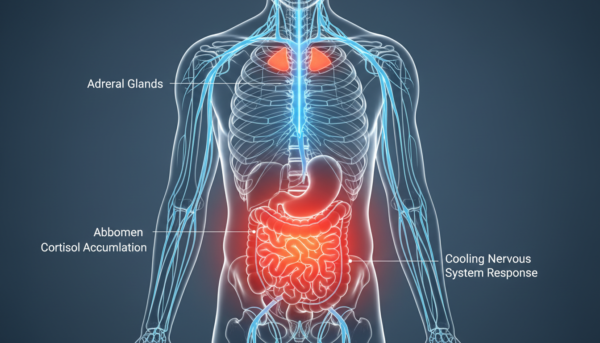
Before attempting to move, you must understand the mechanism you are dismantling. ‘Cortisol belly’ is not just a buzzword; it is a physiological response to chronic stress. When the adrenal glands release cortisol continuously, two things happen that sabotage your waistline:
1. Visceral Fat Storage: Cortisol specifically targets fat receptors deep in the abdomen, surrounding vital organs. This is evolutionarily designed to provide quick energy during famine or war—conditions your modern stressors mimic.
2. Muscle Wasting: High cortisol can break down muscle tissue for glucose, lowering your metabolic rate.
The Vicious Cycle
| Stage | Physiological Response | Consequence for Belly Fat |
|---|---|---|
| Trigger | Perceived Threat (Work, Trauma, HIIT) | Cortisol Spike |
| Response | Sympathetic Nervous System Activation | Digestion Slows, Insulin Spikes |
| Storage | Body anticipates long-term danger | Calories stored as visceral fat |
| Result | ‘Hard’ belly, inflammation | Resistance to traditional diet/exercise |
Somatic exercises interrupt this cycle at the Response stage. By signaling safety to the brain, we lower cortisol, allowing the body to exit storage mode.
2. Somatics vs. Traditional Cardio: A Paradigm Shift
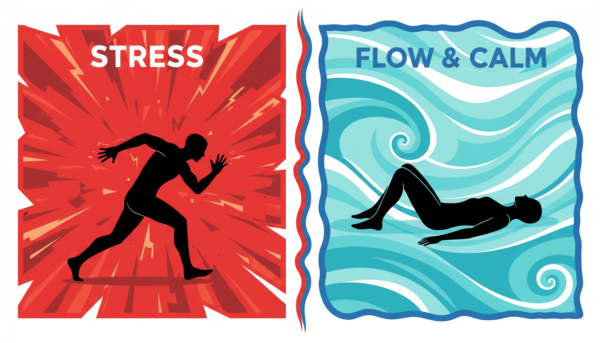
Most people trying to lose belly fat immediately turn to running or high-intensity interval training (HIIT). While effective for some, for those with high stress loads, this is counterproductive. Intense cardio mimics the ‘flight’ response, potentially elevating cortisol levels further.
Somatic exercises function oppositely. They are:
- Slow and Deliberate: Movements are often smaller and done very slowly to engage the motor cortex.
- Internal Focus: The goal is not how the move looks, but how it feels (interoception).
- Pandiculation: unlike static stretching, somatics involves contracting a muscle against resistance and then slowly releasing it to reset resting muscle length.
By choosing somatics, you stop fighting your body. You are not burning calories through friction; you are optimizing your metabolic environment so your body wants to burn fat.
3. The Psoas Connection: Unlocking the ‘Muscle of the Soul’
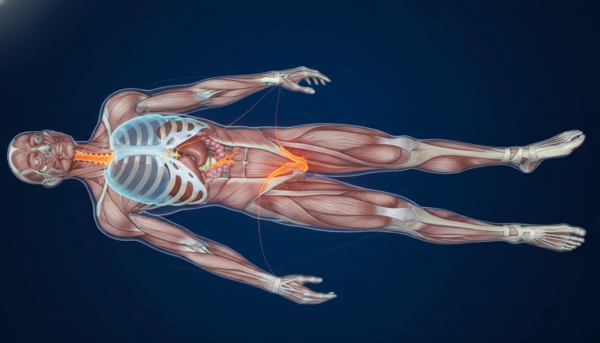
The psoas major is the deepest muscle in the human body, connecting the lumbar spine to the legs. It is the primary hip flexor and is intimately connected to the diaphragm and the reptilian brain. It is often called the ‘fight or flight’ muscle because it contracts instantly when we are startled.
Why a Tight Psoas = Belly Fat
When the psoas is chronically tight (from sitting or stress), it pulls the lower back forward, protruding the abdomen. This creates the visual of a ‘pot belly’ even in thin individuals. Furthermore, a tight psoas restricts the diaphragm, causing shallow breathing which keeps the nervous system in a stress state.
Somatic Strategy: We do not stretch the psoas forcefully. We use somatic release to teach it to stop pulling. Relaxing the psoas allows the organs to settle back into the pelvic bowl, instantly flattening the lower abdomen’s appearance and improving digestion.
4. Setting the Stage: Preparing Your Nervous System
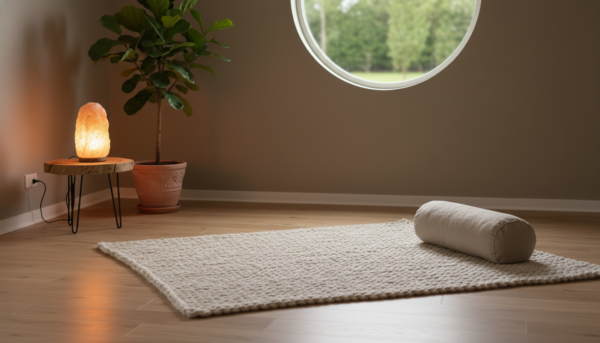
You cannot force relaxation. Before beginning the movements, you must curate an environment that signals safety to your primal brain. This is not just ‘ambiance’; it is a functional part of the exercise.
- Sensory Deprivation: Dim the lights or use an eye mask. Visual stimuli keep the brain alert.
- Temperature: Ensure the room is warm. Cold muscles contract as a defense mechanism.
- The Surface: Use a firm floor with a blanket or thin mat. Soft beds absorb too much feedback, dulling the sensory input your brain needs to re-map the muscles.
The Body Scan: Spend the first 2 minutes lying flat (Savasana). Notice the space between your lower back and the floor. Notice if one hip feels higher. Do not fix it; just notice. This baseline is crucial for recognizing the release later.
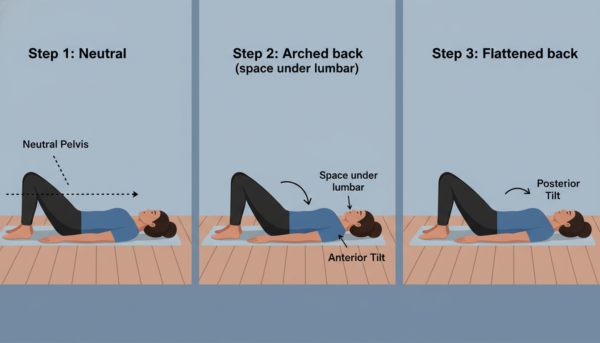
5. Somatic Move 1: The Arch and Flatten
This is the foundational move of Clinical Somatics, designed to release the muscles of the lower back and abdomen simultaneously. It combats the ‘Red Light Reflex’ (slumping forward) which compresses the belly.
Step-by-Step:
1. Lie on your back, knees bent, feet flat on the floor hip-width apart.
2. Inhale: Gently arch your lower back, rolling your pelvis forward so your tailbone presses down and your waist lifts off the floor. Do not force this; use the back muscles gently.
3. Exhale: Slowly release the contraction. Allow your lower back to flatten toward the floor, tucking the tailbone slightly. Engage the abdominals softly to press the low back down.
4. The Release: Slowly let go of the abdominal contraction until your spine returns to neutral.
Repeat: 8-10 times extremely slowly. Focus on the smooth transition between arching and flattening. This movement pumps fluid into the spinal discs and resets the resting tension of the belly wall.
6. Somatic Move 2: The Flower (Psoas Release)
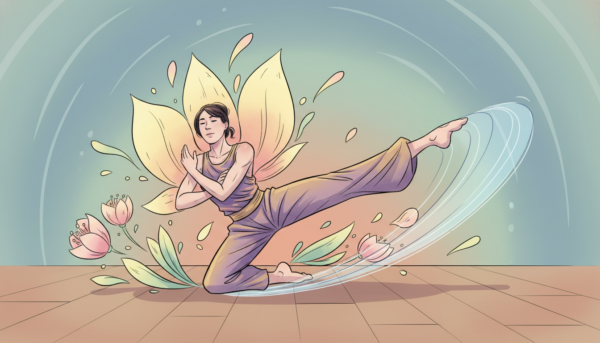
This move specifically targets the deep psoas muscle to reduce the protrusion of the lower belly.
Step-by-Step:
1. Lie on your back with knees bent.
2. Allow your right knee to slowly drop out to the side toward the floor, only as far as is comfortable.
3. Slide the right foot down along the floor until the leg is fully extended.
4. Internal Rotation: Roll the leg inward so the toes point toward the midline, then relax it completely.
5. Slowly drag the heel back up to the starting bent-knee position.
Key Focus: As you slide the leg down, visualize the psoas muscle (deep inside the hip/spine) lengthening. If you feel your back arching excessively, you are moving too fast. Keep the movement fluid and lazy. Repeat 5 times per side.
7. Somatic Move 3: The Diagonal Arch and Curl
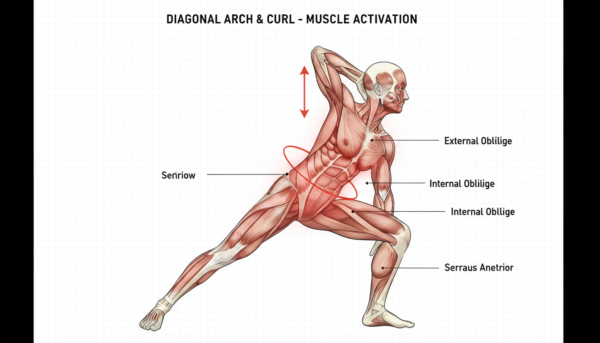
This movement addresses the obliques and the cross-body fascial lines, which often hold trauma and tension that bloat the midsection.
Step-by-Step:
1. Lie on your back. Place your left hand behind your head. Keep knees bent.
2. Inhale: Arch your lower back gently.
3. Exhale: Lift your head/left shoulder and bring your right knee toward your chest. Aim your left elbow toward your right knee. They do not need to touch.
4. The Critical Part: Slowly reverse the motion. Do not drop down. Uncurl inch by inch. Imagine resisting gravity as you lower your head and foot back to the floor.
This eccentric lengthening under load (pandiculation) teaches the oblique muscles to lengthen fully, creating a tighter, more tapered waistline without the bulk of traditional crunches.
8. Somatic Move 4: The Side Bend Release
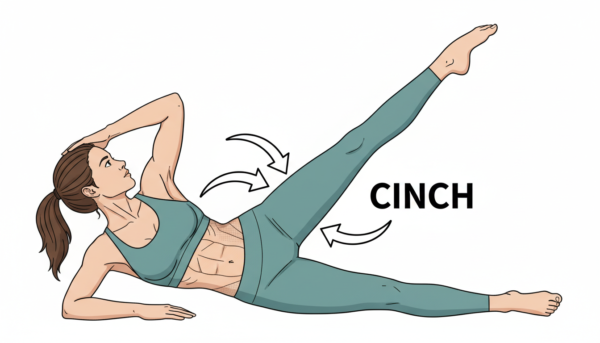
The ‘waist muscles’ (Quadratus Lumborum) often hike one hip up higher than the other, causing functional scoliosis and uneven belly fat distribution. This move balances the hips.
Step-by-Step:
1. Lie on your left side, left arm under your head as a pillow, knees bent at 90 degrees.
2. Reach your right arm over your head, resting it on your left ear (holding the head).
3. Lift: Lift your right foot (keep knees touching) and lift your head/upper body slightly using the muscles of the right waist.
4. Release: Very slowly lower the foot and head back down. Imagine the muscles of your right waist melting like butter.
Why it works: It releases the lateral tension that compresses the torso. When the torso lengthens, the abdomen has more vertical space, instantly reducing the pot-belly look.
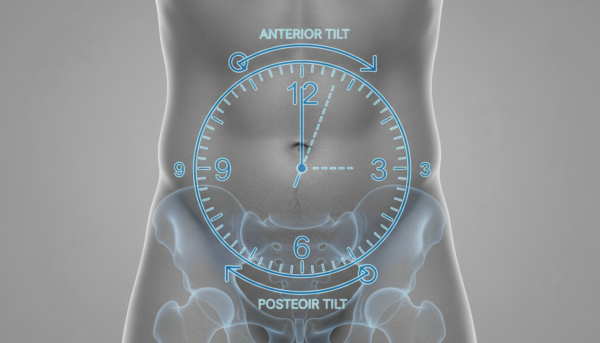
9. Somatic Move 5: The Pelvic Clock
The Pelvic Clock is a subtle mastery of the core. It releases the frozen tension in the pelvic floor and lower abdominals.
Step-by-Step:
1. Lie on your back, knees bent. Imagine a clock face on your lower belly: 12 is your navel, 6 is your pubic bone, 3 and 9 are your hip bones.
2. 12 to 6: Gently tilt your pelvis to press 12 down (flatten back), then arch to press 6 down.
3. 3 to 9: Tilt your pelvis sideways, pressing the left hip (3) down, then the right hip (9) down, without moving your knees excessively.
4. The Circle: Smoothly roll your pelvis around the clock rim: 12-1-2-3… all the way around.
This movement increases circulation to the viscera (organs) and helps break up stagnation in the gut, aiding digestion and reducing bloating.
10. Integrating Breathwork: The Diaphragm Pump
Somatic movement without somatic breathing is incomplete. Cortisol belly is often accompanied by ‘paradoxical breathing’ (sucking the stomach in on inhale). To melt fat, we must activate the Vagus Nerve via the diaphragm.
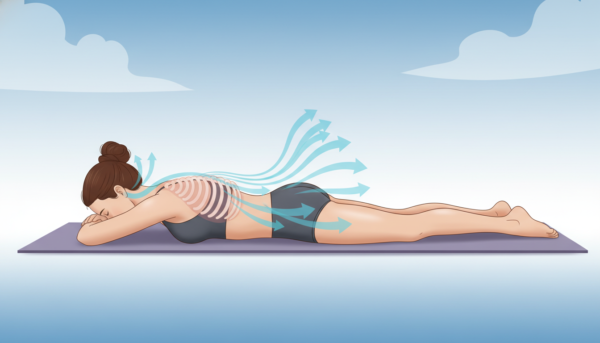
Technique: Crocodile Breathing
1. Lie on your stomach, hands folded under your forehead.
2. Breathe deeply into your lower back and sides.
3. Feel your belly press against the floor on the inhale. This resistance provides feedback to your brain that it is safe to expand the belly.
4. Exhale fully, letting the body sink heavily into the floor.
Performing this for 5 minutes a day lowers cortisol levels significantly, switching the body from fat-storage mode to fat-burning mode.
11. Frequency and Consistency: The ‘Less is More’ Rule
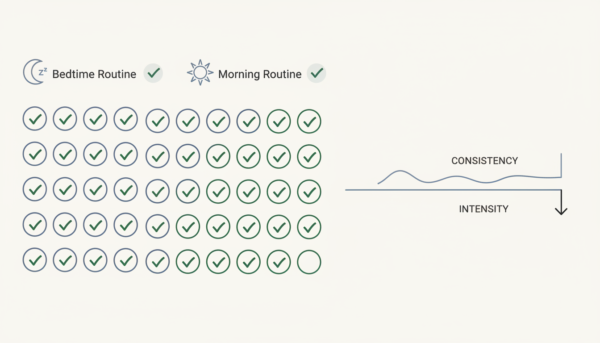
The biggest mistake is treating somatics like a workout. Do not do ‘3 sets of 12 reps’ until you burn. That is the old paradigm.
- Frequency: Daily practice is best, but even 10 minutes helps. The nervous system learns through repetition, not intensity.
- Timing: The best time is immediately before bed (to lower cortisol before sleep, maximizing growth hormone release) or first thing in the morning (to reset resting muscle length for the day).
Sensation Tracking: Stop before* you are tired. If your mind wanders, stop. Somatics requires conscious attention. Mindless movement yields zero results here.
Think of this as dental hygiene for your nervous system. You brush your teeth daily; you should reset your muscle tension daily.
12. Signs Your Nervous System is Resetting
How do you know it’s working if you aren’t sweating? Weight loss from somatics is often a ‘whoosh’ effect rather than a linear drop, as water retention and inflammation subside.
Look for these non-scale victories first:
1. Yawning: Frequent yawning during exercises indicates a shift to the Parasympathetic state.
2. Gurgling Stomach: As the psoas relaxes, digestion reactivates, leading to audible gurgling (borborygmi).
3. Deep Sleep: Improved sleep quality is the #1 indicator that cortisol is dropping.
4. Softer Belly: Your belly may feel ‘squishier’ before it gets smaller. Hard belly fat is inflamed; soft fat is ready to be metabolized.
Trust the process. By healing the stress response, you are removing the biological barrier that has prevented your weight loss for years.
Frequently Asked Questions
Can I really lose belly fat without cardio?
Yes. If your belly fat is driven by cortisol (stress), high-intensity cardio can actually increase it. Somatic exercises lower cortisol, allowing your body to exit ‘storage mode’ and naturally shed visceral fat and water retention.
How long does it take to see results with somatic exercises?
You may feel tension relief and reduced bloating immediately. Visible changes in belly shape typically occur within 4-6 weeks of consistent daily practice as the nervous system resets and inflammation subsides.
Are somatic exercises safe for back pain?
Absolutely. Somatics were originally designed to treat chronic back pain. By releasing the psoas and back muscles gently, you address the root cause of the pain rather than just stretching it.
Do I need to diet while doing these exercises?
While somatics address the stress component, a nutrient-dense diet supports the process. However, somatics help reduce emotional eating and sugar cravings by regulating the nervous system, making healthy eating easier.
Why does my belly feel softer after doing these moves?
A hard, distended belly is often due to inflammation and muscle guarding. As you release tension and lower inflammation, the tissue softens. This is a positive sign that blood flow is returning and fat is becoming mobilizable.
Can I do somatics if I am pregnant or postpartum?
Yes, somatics are very gentle and excellent for postpartum recovery, particularly for Diastasis Recti. However, always consult your doctor, and avoid lying flat on your back for long periods if you are in the second or third trimester.
Is this the same as Yoga or Pilates?
No. Yoga stretches muscles and Pilates strengthens them. Somatics re-educates muscles. It uses ‘pandiculation’ (contracting then slowly releasing) to change the brain’s control over the muscle resting length.
How many times a day should I practice?
Once a day for 15-20 minutes is ideal. Consistency is more important than duration. Doing a few minutes of the ‘Arch and Flatten’ whenever you feel stressed is also highly effective.
You might also like:- Somatic Exercises for Cortisol Belly: The Science of Melting Visceral Fat Through Nervous System Regulation
Discover more from innerspiritglow
Subscribe to get the latest posts sent to your email.

Interesting read! Seeing more VIP-focused platforms like filbet app emerge in the Philippines is smart. Security & personalized service are key – crucial for building trust in online gaming, right? 🤔
This analysis reminds me of teaching complex strategy! Remember, even with great tools like the jljl9 app, solid fundamentals matter. Check out jljl9 games for more insights.
This deep dive into somatics highlights how metabolic stagnation is fundamentally a nervous system issue, not just a caloric one. Viewing the body as a complex, interconnected system-much like optimizing a digital platform-shows that true health comes from regulating the core ‘flow state.’ For those seeking holistic optimization tools, checking out the phttt app download apk might offer a different kind of system reset.
Honestly, the focus on tiered rewards in the product description is smart. It shows they understand player psychology. Check out fly68 legit for a deeper look at their slot options!
Honestly, the focus on user flow makes sense. It’s not just about the bonuses; the structure matters. Check out x777 free 200 online casino for a clearer view!
This platform seems interesting for casual fun! Remember to approach any online gaming like hawkgaming slot purely for entertainment’s sake, not income replacement. Keep that balance in mind! 😊
[4459]Zuka Bet Official Login | Pinakamabilis na GCash Casino sa PH,Sa zuka bet, mabilis ang GCash deposits at withdrawals. I-download ang app para sa legit online slots at matutong maglaro ng baccarat. Mag-register na at magsimula! visit: zuka bet
Interesting overview of the platform mechanics. It’s fascinating how the convenience of payment methods like bKash really impacts user engagement patterns. For more behavioral insights, check out fd77 app.