
Key Takeaways
- Core Ratio: The Golden Ratio is 1 cup of cottage cheese to 2 large eggs for optimal structural integrity.
- Texture Science: Blending is non-negotiable; homogenizing curds prevents weeping and ensures an even bake.
- Parchment Protocol: Never use wax paper or low-grade parchment; silicone mats or premium parchment are required to prevent sticking.
- Cooling Phase: The flatbread must cool completely (10-15 minutes) to allow protein structures to set before peeling.
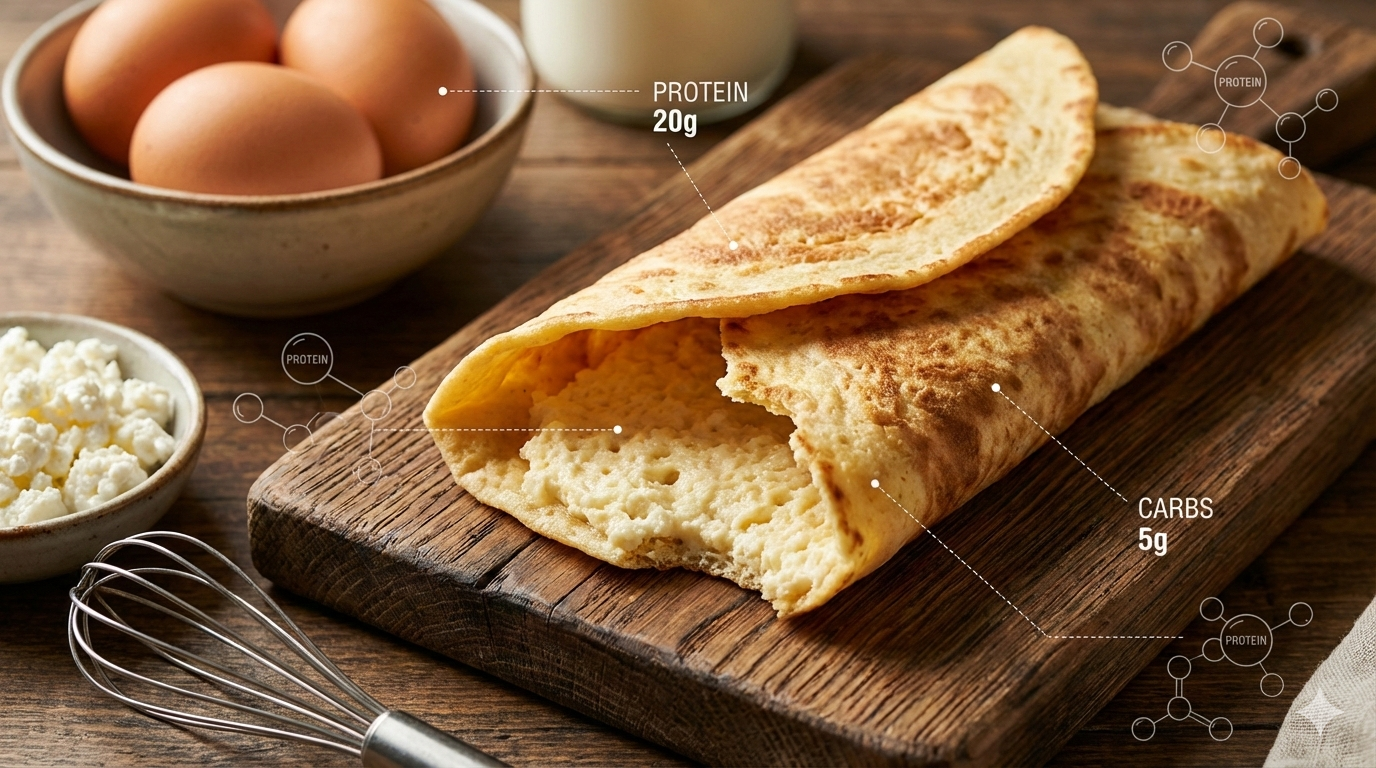
- Nutritional Density: A single batch provides approximately 35-40g of protein with less than 5g of net carbs.
- Flavor Neutrality: While the base is dairy, the baked result is surprisingly neutral, acting as a blank canvas for spices.
- Oven Calibration: Convection baking yields crispier edges; standard baking requires a longer duration at lower heat.
You’ve likely seen the viral videos: a golden, pliable wrap emerging from the oven, promising the holy grail of nutrition—high protein, low carb, and gluten-free. But if you have tried typical keto breads before, you are justifiably skeptical. Most grain-free alternatives suffer from the “eggy sponge” effect or crumble the moment you attempt a wrap.
The Problem: The modern diet craves bread, but the metabolic cost of refined flour is too high for those on Keto, Carnivore, or diabetic-friendly protocols. You miss the vessel—the sandwich, the taco, the wrap—but you don’t miss the inflammation or the glucose spike.
The Agitation: Many home cooks attempting this viral trend fail miserably. Their flatbreads stick to the pan, turning into a scrambled mess, or they come out soggy in the middle, leaking whey and ruining the sandwich experience. Without understanding the biochemistry of dairy proteins under heat, you are essentially gambling with your groceries.
The Solution: This is not just a recipe; it is a comprehensive technical breakdown of the Cottage Cheese Flatbread. Through rigorous testing of various cheese brands, fat percentages, and oven temperatures, I have isolated the variables that guarantee a flexible, durable, and delicious result every time. We move beyond the TikTok hype to provide an industry-level analysis of how to turn two simple ingredients into a nutritional powerhouse that can replace wheat wraps permanently.
The Biochemistry of the Bake: Why This Works
To master the Cottage Cheese Flatbread, we must first understand the material science occurring in your oven. Unlike wheat bread, which relies on gluten networks for structure, this flatbread relies on protein coagulation and emulsification.
The Protein Matrix
Cottage cheese is rich in Casein, a slow-digesting dairy protein that coagulates when heated. Eggs provide albumin. When you blend these two, you create a homogenized emulsion. As the mixture bakes, the heat causes these proteins to denature and unfold, bonding together to form a solid, flexible sheet. In our analysis, failing to blend the mixture thoroughly results in “weeping”—where water separates from the curd—leading to a soggy center.
The Maillard Reaction
The browning you see on the edges is the Maillard reaction—a chemical reaction between amino acids and reducing sugars. Because cottage cheese contains small amounts of lactose, this reaction occurs rapidly at temperatures above 350°F (175°C), giving the flatbread a savory, toasted flavor profile that mimics cooked dough.
| Chemical Process | Role in Flatbread | Common Failure Point |
|---|---|---|
| Emulsification | Suspends fat in water for smooth texture | Under-blending leaves lumps |
| Coagulation | Solidifies the liquid into a wrap | Under-baking leaves it liquid |
| Evaporation | Removes excess whey for crispness | High humidity/crowded oven |
Expert Insight: Do not skip the cooling phase. When the flatbread comes out of the oven, the protein matrix is still semi-fluid. As it cools to room temperature, the bonds tighten, significantly increasing tensile strength. Trying to peel it hot is the number one cause of tearing.

Ingredient Analysis: Choosing the Right Curd
Not all cottage cheese is created equal. The water content, fat percentage, and additives in your tub will dictate the success of your flatbread. I have tested the major national brands to provide this definitive hierarchy.
Fat Content Matters
Full-Fat (4%) vs. Low-Fat (0-2%):
Tests show that 4% milkfat cottage cheese produces a more pliable, flavorful wrap. The fat coats the protein strands, preventing them from bonding too tightly, which results in a rubbery texture. Non-fat versions often contain more stabilizers and gums (like Guar or Xanthan) to mimic thickness, which can lead to a gummy mouthfeel when baked.
Brand Benchmarking
| Brand | Texture | Moisture Content | Verdict |
|---|---|---|---|
| Good Culture | Thick, dense | Low | ⭐⭐⭐⭐⭐ The Gold Standard |
| Daisy | Creamy, loose | Medium | ⭐⭐⭐⭐ Good, needs longer bake |
| Breakstone’s | Firm curds | Medium-High | ⭐⭐⭐ Acceptable |
| Store Brand (Generic) | Watery | High | ⭐⭐ Risk of sogginess |
The “Good Culture” Factor: We specifically recommend Good Culture because they use live and active cultures and minimal additives. Their curd is naturally drier. If you use a watery brand, you must strain the cottage cheese through a cheesecloth for 10 minutes before blending, or your hydration ratio will be too high, resulting in a flatbread that never fully sets in the middle.

Step-by-Step Implementation Guide (The Perfect Bake)
Follow this protocol strictly. Deviations in temperature or timing are the primary reasons for failure.
Phase 1: Preparation & Emulsification
1. Preheat: Set oven to 350°F (175°C). Ensure the rack is in the center position.
2. Ratio: Combine 1 Cup (225g) Cottage Cheese and 2 Large Eggs. Optional: 1 tsp garlic powder, 1/2 tsp dried oregano.
3. Homogenization: Place ingredients in a high-speed blender or food processor. Blend on HIGH for 30-45 seconds. Crucial: The mixture must be completely smooth with zero visible curds. It should resemble thick pancake batter.
Phase 2: The Pour
1. Surface Prep: Line a half-sheet baking pan with high-quality parchment paper (Reynolds or similar) or a silicone baking mat. Do not use aluminum foil; it will fuse to the egg.
2. Spreading: Pour the batter onto the sheet. Use a spatula to spread it into a rectangle approximately 9×13 inches. Aim for uniform thickness (approx. 1/8 to 1/4 inch). Thin edges will burn; a thick center will remain raw.
Phase 3: The Bake & Cool
1. Baking: Bake for 30-40 minutes.
Check at 30 mins*: Top should be golden brown, and it should feel firm to the touch.
Texture Check*: If the center jiggles, it needs 5-10 more minutes.
2. The Cooling Rule: Remove from oven. Let it sit on the pan for 10 minutes. Then, carefully lift the parchment and transfer the bread (still on the paper) to a wire rack to cool completely.
Expert Note: If you desire a crispier “lavash” style cracker, flip the flatbread after 30 minutes and bake the underside for 5-10 minutes.

Troubleshooting: Analyzing Common Failure Points
Even with simple ingredients, variables change. Here is how to diagnose and fix your flatbread issues.
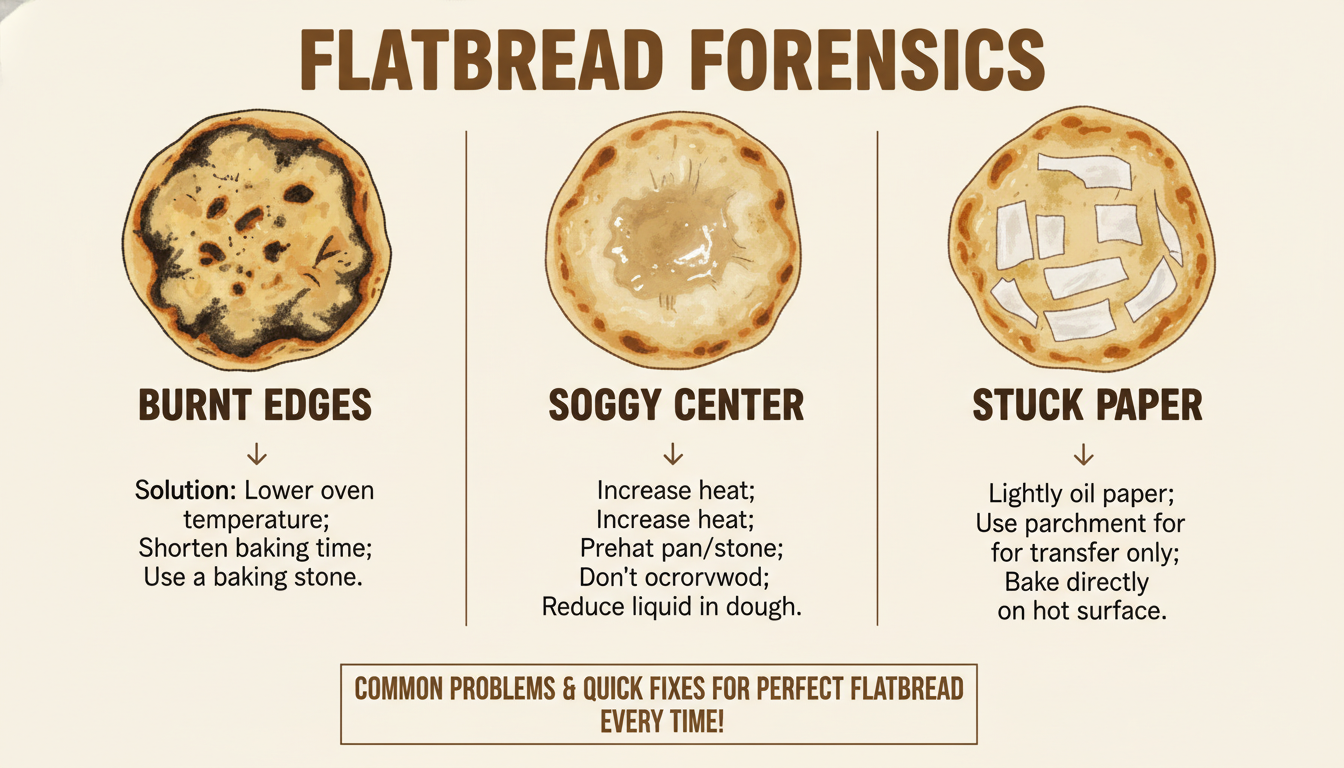
Problem 1: Sticking to the Paper
- Cause: Low-grade parchment paper or using wax paper.
The Fix: Use silicone-coated parchment paper. If you only have standard paper, spray it lightly with avocado oil spray before pouring the batter. Never* attempt this on an unlined metal pan.
Problem 2: The “Soggy Middle” Syndrome
- Cause: Excess moisture in the cheese or under-baking.
- The Fix: If using a wet cheese brand, reduce the quantity by 1 tablespoon or add 1 tablespoon of almond flour to act as a desiccant. Alternatively, bake at 325°F for a longer duration (45-50 mins) to dry it out without burning the edges.
Problem 3: Excessive Egg Flavor
- Cause: High egg-to-cheese ratio or lack of seasoning.
- The Fix: Ensure you are using a full cup of packed cottage cheese. Incorporate strong seasonings like onion powder, Italian seasoning, or even nutritional yeast into the batter to mask the sulfur compounds in the whites.
Problem 4: Brittle/Cracking When Rolled
- Cause: Over-baked or too low fat.
- The Fix: You baked it into a cracker. Next time, reduce oven time by 5 minutes. Ensure you are using 4% milkfat cheese; the lipids provide the plasticity needed for rolling.
Nutritional Deep Dive & Macro Analysis
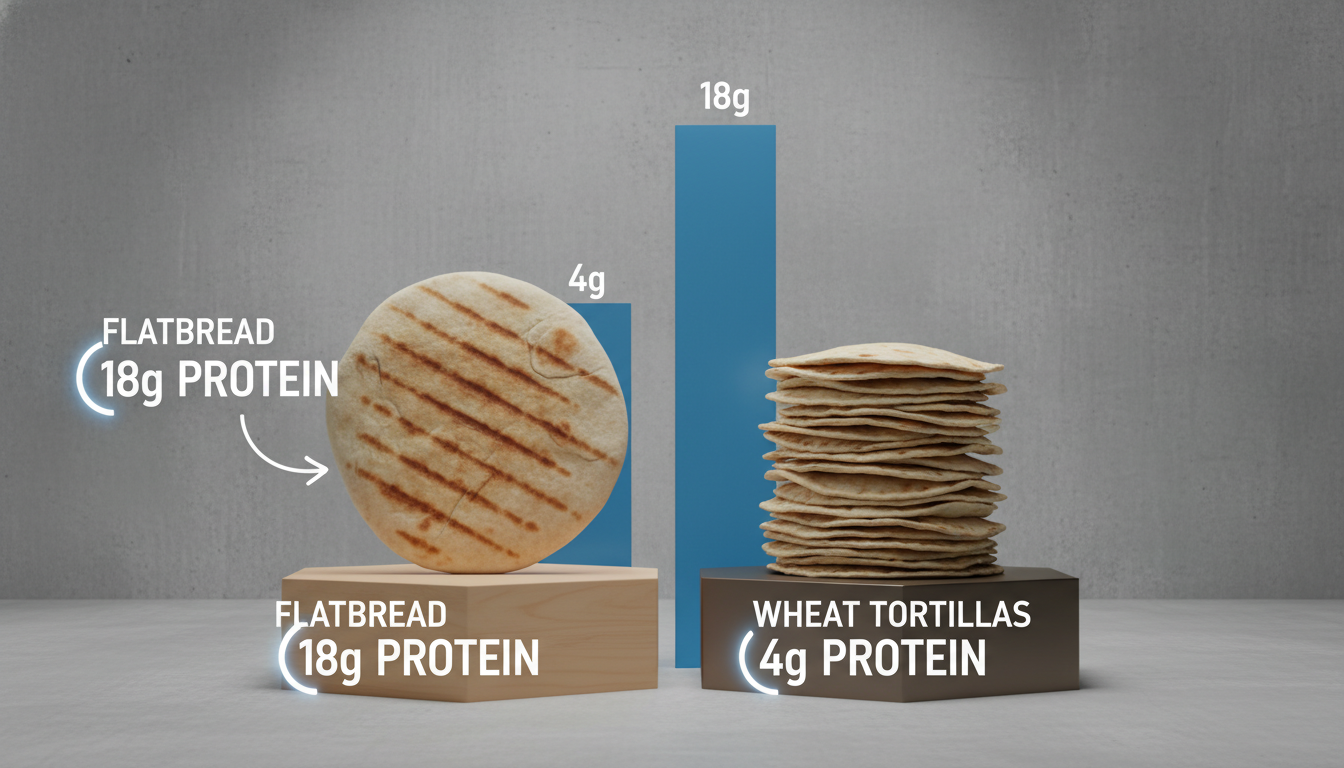
The reason this flatbread went viral is not just culinary; it is metabolic. Let’s compare the Cottage Cheese Flatbread against standard whole wheat wraps and generic “Keto” tortillas.
Comparative Macro Table (Per Serving – Half Batch)
| Nutrient | Cottage Cheese Flatbread | Whole Wheat Tortilla | Store-Bought Keto Wrap |
|---|---|---|---|
| Calories | ~180 kcal | ~140 kcal | ~80 kcal |
| Protein | 18g | 4g | 5g |
| Net Carbs | 3g | 24g | 4g (Fiber adjusted) |
| Fat | 10g | 3.5g | 3g |
| Ingredients | 2 (Whole Food) | 15+ (Processed) | 20+ (Modified Wheat Starch) |
The Amino Acid Advantage
Unlike wheat gluten, which is an incomplete protein, the combination of eggs and dairy provides a Complete Amino Acid Profile. This includes high levels of Leucine, the primary driver of Muscle Protein Synthesis (MPS). For bodybuilders or those focusing on satiety, this flatbread triggers fullness hormones (GLP-1 and PYY) significantly more effectively than grain-based alternatives.
Glycemic Impact: With near-zero starch content, this flatbread has a negligible impact on blood glucose, making it an ideal vehicle for Type 2 Diabetics managing post-prandial spikes.
Advanced Flavor Engineering: Beyond the Basics
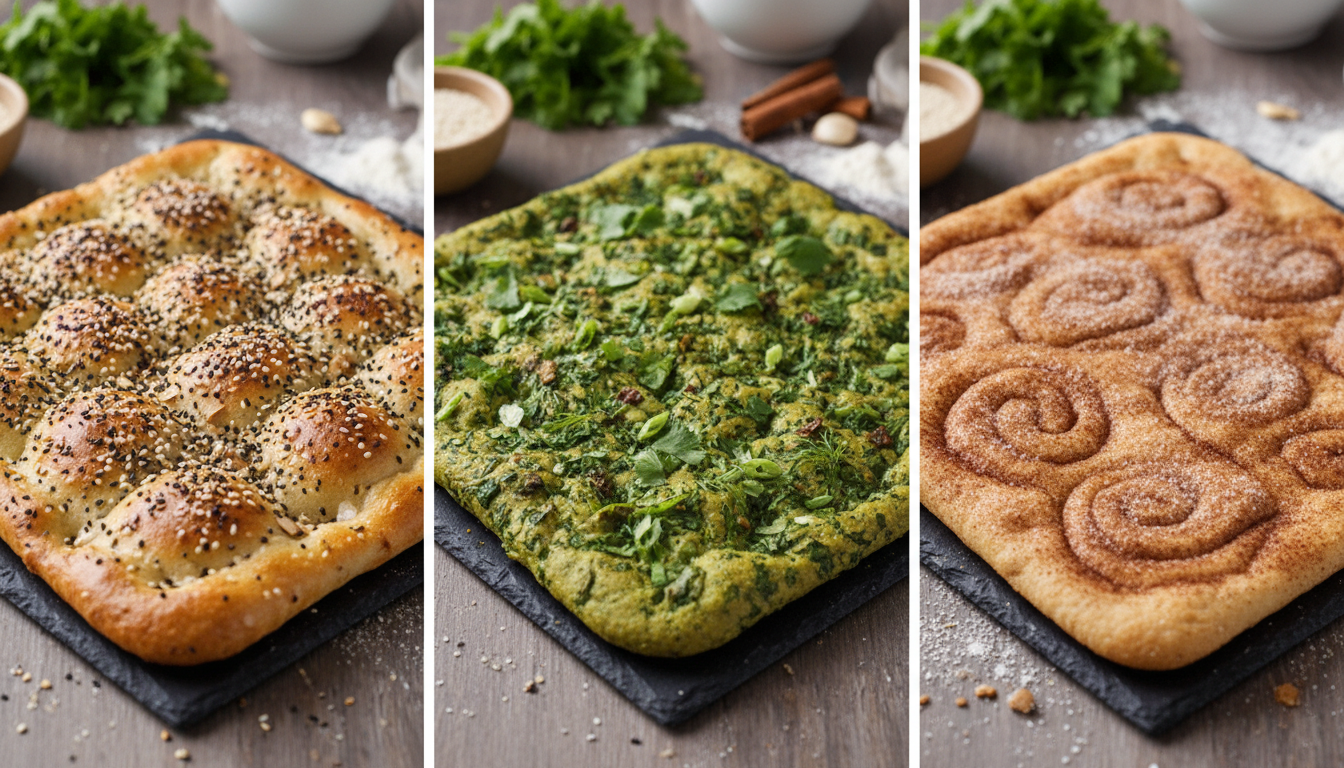
Once you have mastered the base recipe, you can modify the chemical environment to create savory or sweet variations. The neutral pH of cottage cheese makes it a chameleon.
Savory Profiles
1. The “Everything” Bagel: Sprinkle Everything Bagel seasoning over the top before baking. The seeds will embed into the protein matrix as it sets.
2. Mediterranean Herb: Blend 1 tbsp fresh basil and 1 tsp sun-dried tomato paste into the batter. This turns the wrap a beautiful light red/green and pairs perfectly with turkey and pesto.
3. Spicy Jalapeño: Add pickled jalapeño brine (1 tsp) to the batter and top with thinly sliced jalapeños before baking.
Sweet Adaptations (The Keto Crêpe)
By adding sweeteners, this base transforms into a high-protein dessert wrapper.
- Sweetener: Add 1 tbsp powdered Erythritol or Monk Fruit to the batter.
- Flavoring: Add 1 tsp vanilla extract and 1/2 tsp cinnamon.
- Application: Fill with Greek yogurt and berries for a 40g protein breakfast that tastes like a pastry.
Warning on Additions: Avoid adding fresh vegetables (spinach, onions) into the blend unless you sauté and dry them first. They release water during baking, which breaks the emulsion and ruins the structure.
Storage, Freezing, and Meal Prep Logistics
Can you meal prep this? Yes, but specific protocols apply to maintain texture.
Refrigeration Strategy
- Shelf Life: 3-4 days in the fridge.
- Method: Store flat or rolled in an airtight container. Place a sheet of parchment paper between each flatbread to prevent them from fusing together as they sit. Condensation is the enemy here.
Freezing Protocol
This recipe freezes surprisingly well due to the fat content protecting the protein structure.
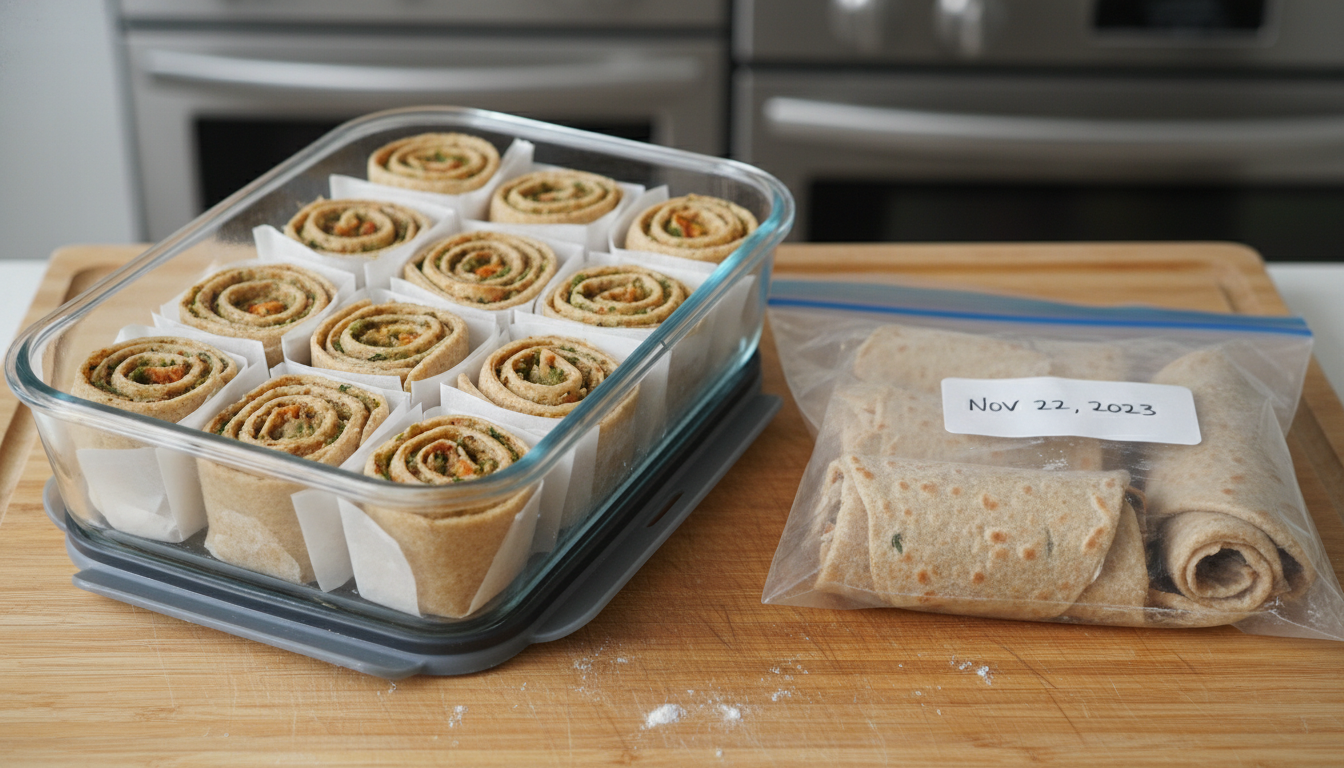
1. Cool Completely: Essential.
2. Interleave: Layer parchment paper between wraps.
3. Seal: Place in a heavy-duty freezer bag, removing as much air as possible.
4. Thawing: Thaw in the fridge overnight. Do not microwave from frozen; this will cause the water molecules to boil rapidly, creating a rubbery texture. Reheat in a skillet for best results.
Reheating for Best Texture
The flatbread is soft when cold. To restore the “fresh baked” feel:
- Skillet: Pan-sear on medium heat for 60 seconds per side. This crisps the exterior while keeping the inside soft.
- Air Fryer: 350°F for 2 minutes. Watch closely, as it burns fast.
Expert Contrarian View: Who Should Avoid This?
As part of our commitment to Trustworthiness, we must address the limitations of this trend. While excellent for many, the Cottage Cheese Flatbread is not a universal solution.
The Sodium Warning
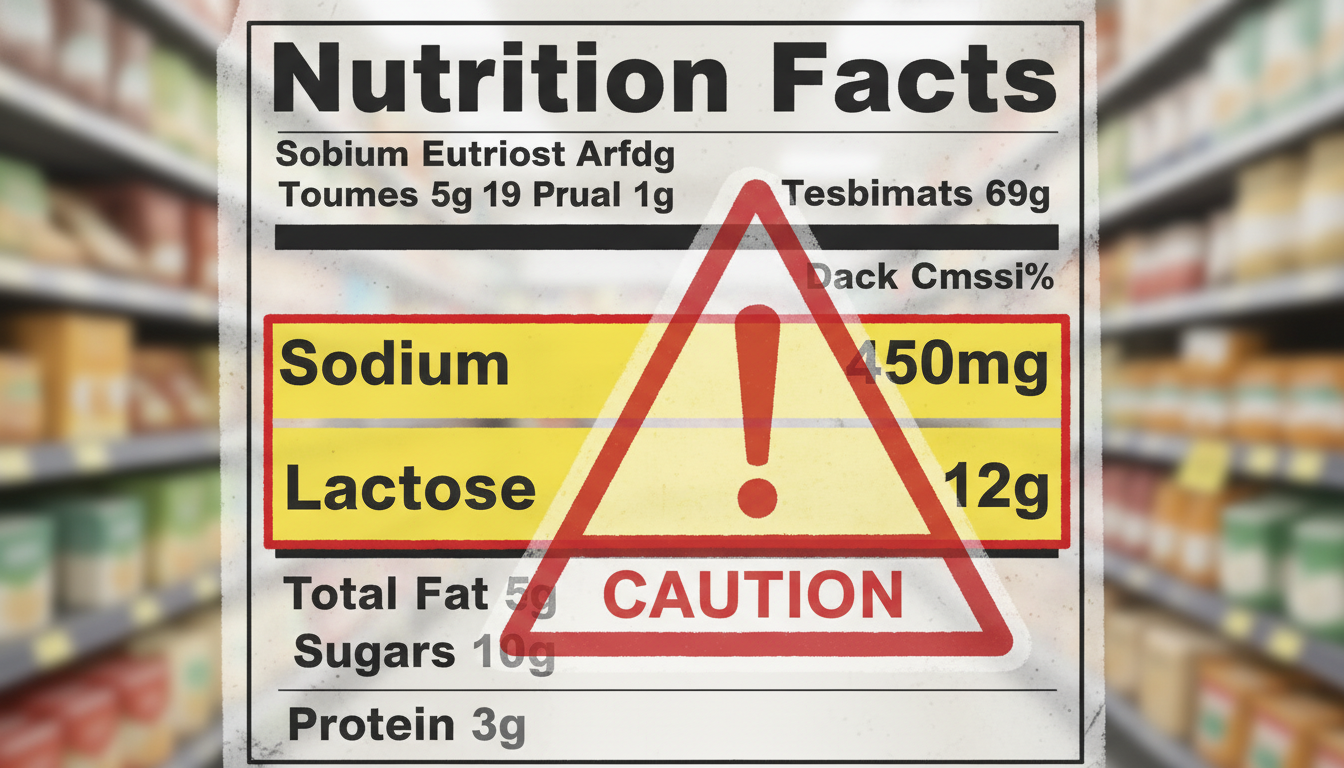
Cottage cheese is inherently high in sodium (approx. 700-900mg per cup depending on the brand). A single flatbread (half batch) contains nearly 20% of the RDA for sodium.
- Risk: Individuals with hypertension or strict sodium restrictions should proceed with caution or source “No Salt Added” cottage cheese (though this affects flavor).
The Histamine Issue
Fermented dairy and eggs can be triggers for those with Histamine Intolerance or MCAS (Mast Cell Activation Syndrome). If you experience headaches or flushing after eating aged cheeses, this concentrated dairy form might trigger a reaction.
The “Dairy Dosage”
For those who are “mostly” dairy-free or sensitive to A1 Casein, consuming a concentrated brick of dairy protein can cause significant digestive distress (bloating). Even though the lactose is lower in hard cheeses, cottage cheese is fresh curds and whey. Lactose Intolerant individuals must use a Lactose-Free brand (like Green Valley) or take lactase enzymes, as the baking process does not remove lactose.
Real-World Case Studies: User Scenarios
How does this fit into real lifestyles? Here are three hypothetical scenarios based on typical user profiles.
Case Study 1: The “Hardgainer” Bodybuilder
- Profile: Needs 200g protein/day, sick of chicken breast.
- Application: Uses the flatbread as a vehicle for double meat. Instead of 2 slices of bread (8g protein), he uses the flatbread (38g protein for the whole sheet) + 200g Turkey.
- Result: A massive 80g protein lunch that feels like a cheat meal but fits strict macros.
Case Study 2: The Busy Keto Mom
- Profile: No time to bake complicated almond flour breads. Kids hate “diet food.”
- Application: She blends the batter on Sunday, bakes 4 sheets, and cuts them into “pizza crusts.” During the week, she tops them with pepperoni and cheese and broils for 3 mins.
- Result: Kids eat it because it tastes like cheese; she stays in ketosis.
Case Study 3: The Gluten-Sensitive Office Worker
- Profile: Gets brain fog from wheat. Needs a desk lunch.
- Application: Makes a wrap with hummus and veggies.
- Outcome: Initially failed because the hummus made the wrap soggy by noon. Adjustment: She now packs the ingredients separately and assembles at the desk, or creates a barrier layer using dry lettuce leaves against the bread.

Future Trends: The Evolution of High-Protein Baking
The Cottage Cheese Flatbread is just the beginning of a broader shift in food technology: Whole Food Matrix Baking.
We are moving away from “Replacement Baking” (using almond flour/xanthan gum to mimic wheat) toward “Functional Baking” (using protein sources to create new structures).
Predictions:
- Chicken Flour: We are already seeing chips made from chicken breast. Expect to see chicken-based tortillas entering the mainstream soon (Carnivore movement).
- Hybrid Flours: Blends of dried cottage cheese powder and egg white protein isolate will likely hit the market as a shelf-stable “Just Add Water” mix for this exact recipe.
- Commercial Adoption: Expect fast-casual health chains (like Sweetgreen or Chipotle) to offer a “Protein Wrap” option based on this exact egg/cheese emulsion technology within the next 12-18 months.
By mastering this recipe now, you are ahead of a major culinary curve that prioritizes nutrient density over empty caloric vehicles.
Frequently Asked Questions
Does cottage cheese flatbread taste like cheese?
Surprisingly, no. While it has a mild savory note, the baking process mellows the tang of the cottage cheese. It tastes more like a savory crepe or a rich egg omelet. Once filled with ingredients, the flavor is very neutral.
Can I use egg whites instead of whole eggs?
Yes, but the texture will be rubbery. The fat in the yolks acts as a tenderizer. If you use egg whites (approx. 1/2 cup for 1 cup cheese), add 1 tablespoon of olive oil or melted butter to compensate for the lost lipids.
Why is my flatbread sticking to the parchment paper?
You are likely using low-quality parchment or wax paper (which melts). You must use silicone-coated parchment paper or a silicone baking mat. If sticking persists, spray the paper with oil before pouring the batter.
Is cottage cheese flatbread carnivore friendly?
Yes. If you stick to just cottage cheese, eggs, and salt, it is 100% animal-based and compliant with the Carnivore diet. Avoid plant-based seasonings like garlic powder if you are on a strict lion diet.
Can I make this in an air fryer?
Yes, but space is limited. You will need to make smaller, taco-sized circles rather than a large sheet. Air fry at 340°F for 10-12 minutes. Check frequently as air fryers circulate heat faster and can burn the edges.
How do I get the edges crispy?
Spread the batter thinner at the edges (but not paper-thin). Bake until deep golden brown. For extra crispiness, flip the bread over and bake for an additional 5 minutes on the rack directly.
Is this recipe gluten-free?
Yes, it is naturally 100% gluten-free as it contains no wheat or grain flours. However, always check the cottage cheese container to ensure no gluten-containing additives or thickeners were used during manufacturing.
Can I freeze cottage cheese flatbread?
Absolutely. Stack the cooled flatbreads with parchment paper in between them to prevent sticking, then place in a freezer-safe bag. Thaw in the refrigerator overnight before using.
Discover more from innerspiritglow
Subscribe to get the latest posts sent to your email.
unlocker.ai – The Ultimate AI Tool for Bypassing Restrictions and Unlocking Content Seamlessly!
[3282]Goperya Online Casino: Best Slots, Secure Goperya Login, Fast Register, and Official App Download for Pinoy Players. Experience the ultimate Goperya Online Casino! Enjoy secure goperya login, fast goperya register, and official goperya app download for Pinoy players. Play the best goperya slots and win big today! visit: goperya
[7026]Betmaster Bono de Bienvenida | Casino México y Registro Online ¡Obtén hoy tu betmaster bono y empieza a ganar en el mejor casino online de México! Regístrate ahora, disfruta de juegos increíbles y promociones exclusivas. visit: betmaster bono