
Key Takeaways
- Immediate Debloating: targeted massage reduces water retention and gas within minutes.
- Immune System Boost: 70% of the immune system resides in the gut; massage stimulates lymph flow.
- Proper Technique Matters: Always massage clockwise to mimic natural peristalsis.
- Open the Terminus First: You must clear the collarbone lymph nodes before massaging the stomach.
- Contraindications: Avoid during acute inflammation, pregnancy (without modification), or recent surgery.
- The ‘I Love U’ Stroke: The gold standard technique for moving stool and trapped gas.
- Hydration is Key: Drinking water post-massage is non-negotiable to flush toxins.
Does your stomach feel tight, distended, or uncomfortable after meals? You are not alone. Chronic bloating affects millions, often stemming from a sluggish lymphatic system and poor digestion. While diet plays a role, mechanical stimulation is the missing link for many.
Enter Lymphatic Stomach Massage—a non-invasive, powerful technique that manually encourages the drainage of excess fluid and toxins from the abdominal cavity. Unlike deep tissue massage, this modality uses specific, rhythmic strokes to target the lymph nodes and gut motility.
In this comprehensive guide, we move beyond basic advice. You will learn the anatomy of abdominal lymphatics, safety protocols, and a precise 11-step protocol to debloat fast. Whether you are dealing with IBS, post-travel swelling, or just want a flatter tummy, this method is your 5-minute solution.
1. Understanding the Abdominal Lymphatic System
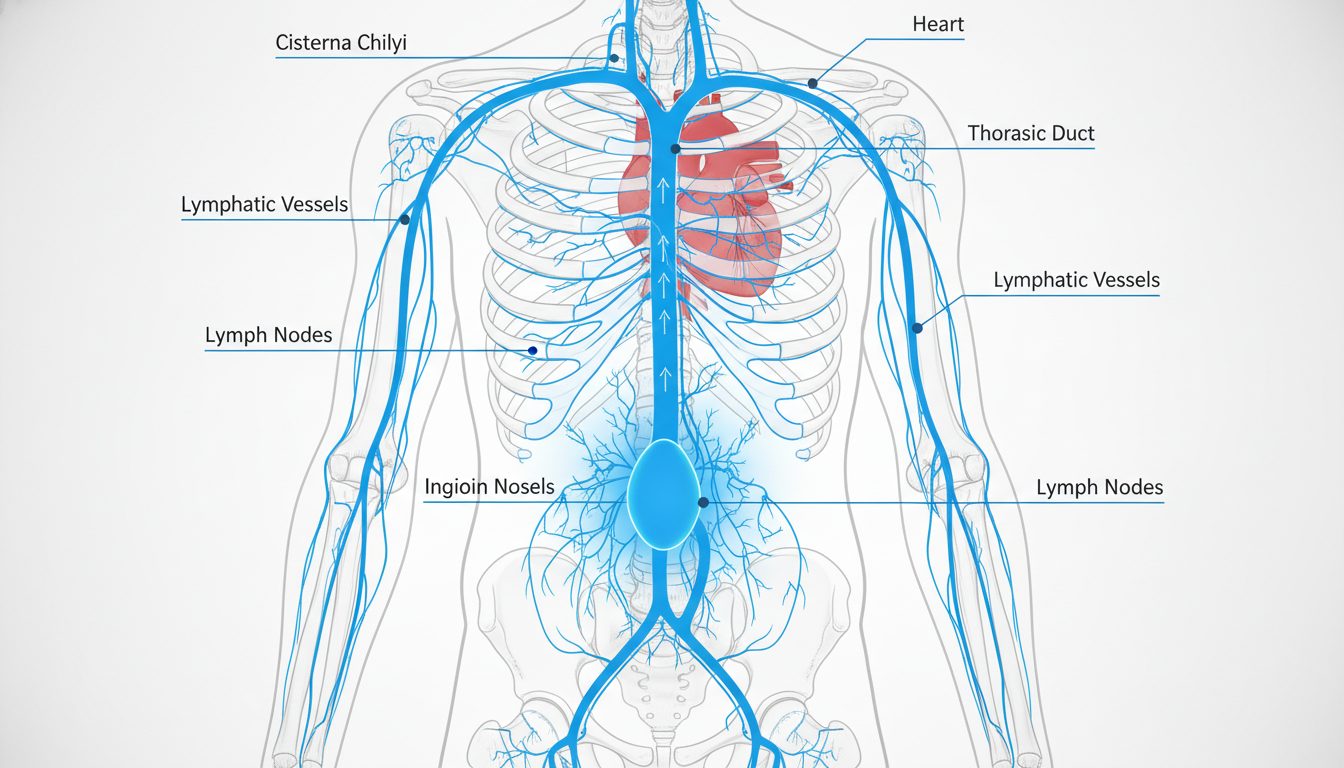
To perform an effective lymphatic stomach massage, you must first understand what you are manipulating. The lymphatic system is the body’s sewage processing plant, but unlike the heart, it has no pump. It relies on muscle movement and breath to circulate fluid.
The Cisterna Chyli
The star of abdominal drainage is the Cisterna Chyli. Located deep in the abdomen, roughly between the navel and the ribcage, this is a dilated sac that acts as a reservoir for lymph fluid flowing up from the lower body and the gut.
- Function: It collects lymph from the two lumbar lymphatic trunks and the intestinal trunk.
- Why it matters: If this reservoir is stagnant, your stomach retains fluid, leading to that ‘puffy’ look and feeling of heaviness.
Superficial vs. Deep Nodes
Your abdomen contains both superficial nodes (in the subcutaneous fat) and deep nodes (surrounding organs).
Key areas to target:
- Inguinal Nodes: Located in the groin crease.
- Axillary Nodes: Located in the armpits.
- Peyer’s Patches: Lymphoid tissue in the small intestine responsible for monitoring intestinal bacteria.
Stimulating these areas manually reduces visceral hypersensitivity and accelerates the removal of metabolic waste products known as lymph load.
2. The Science: Why This Debloats You Fast
Why does a 5-minute stomach massage work faster than a detox tea? The answer lies in peristalsis and fluid dynamics.
1. Mechanical Activation of Peristalsis
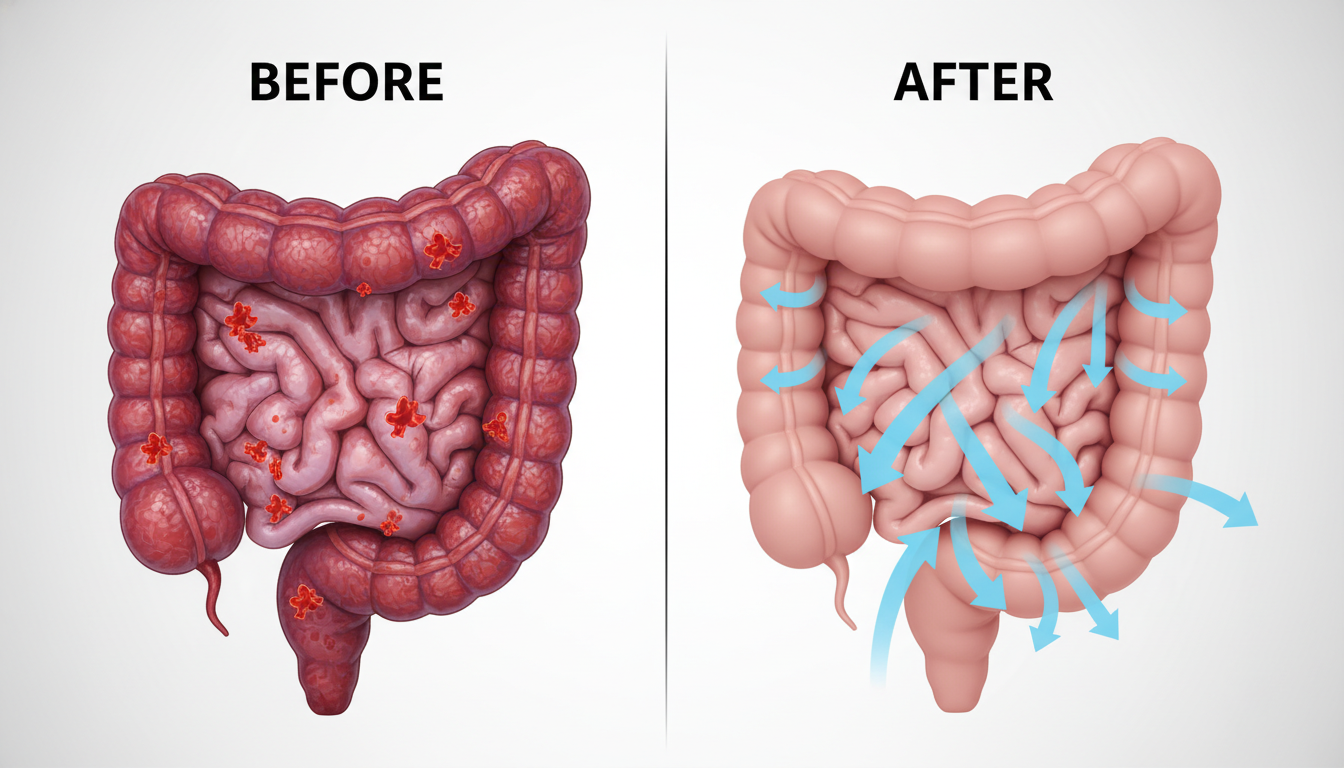
Peristalsis is the wave-like muscle contraction that moves food through the digestive tract. Stress, sedentary lifestyles, and processed foods can slow this process (gastroparesis). Rhythmic circular massage mechanically mimics these contractions, physically pushing trapped gas and stool through the colon.
2. Reduction of Water Retention
Bloating is often a mix of gas and edema (water retention) in the abdominal tissues. By applying light, directional pressure, you increase the lymphangiomotoricity—the contraction rate of lymph vessels. This moves stagnant interstitial fluid into the lymphatic capillaries, where it can be processed and excreted by the kidneys.
Clinical Insight: Studies suggest that abdominal massage can significantly decrease the severity of gastrointestinal symptoms and increase bowel movement frequency in patients with constipation.
3. Safety First: Contraindications & Precautions
Before you apply oil and start massaging, you must rule out conditions where abdominal massage could be harmful. While safe for most, lymphatic stomach massage is potent and moves fluids rapidly.
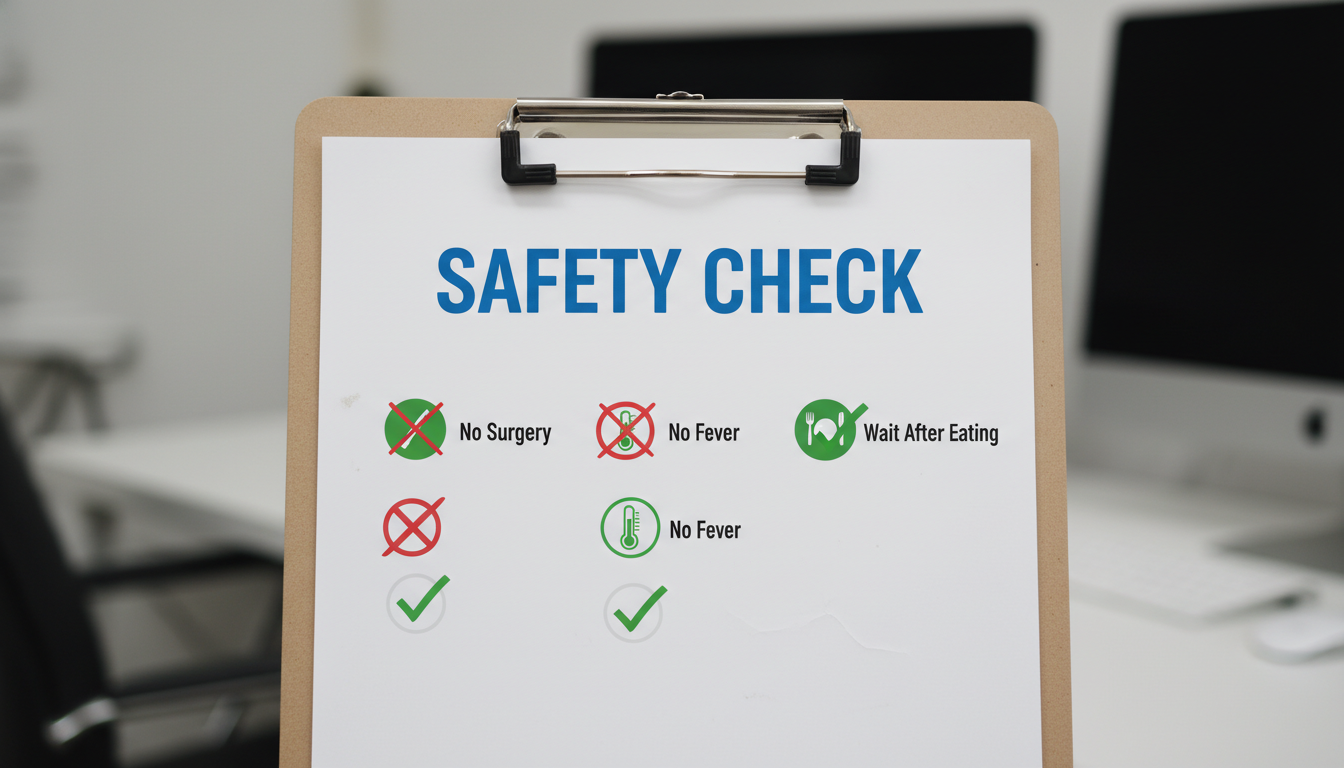
Absolute Contraindications (DO NOT Massage)
- Acute Infection: If you have a fever or active stomach flu, massage can spread the infection.
- Unexplained Pain: Sharp, severe pain in the abdomen (could be appendicitis or obstruction).
- Recent Surgery: Wait at least 6-8 weeks post-surgery or until cleared by a surgeon.
- Thrombosis: History of blood clots in the legs or pelvis.
- Congestive Heart Failure: Moving too much fluid back to the heart can overwhelm a compromised system.
Precautions
- Pregnancy: The techniques here must be modified. Avoid deep pressure and focus only on light, superficial skin stretching.
- Menstruation: Massage can increase flow. It helps cramps but may cause heavier bleeding for some.
- Eating: Wait at least 1 hour after a heavy meal to avoid nausea.
4. Preparation: Oil, Positioning & Environment
The success of your lymphatic massage depends on the environment. You cannot perform this effectively while standing or stressed.
The Setup
1. Lie Down: Lie flat on your back on a firm surface (yoga mat or bed).
2. Knee Support: Place a pillow under your knees. This relaxes the abdominal muscles (rectus abdominis), allowing deeper access to the organs.
3. Skin Contact: This must be done skin-on-skin. Do not massage over clothes.
The Medium (Oils)
You need ‘slip’ to avoid dragging the skin, which damages superficial lymph capillaries.
Best Oils for Stomach Massage:
- Castor Oil: Highly penetrating and anti-inflammatory. Excellent for reducing cysts and fibroids over time.
- Coconut Oil: Antimicrobial and easy to glide.
- Magnesium Oil: If your bloating is cramp-related, magnesium aids muscle relaxation instantly.
Pro Tip: Warm the oil in your hands for 10 seconds before touching your stomach to prevent the muscles from tensing up due to cold shock.

5. Step 1: Open the Terminus (The Neck Connection)
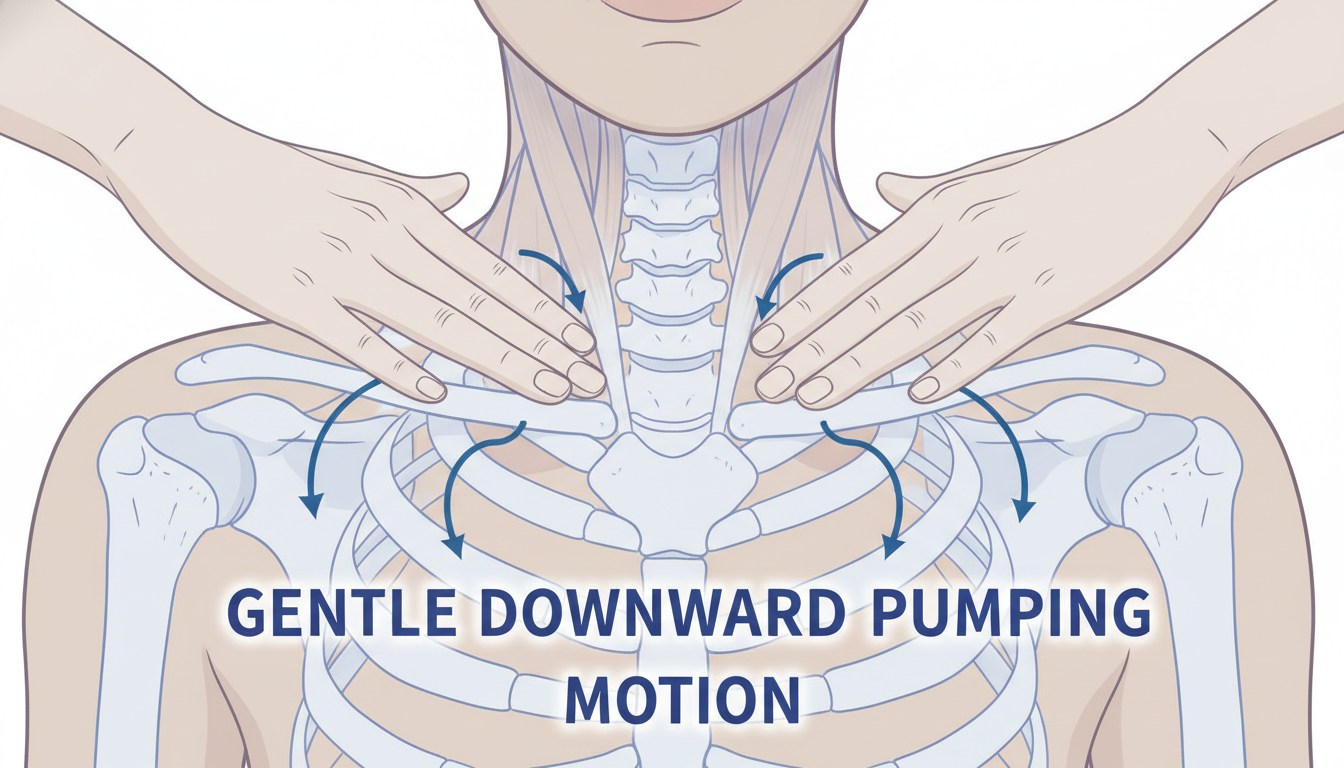
This is the most critical step that 90% of people skip. You cannot drain the stomach if the drain pipe (the neck) is clogged.
Why the Neck?
The entire lymphatic system drains into the subclavian veins, located just behind your collarbones. If these nodes are congested, fluid pushed up from the stomach has nowhere to go.
The Technique: Supraclavicular Pumping
1. Cross your hands over your chest.
2. Place your fingers in the soft hollow spot just above your collarbones.
3. Action: Gently press down and pulse (pump) 10-15 times.
4. Pressure: Feather-light. You are moving skin, not muscle.
Think of this as uncorking a bottle. Once the ‘cork’ is removed at the neck, the fluid from the abdomen can flow upward freely.
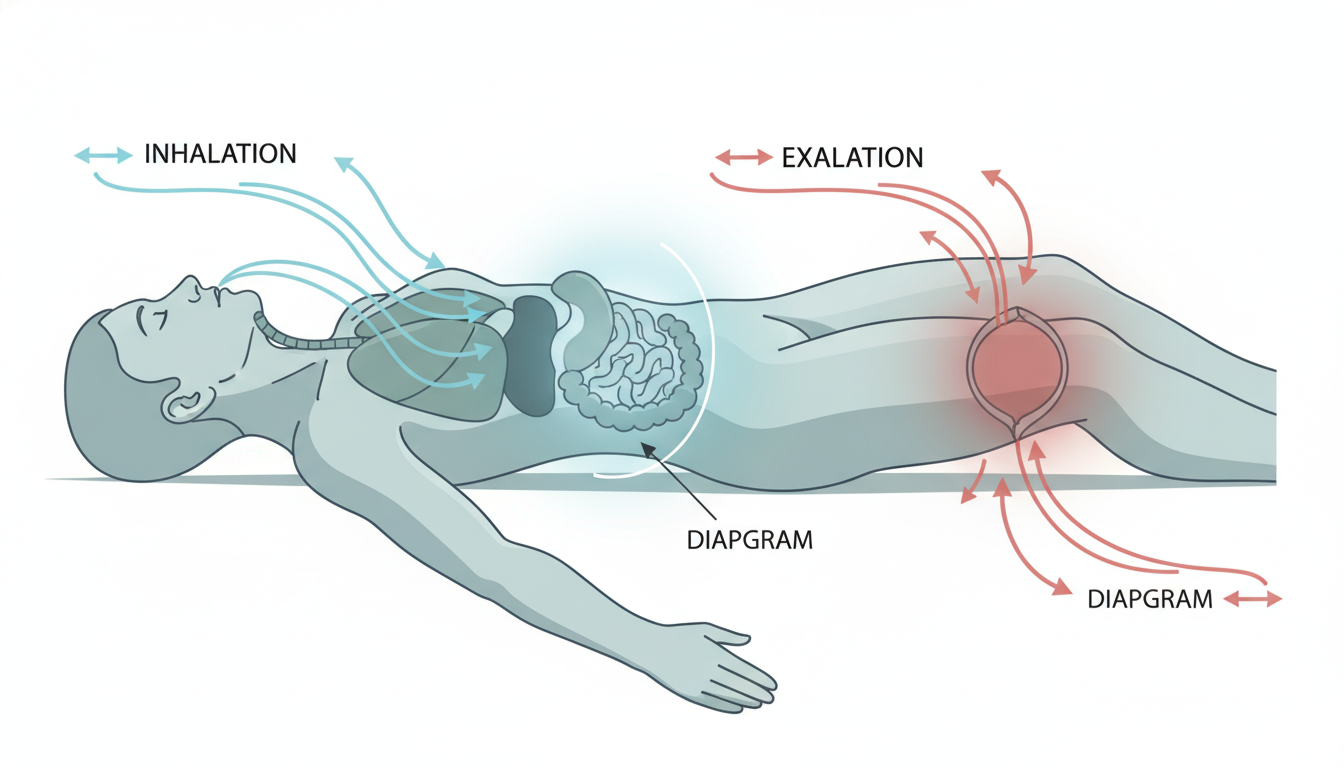
6. Step 2: Diaphragmatic ‘Belly’ Breathing
The lymphatic system lacks a heart to pump it, but it has the diaphragm. Deep belly breathing changes the pressure in the thoracic and abdominal cavities, creating a vacuum effect that pulls lymph fluid upward.
The 4-7-8 Breathing Technique
Before touching your stomach, engage the pump:
1. Place hands on your lower belly.
2. Inhale through the nose for 4 seconds. Feel your belly rise significantly (not your chest).
3. Hold the breath for 7 seconds. This increases intra-abdominal pressure.
4. Exhale forcefully through the mouth for 8 seconds, imagining you are blowing out a candle. Feel the belly button sink toward the spine.
Repeat this cycle 5 times. This oxygenates the blood and manually massages the internal organs via the diaphragm.
7. Step 3: Stimulate the Inguinal Nodes (Groin)
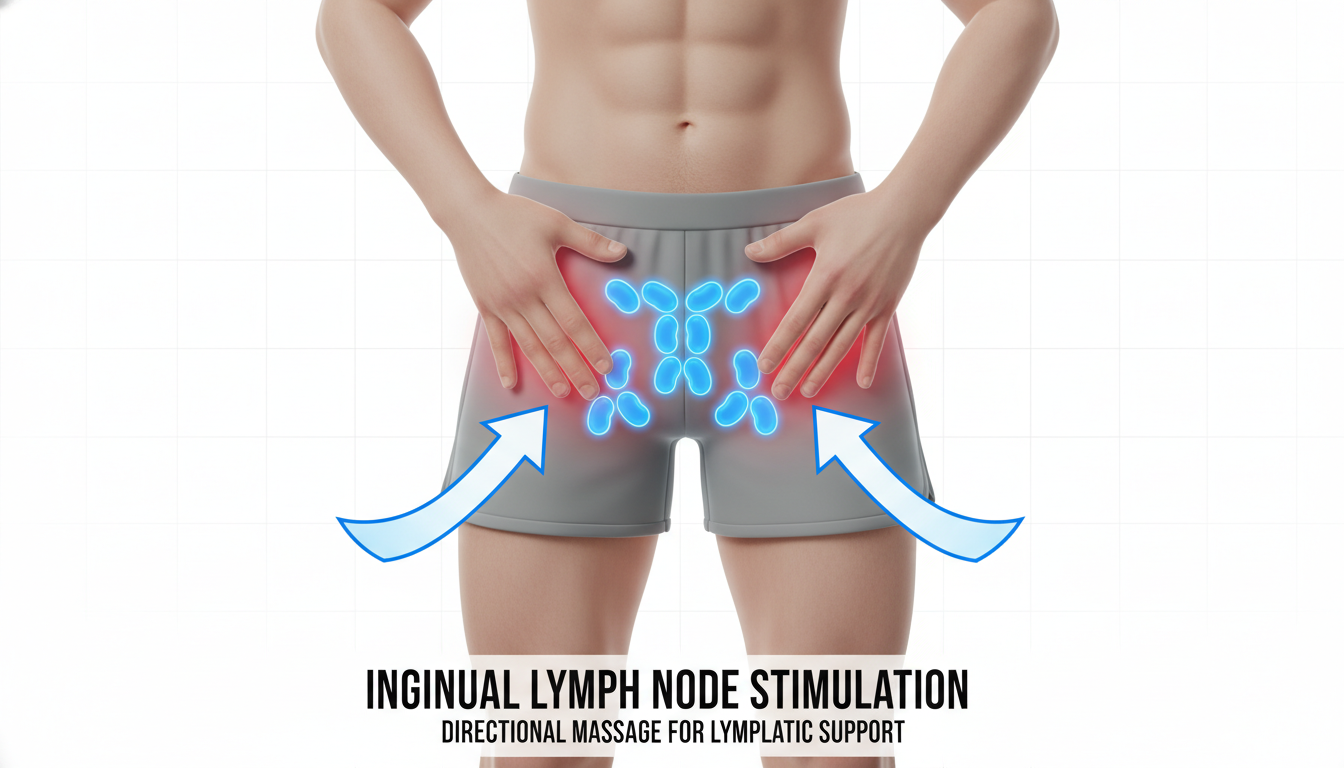
Now we open the lower drains. The inguinal lymph nodes are located in the crease where your thigh meets your pelvis. These nodes are responsible for draining the lower abdominal wall and the legs.
The Technique
1. Locate the ‘bikini line’ crease on both sides.
2. Place your flat palms or four fingers directly on the crease.
3. Action: Gently pump or circle the skin.
4. Direction: Towards the midline of the body and slightly upward.
5. Repetitions: 10-15 pumps.
By clearing these nodes, you ensure that any fluid pushed downward during the massage has a clear exit path, preventing congestion in the lower pelvic bowl.
8. Step 4: The Clockwise Colon Sweep
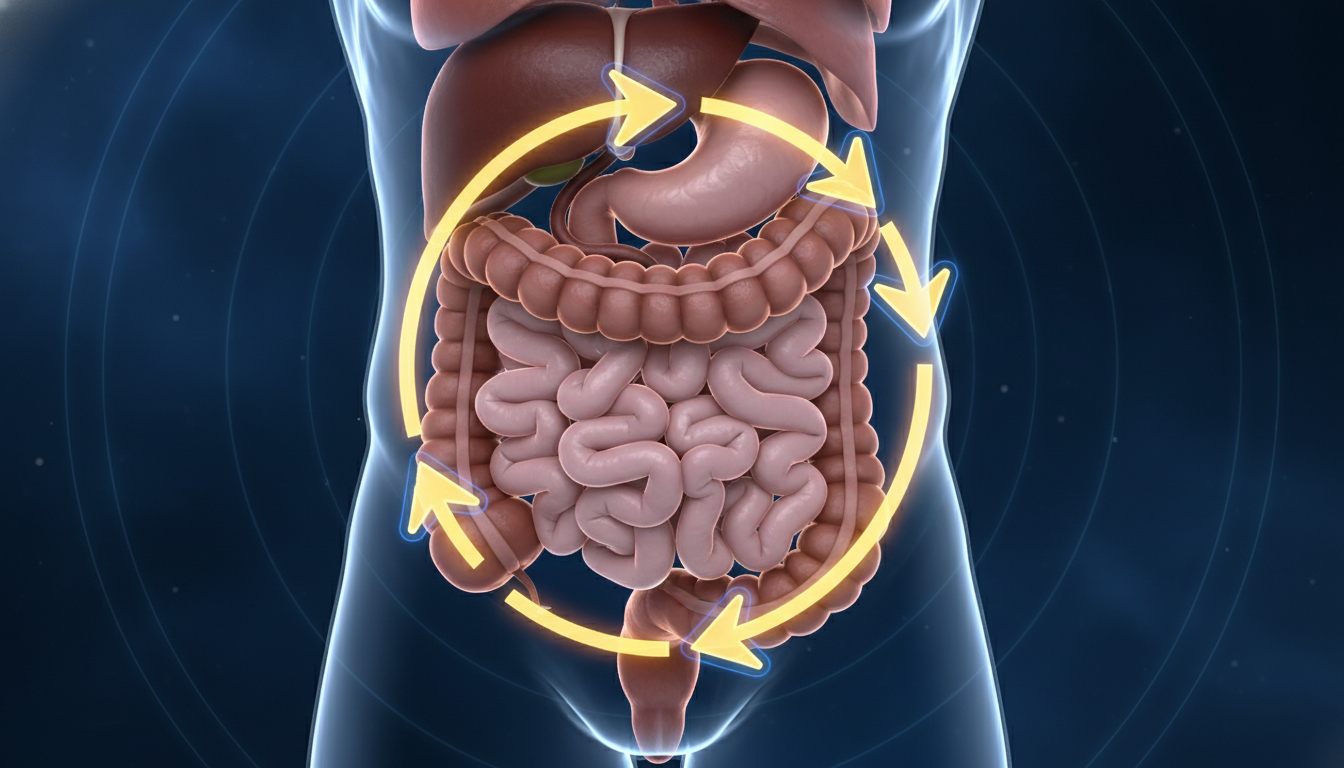
This is the foundational movement of abdominal massage. The large intestine (colon) ascends on the right side of your body, crosses under the ribs, and descends on the left side. To aid digestion, you must always massage clockwise.
The Technique
1. Apply your oil.
2. Place your flat palm on your belly button.
3. Begin making large, slow circles using the whole hand.
4. Path:
- Up the right side (Ascending Colon).
- Across the top, under the ribs (Transverse Colon).
- Down the left side (Descending Colon).
5. Pressure: Moderate. You want to feel the firmness of the gut but cause no pain.
6. Duration: 1 to 2 minutes continuously.
This motion manually pushes gas pockets toward the exit and encourages the smooth muscle of the bowel to contract.
9. Step 5: The ‘I Love U’ Stroke
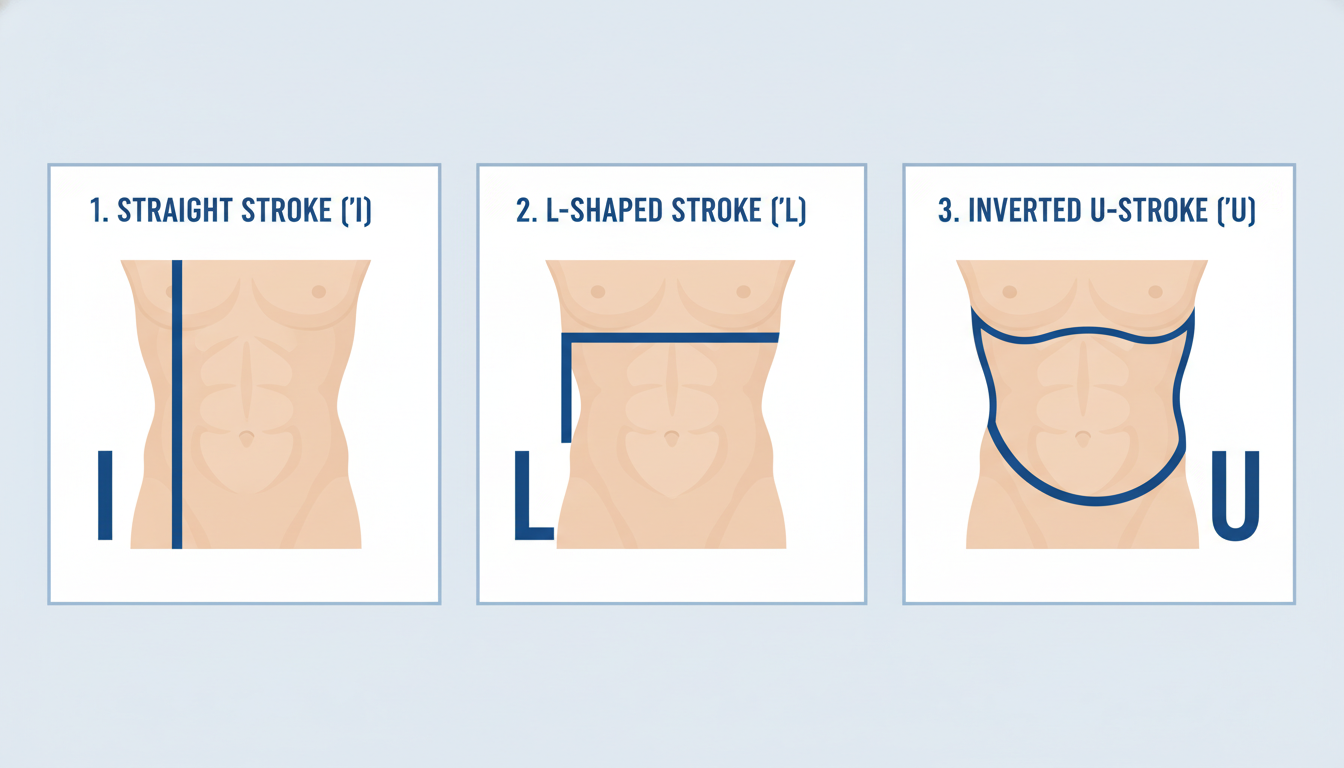
The ‘I Love U’ (or I-L-U) massage is a specific sequence used by physical therapists to treat constipation and impacted stool. It breaks the colon sweep into three distinct strokes.
The ‘I’ Stroke (Descending Colon)
- Start on your left side, just below the ribs.
- Stroke straight down to the left hip bone.
- Repeat 10 times. (This clears the exit first).
The ‘L’ Stroke (Transverse + Descending)
- Start on your right side, just below the ribs.
- Stroke across to the left side, then down to the left hip.
- This creates an inverted ‘L’.
- Repeat 10 times.
The ‘U’ Stroke (Full Colon)
- Start at the right hip bone.
- Stroke up to the right ribs, across to the left ribs, and down to the left hip.
- This creates an inverted ‘U’.
- Repeat 10 times.
This sequence follows the logic of clearing the ‘traffic jam’ at the exit before sending more ‘cars’ (waste) down the road.
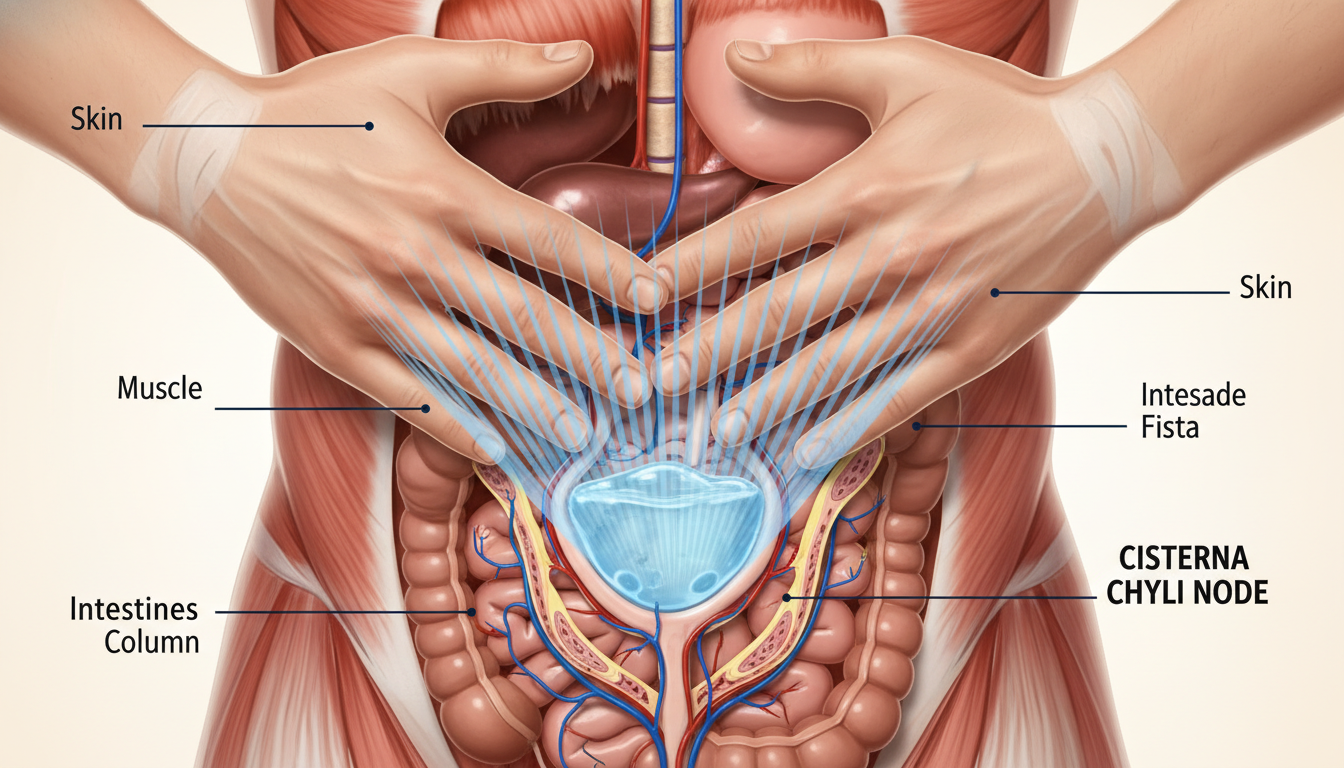
10. Step 6: Targeted Pumping of the Cisterna Chyli
Now we target the deep lymphatic reservoir we discussed in section 1. This move is subtle but powerful for deep debloating.
The Technique
1. Locate the point halfway between your belly button and the bottom of your sternum (breastbone).
2. Place your fingers of both hands deep into this soft area.
3. Exhale completely.
4. As you exhale, sink your fingers deeper (gently) into the abdomen toward the spine.
5. Inhale, and let your belly rise against the resistance of your fingers.
6. Release.
Repeat this deep pulsation 5 times. This manual pump stimulates the Cisterna Chyli to flush its contents upward into the thoracic duct.
11. Post-Massage Care & Frequency
You have mobilized toxins and stagnant fluid; now you must help your body eliminate them. Neglecting aftercare can lead to a ‘detox headache’ or nausea.
Immediate Aftercare
- Hydrate: Drink a large glass of warm water (roughly 16oz) immediately. This flushes the kidneys, which are now filtering the lymph load you just moved.
- Stay Upright: Do not go to sleep immediately. Mild movement, like walking, helps keep the lymph circulating.
Frequency: How often should you do this?
- For Acute Bloating: Perform once a day, ideally before bed or in the morning before food.
- For Maintenance: 3 times a week is sufficient to keep digestion regular.
- For Constipation: Perform twice daily (morning and night) until regularity returns.
Consistency is key. The lymphatic system can be trained; the more frequently you guide the flow, the more efficient it becomes on its own.

Frequently Asked Questions
Can lymphatic stomach massage help with weight loss?
Yes, but indirectly. It does not burn fat cells. However, it significantly reduces water weight and inflammation, which can take inches off the waistline immediately. Long-term, improved digestion and cortisol reduction support metabolic health.
Does this massage hurt?
No. Lymphatic massage should never be painful. The lymph vessels are just under the skin. Deep pressure is used for the colon (I-L-U strokes), but it should feel like ‘good’ pressure, not sharp pain. If it hurts, stop.
Can I do stomach massage after eating?
It is best to wait at least 60 to 90 minutes after a heavy meal. Massaging a full stomach can interfere with the chemical process of digestion and cause nausea or reflux.
Is it normal to hear gurgling noises?
Yes! Gurgling noises (borborygmi) are a great sign. It means gas and fluid are moving through the intestines and peristalsis is active. You want to hear these sounds.
Can this help with IBS?
Many IBS sufferers find relief with abdominal massage. It helps regulate bowel movements (helping both constipation and diarrhea) and reduces visceral hypersensitivity. However, avoid massage during a painful flare-up.
Why do I need to open the neck nodes first?
The neck nodes (terminus) are the final drain for the lymphatic system. If they are congested, pushing fluid up from the stomach creates a backlog, rendering the massage ineffective.
Can I use any lotion?
You can, but natural oils like castor, coconut, or almond oil are preferred. Lotions absorb too quickly, causing you to lose the ‘slip’ needed for smooth rhythmic strokes.
How long does it take to see results?
For bloating and gas, results can be instant or within 20 minutes. For chronic digestive issues, consistent practice for 2-3 weeks usually yields significant improvements.
You Might Also Like:- 5 Ways to Get Skinny With Lymphatic & Feel Amazing Fast
Discover more from innerspiritglow
Subscribe to get the latest posts sent to your email.

[8758]Slotsgo Login: App Download & Register | Online Casino Game Philippines Experience top-tier online casino gaming in the Philippines at Slotsgo. Register today, login, and download the app to enjoy premium slots and big wins anytime! visit: slotsgo