
Key Takeaways
- The ‘Dry’ Technique: Unlike traditional manicures, this process uses no water, preventing nail plate expansion and ensuring longer-lasting gel adhesion.
- E-File Precision: Utilizes specific electronic file bits (diamond bits) to gently remove the proximal nail fold and cuticle for a ‘photoshopped’ appearance.
- Longevity: Known to last 3 to 5 weeks due to the deep application of polish under the proximal fold.
- Higher Cost & Time: Expect to pay between $80-$150 and sit for 2-3 hours due to the meticulous detailing required.
- Safety Concerns: Improper technique can cause damage or infection; finding a certified, autoclave-using technician is non-negotiable.
You’ve seen them on Instagram and TikTok: nails that look impossibly clean, with color applied so close to the skin it looks like it’s growing out of the finger itself. They call it the ‘Photoshop Effect.’
However, traditional salon visits often leave you with frayed cuticles, rapid chipping, and a gap between the polish and skin within days. You pay for luxury but get mediocrity.
Enter the Russian Manicure (also known as the High-End Dry Manicure). This controversial yet viral technique promises up to five weeks of flawless wear and an aesthetic perfection that traditional nippers simply cannot achieve. But is it safe? Why is it so expensive? And does it actually hurt?
In this comprehensive guide, we strip away the filters to reveal the mechanics, risks, and rewards of the nail industry’s most meticulous service.
1. The ‘Photoshop Effect’: Defining the Russian Manicure
A Russian Manicure is distinctly different from the standard service you receive at a corner nail salon. At its core, it is a dry process of cuticle removal using an electronic file (e-file).
The Visual Difference
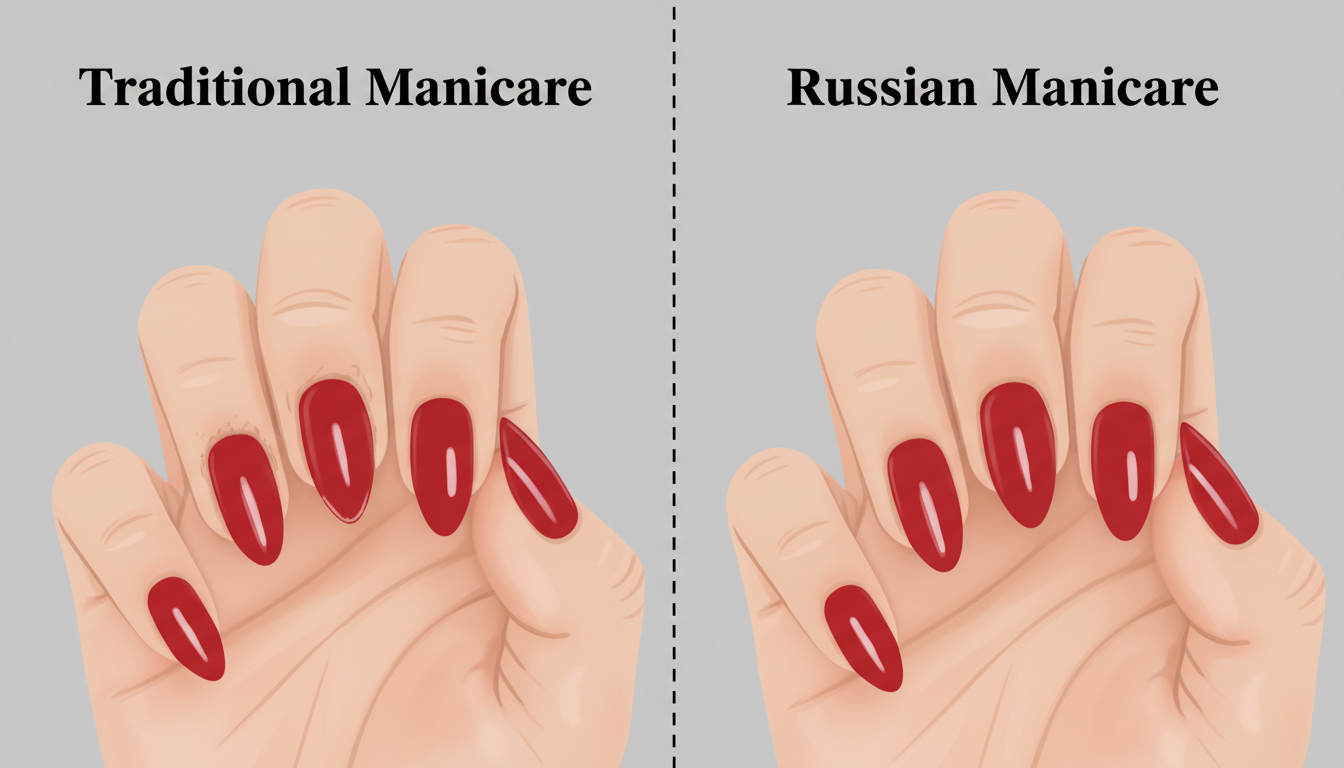
The primary allure is the aesthetic. In a standard manicure, the cuticle is pushed back and nipped, often leaving a small margin of imperfection. In a Russian Manicure, the e-file acts as a micro-exfoliator, removing the excess skin surrounding the nail bed entirely. This allows the technician to apply the base coat and color under the proximal nail fold (the skin behind the cuticle).
Why It Looks ‘Edited’
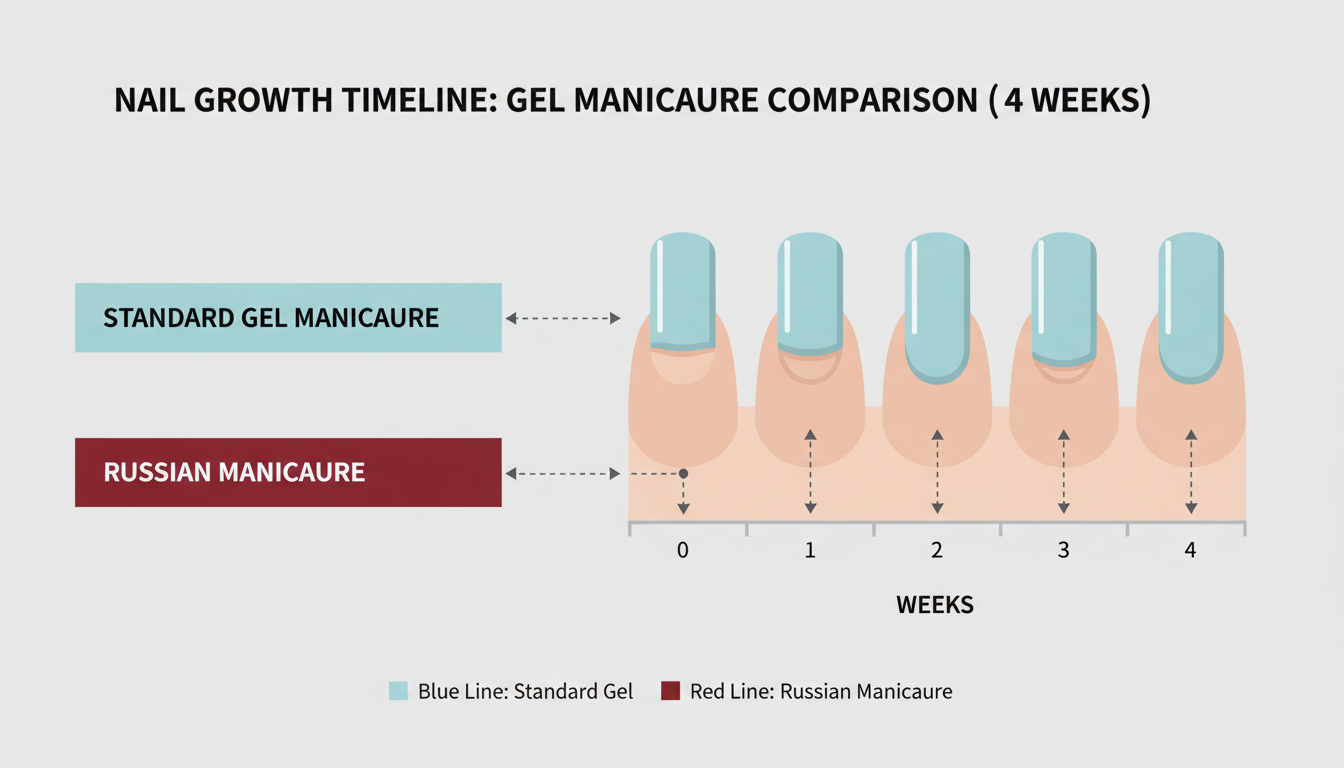
When the polish is applied that deep, there is no visible gap between the color and the skin. As the nail grows out naturally over the first week, the color simply emerges, meaning you don’t see that dreaded ‘growth gap’ for 7-10 days. This flawless, seamless transition mimics the smooth lines of a digitally retouched photo, hence the viral moniker “The Photoshop Effect.”
2. The Dry Process vs. Water Soaking
The most fundamental technical difference is the absence of water.
The Problem with Water
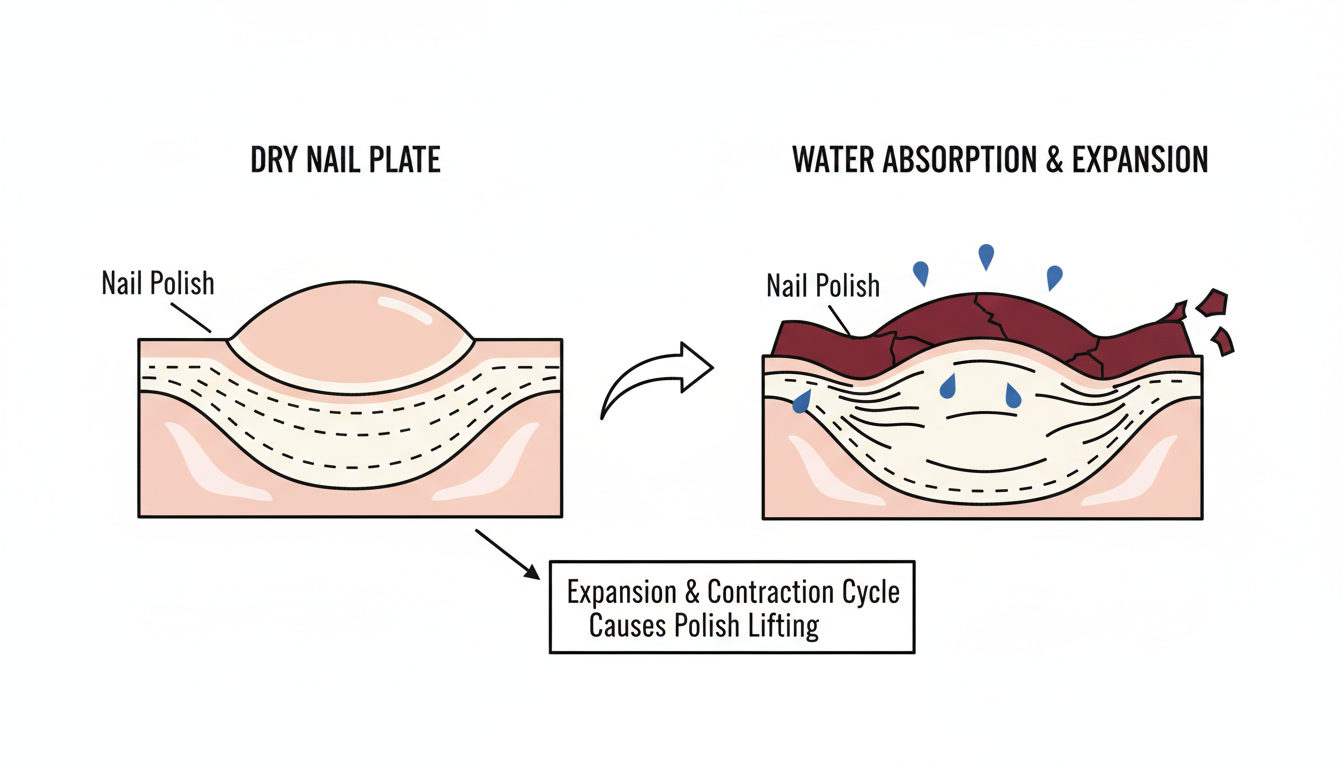
Traditional manicures begin with soaking your hands in a bowl of warm water. While relaxing, this is detrimental to gel longevity. Nail plates are porous, like a sponge. When soaked, they absorb water, expanding and flattening their natural curve.
If gel polish is applied to a water-logged nail, the nail will eventually dry and shrink back to its original shape after the polish has cured. This size mismatch causes the polish to lift, chip, or peel prematurely.
The Dry Advantage
Russian Manicures are performed 100% dry. This ensures:
1. Maximum Adhesion: The base coat bonds directly to the keratin without water interference.
2. Precision Skin Removal: Dry skin is easier to exfoliate cleanly with an e-file; wet skin tears and frays.
3. Sanitation: Water bowls are breeding grounds for bacteria if not sanitized perfectly; dry manicures eliminate this vector.
3. The E-File Technology: Diamond Bits Explained
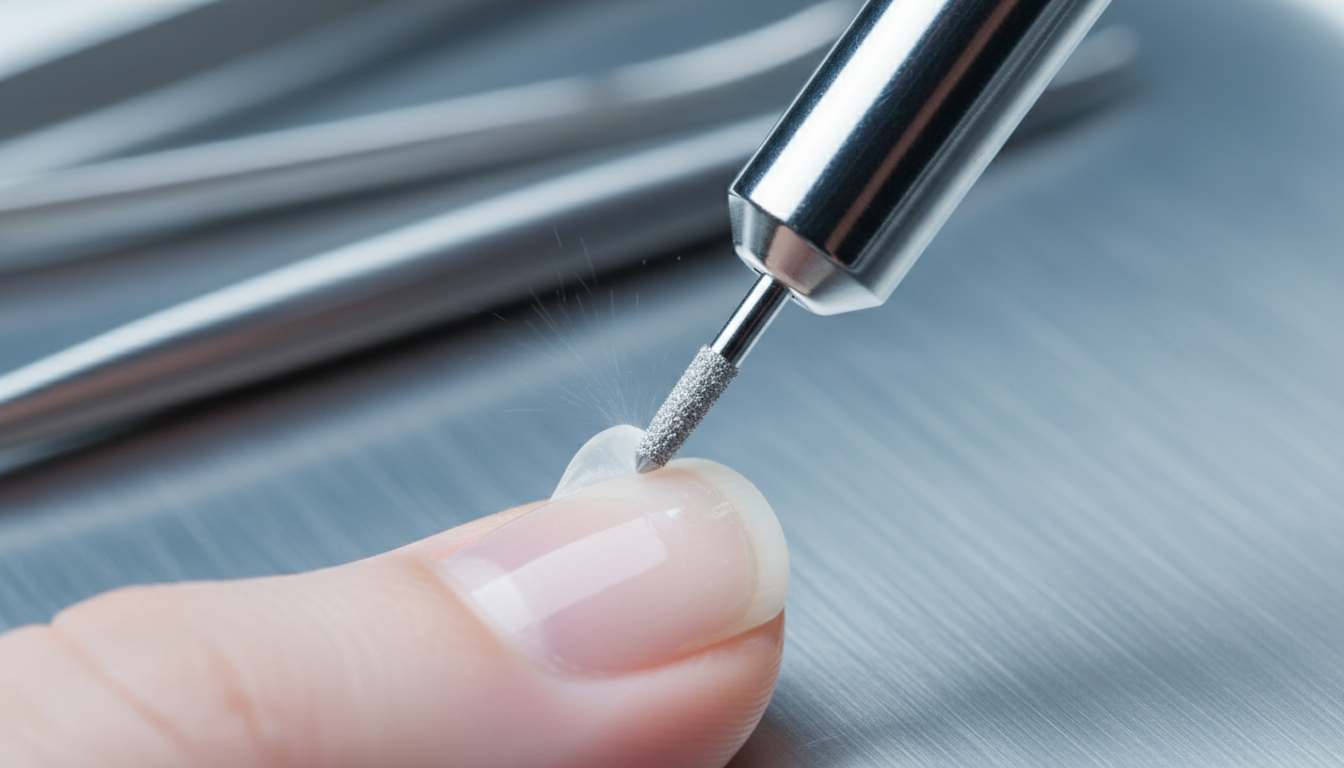
The tool that defines this technique is the electronic file, but not the aggressive drills used for acrylic removal. Russian Manicures employ specific diamond bits and low RPM (rotations per minute) settings.
The Tool Kit
A specialized technician will use a sequence of bits, often resembling dental tools:
- Flame Bit: Lifts the cuticle and opens the proximal fold.
- Ball Bit: Exfoliates the lifted dry skin and polishes the surrounding tissue.
- Cylinder Bit: Smooths the nail plate surface.
Precision Over Power
Unlike removing acrylics where speed is high, cuticle work requires low speed and high torque. The technician gently traces the anatomy of the nail fold. It is a form of microdermabrasion for the fingertips. The goal is not just to cut the cuticle, but to polish the skin so it doesn’t grow back rough or jagged.
4. The Controversy: Is Cutting the Eponychium Safe?
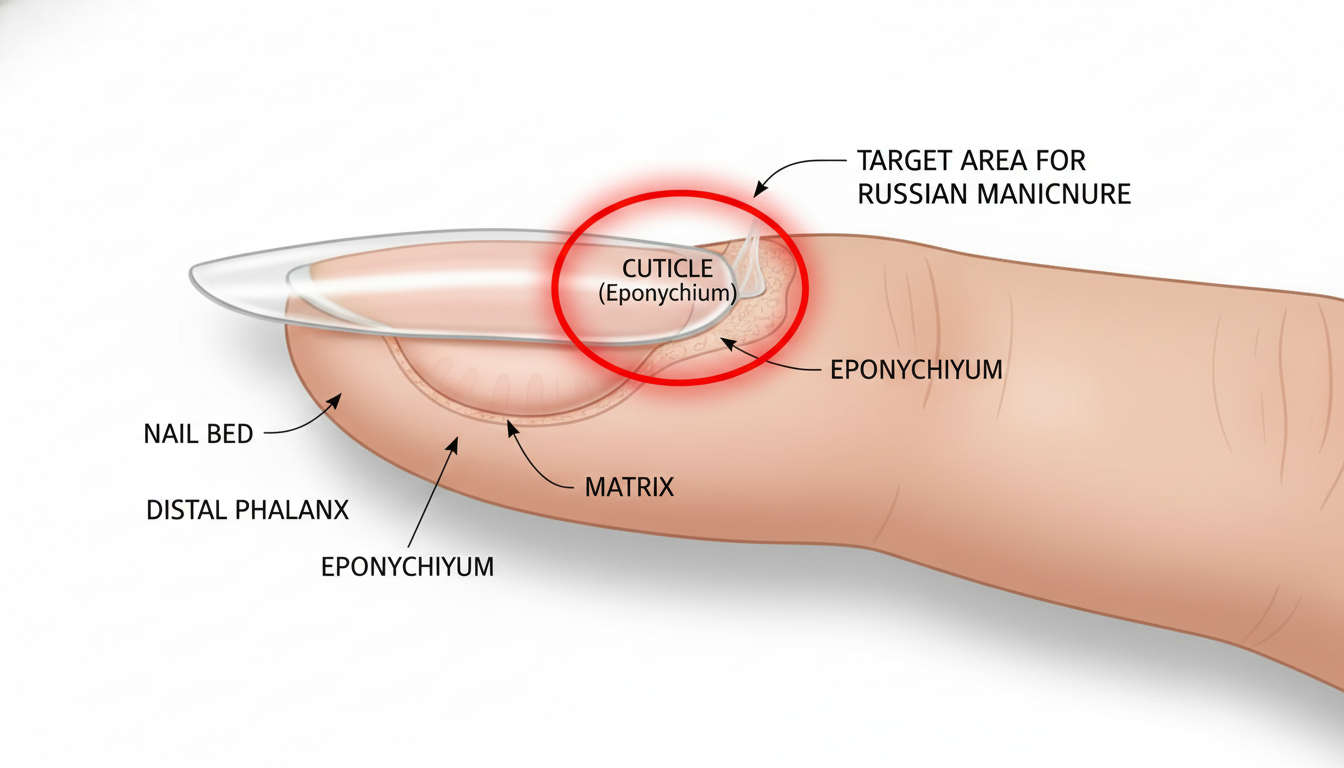
This is the most debated aspect of the Russian Manicure. Dermatologists often warn against cutting the eponychium (often confused with the cuticle).
Anatomy 101
- Cuticle: The dead, shedding skin layer attached to the nail plate.
- Eponychium: The living seal of skin at the base of the nail that protects the matrix from infection.
- Proximal Fold: The band of living skin covering the matrix.
The Debate
Critics argue that the Russian method is too aggressive, removing living tissue that protects the nail matrix (the root where the nail grows). If the seal is broken, bacteria can enter, causing paronychia (infection).
The Defense: Proponents argue that a properly trained technician distinguishes between the dead, calloused tissue and the living seal. They claim the ‘damage’ seen in horror stories is solely due to untrained technicians using the wrong bits or too much pressure. When done correctly, there should be no blood, no pain, and no redness.
5. Safety First: Sterilization Standards
Because the Russian Manicure involves deep cleaning and potential micro-abrasions, the hygiene standards must be medical-grade.
The Autoclave Requirement
A UV light box or a Barbicide soak is insufficient for the tools used in this procedure.
- Barbicide: Only sanitizes surfaces; does not kill spores.
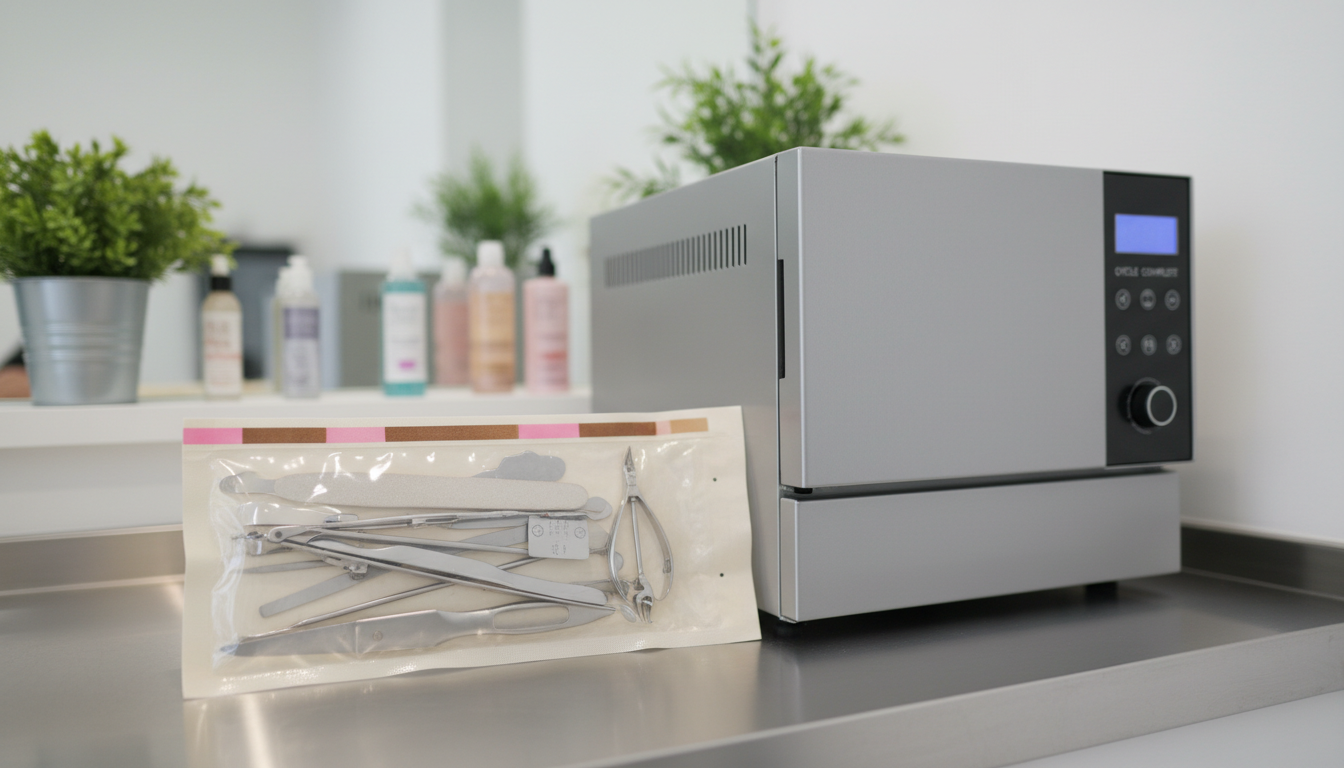
- Autoclave: Uses high pressure and steam to achieve true sterilization, killing 100% of bacteria, viruses, and fungi.
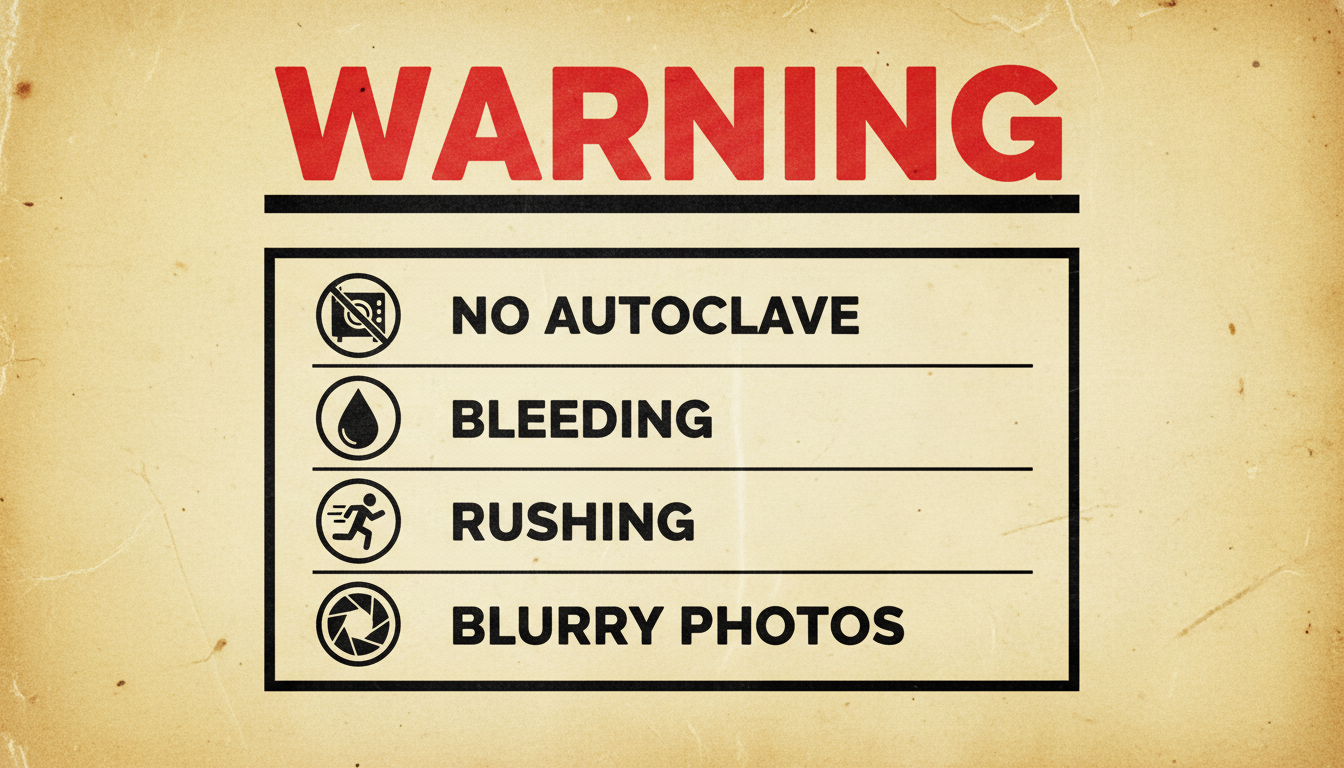
Red Flag: If your technician pulls tools out of a plastic drawer or a generic UV box rather than a sealed, color-changing sterilization pouch (that indicates it has been autoclaved), do not proceed. The risk of transmitting hepatitis or staph infections is real with improper tool management.
6. Step-by-Step Procedure Walkthrough
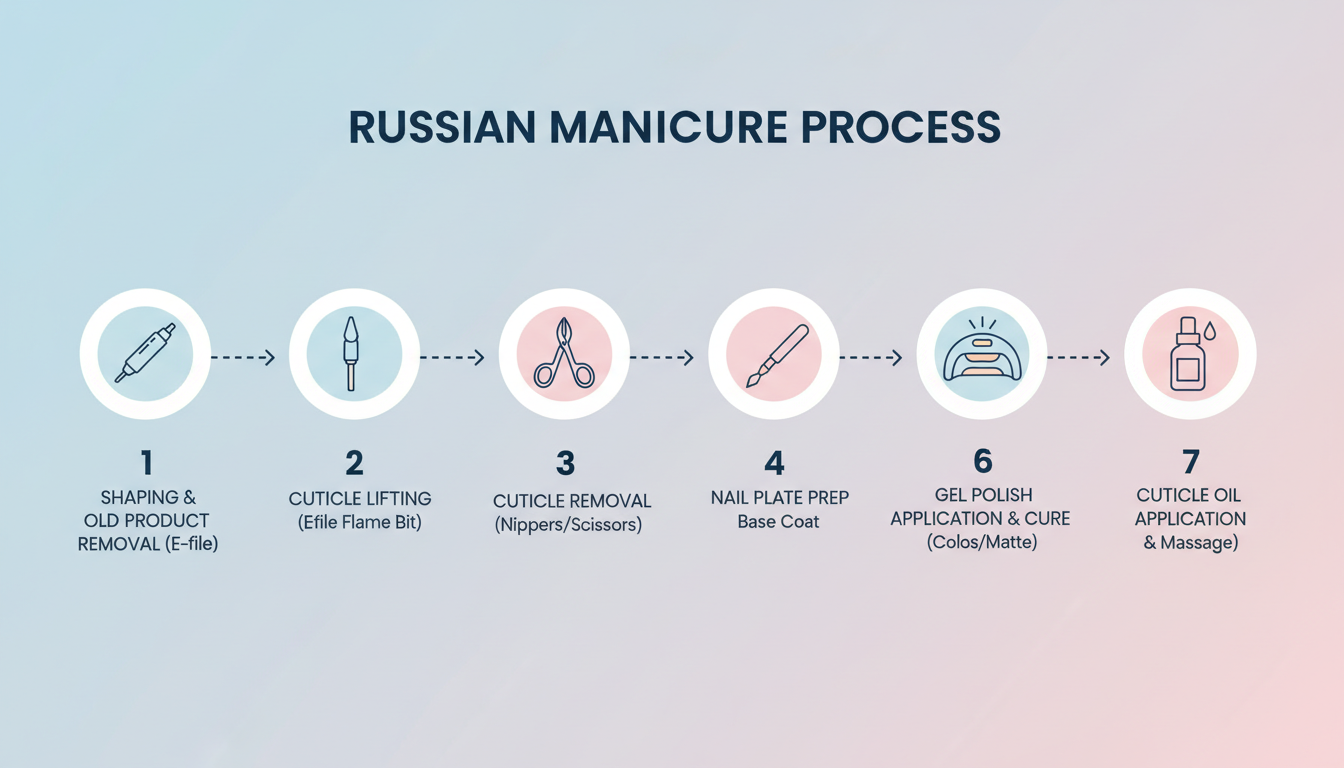
Expect to be in the chair for 2 to 3 hours. This is not a lunch-break service. Here is the typical workflow:
1. Removal: Old gel is removed carefully with a ceramic or carbide bit, leaving a thin layer of base coat to protect the natural nail.
2. Shaping: The free edge is filed to perfection.
3. The Pocket: The technician uses a flame bit to separate the skin from the nail plate, creating a ‘pocket’ under the proximal fold.
4. Cleaning: The lifted skin is exfoliated using a ball bit or specific nippers (combining dry technique with scissors is sometimes called a ‘Combi Manicure’).
5. Alignment: A thick, rubber base gel is applied to create an ‘apex’—adding structure and strength to the nail.
6. Color Application: A thin liner brush pushes color deep into the pocket created in step 3.
7. Top Coat & Oil: Sealed for high shine.
7. Longevity & Growth: The 4-Week Promise
Why do people pay double for this? Longevity.
The Mechanics of Long Wear
Standard manicures chip because of water absorption (discussed in Section 2) and poor structure. The Russian Manicure uses Structure Gel (often rubber base or builder gel). This material is flexible yet strong, moving with the natural nail to prevent cracks.
The Growth Gap
Because the color is applied 1-2mm under the proximal fold, it takes about a week for the color to even reach the visible cuticle line.
| Manicure Type | Average Wear Time | Visible Regrowth | Chip Risk |
|---|---|---|---|
| Standard Polish | 3-5 Days | Immediate | High |
| Standard Gel | 10-14 Days | Day 3 | Medium |
| Russian Manicure | 3-5 Weeks | Day 10 | Very Low |
This longevity justifies the time investment for busy professionals who cannot visit the salon every two weeks.
8. Cost vs. Value: Why It Costs $100+
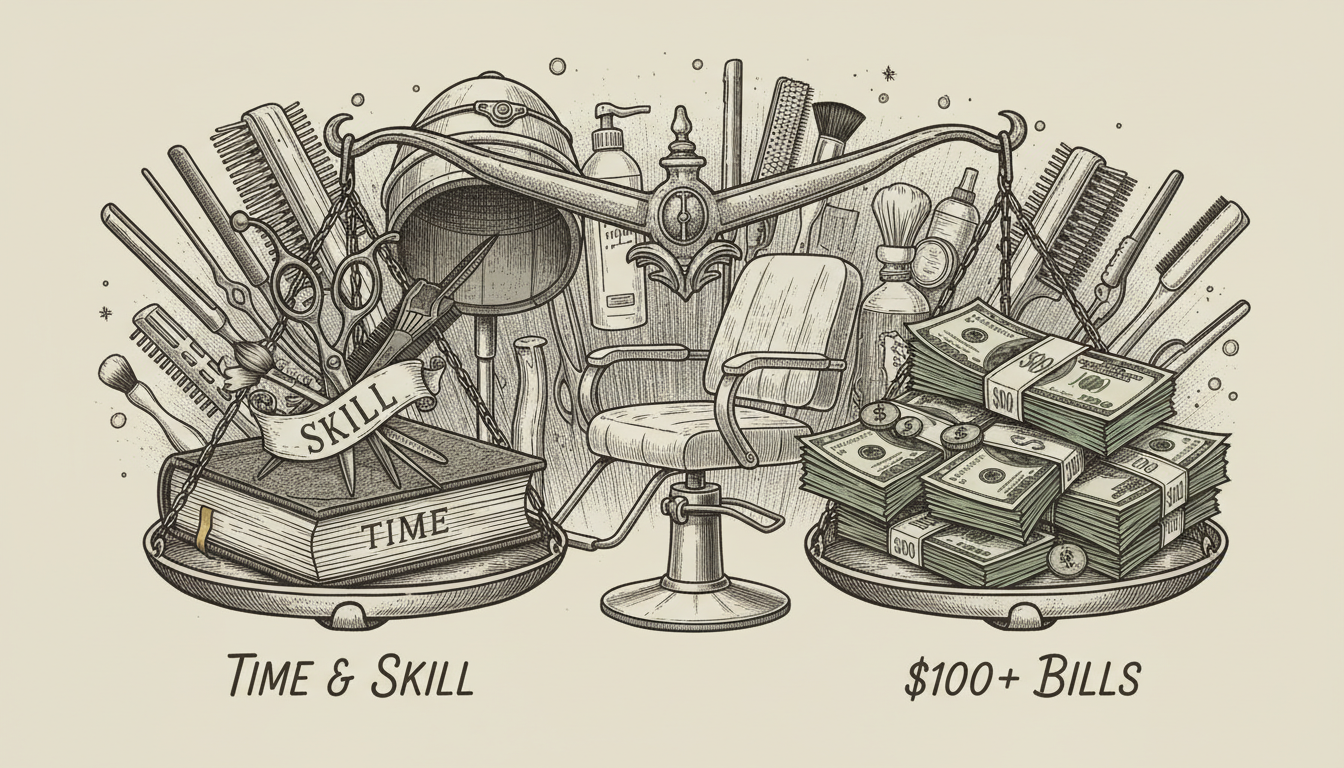
Sticker shock is common. Prices range from $80 to over $200 depending on the location and artist tier.
The Economics of Perfection
1. Time: The technician can only see 3-4 clients a day (vs. 10-15 in a standard salon). You are paying for their exclusive time.
2. Training: Certification for Russian techniques involves rigorous, expensive courses often taken abroad or from master educators.
3. Equipment: High-quality e-files, autoclaves, and Japanese/Korean gels are significantly more expensive than bulk salon supplies.
Is it worth it? If you visit a standard salon twice a month ($40 x 2 = $80) vs. one Russian manicure once a month ($90), the cost balances out, but the quality of the Russian manicure remains superior throughout the month.
9. Finding a Qualified Tech: Vetting & Red Flags
This is the most critical section of this guide. Do not walk into a random salon asking for this service.
How to Vet
- Instagram Portfolio: Look for macro (close-up) photos. If they blur the cuticles, they are hiding something. Look for clean, oiled skin without redness.
- Certifications: Ask specifically about their training. ‘Self-taught’ is risky for e-file work on the cuticle.
- Sterilization: Ask to see the autoclave pouch. If they hesitate, leave.
Major Red Flags
- Pain or bleeding during the service.
- The technician rushes (anything under 1.5 hours is suspicious).
- Deep rings of fire (red grooves) on the nail plate after removal (signs of over-filing).
- Dirty workspace or reused files.
10. Aftercare Essentials
To maintain the ‘Photoshop’ look and health of the nail, aftercare is required.
The Golden Rule: Oil
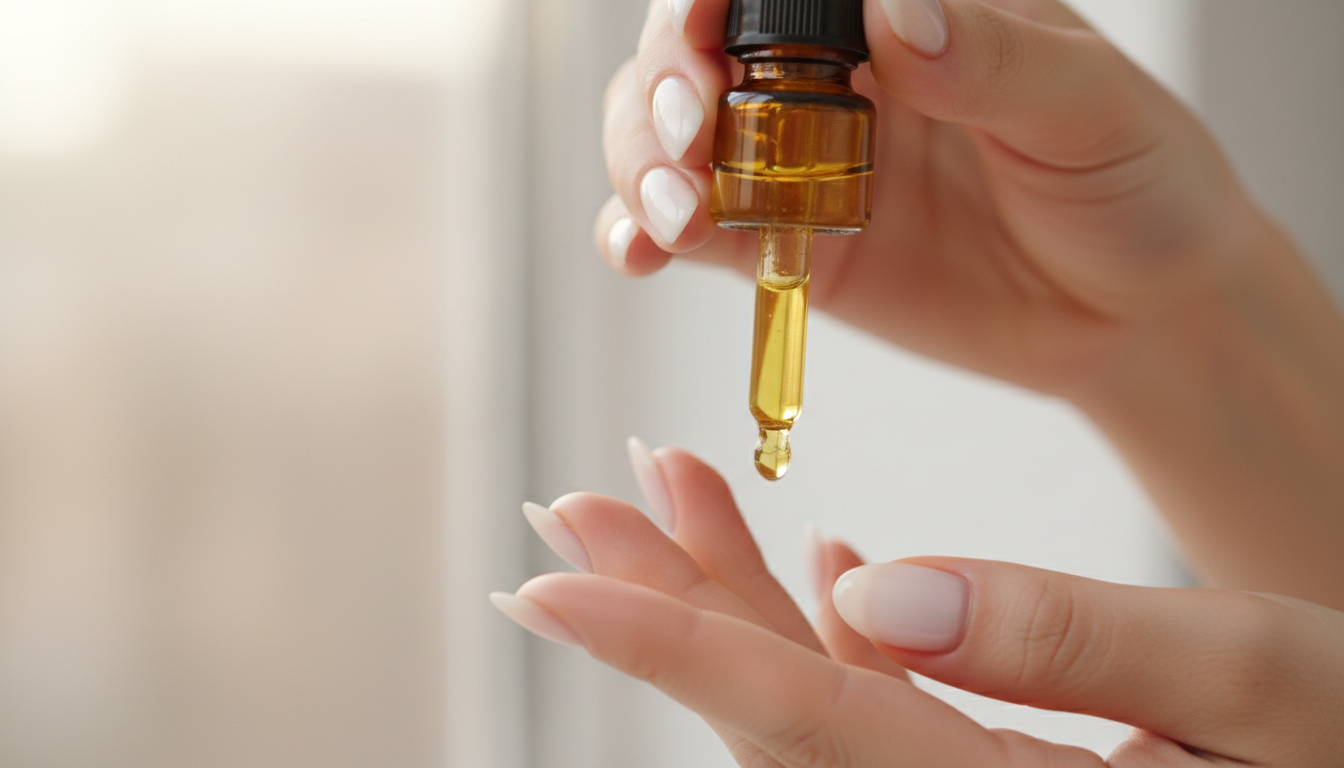
Because the skin around the nail has been deeply exfoliated, it needs hydration to prevent it from growing back hard or calloused. You must apply high-quality cuticle oil (Jojoba based is best) at least twice daily.
Avoid Water Absorption
Even though the manicure is dry, prolonged exposure to hot water (doing dishes, long baths) without gloves can eventually weaken the gel bond.
Do Not Pick: If you see a small lifting edge, do not peel it. Peeling gel off removes layers of your natural nail plate, thinning it and making future manicures painful. Visit the salon for a repair or proper removal.
Frequently Asked Questions
Is a Russian Manicure safe?
Yes, but only when performed by a highly trained, certified technician using sterilized tools. The risk lies in untrained technicians over-filing the nail plate or cutting living tissue, which can lead to infection.
Does a Russian Manicure hurt?
No. A correctly performed Russian Manicure should be painless. You may feel slight vibration from the e-file, but any pain, burning, or bleeding is a sign of improper technique.
How long does a Russian Manicure last?
Due to the precise cuticle work and high-quality structure gel, they typically last 3 to 5 weeks without chipping or significant lifting.
Why is it called a Russian Manicure?
The technique originated and was perfected in Russia and neighboring Eastern European countries, where nail technology education is extremely rigorous and treated as a medical-adjacent discipline.
Can I remove it at home?
It is highly discouraged. Russian manicures use strong structure gels that are difficult to soak off with acetone alone. Attempting to pry or file it off at home often results in severe damage to the natural nail.
What is the difference between a Russian Manicure and a Gel Manicure?
A standard gel manicure focuses on the polish application with minimal cuticle work (usually pushing and nipping). A Russian Manicure focuses heavily on cuticle exfoliation using an e-file to allow polish application under the proximal fold.
How much does a Russian Manicure cost?
Prices vary by location but generally range from $80 to over $150, reflecting the 2-3 hours of labor and specialized training required.
Is it illegal in some states?
Cutting living skin is restricted in some US states (like NY or CA) under cosmetology board regulations. However, many technicians operate in a gray area or define the service as ‘dry pedantic cuticle work’ focusing on dead tissue. Always check local regulations.
Can I get extensions with a Russian Manicure?
Yes, many technicians offer hard gel extensions or sculpted extensions in combination with the Russian cuticle cleaning technique.
You might also like:- 11 Critical Things You Must Know Before Getting a Russian Manicure
Discover more from innerspiritglow
Subscribe to get the latest posts sent to your email.
It’s fascinating how gaming platforms like AiScore build on centuries of tradition! Accessibility-like with the aiscore app casino– echoes how gaming historically adapted to reach wider audiences. Understanding that heritage adds another layer of enjoyment, doesn’t it?
[4650]Betmxs Casino Online México | Bono de Bienvenida y Descargar App ¡Juega en Betmxs, el casino online favorito de México! Reclama tu Bono de Bienvenida, descarga la app oficial y gana con las mejores apuestas. ¡Regístrate ya! visit: betmxs