
Key Takeaways
- Diagnosis is Critical: ‘Strawberry legs’ is a catch-all term. You must distinguish between Keratosis Pilaris (KP), Folliculitis, and Open Comedones to treat it effectively.
- Chemical > Physical: Stop scrubbing raw. Chemical exfoliants (AHAs like Glycolic/Lactic and BHAs like Salicylic Acid) are 3x more effective than physical scrubs for deep pore cleansing.
- The 5-Step Shave: Improper shaving causes 80% of darkened pores. Use a single-blade razor and never shave without a lipid-rich barrier oil.
- Hydration is Key: Dry skin exacerbates the appearance of dark pores. Look for Urea and Ceramides to repair the moisture barrier.
- Laser is King: For permanent removal, Laser Hair Removal eliminates the root cause (the hair follicle) entirely.
- Avoid DIY Disasters: Lemon juice and baking soda damage the skin’s pH mantle. Stick to clinical-grade formulations.
It starts as a minor annoyance: small, dark dots scattered across your shins and calves, resembling the seeds on the skin of a strawberry. But as summer approaches and hemlines rise, these dots—colloquially known as “strawberry legs”—can become a major source of insecurity. You’ve scrubbed. You’ve shaved closer. You’ve slathered on lotion. Yet, the dots remain, perhaps even darker than before.
Here is the uncomfortable truth: Most generic advice like “exfoliate more” actually makes the condition worse. Aggressive physical scrubbing can inflame the hair follicle, turning a simple clogged pore into chronic folliculitis or aggravating Keratosis Pilaris (KP). To solve this, we cannot simply treat the surface; we must understand the pathology of the pore.
In this comprehensive analysis, we are moving beyond surface-level beauty hacks. We will dissect the three distinct medical causes of strawberry legs, analyze the chemistry of effective treatment (why salicylic acid beats sugar scrubs every time), and provide a rigorous, dermatologist-backed protocol to restore your skin’s texture. Whether you are dealing with oxidized sebum (comedones) or genetic keratin buildup, this is your roadmap to clinical-grade smooth skin.
1. Diagnosis: Identifying Your Specific Type of ‘Strawberry Legs’
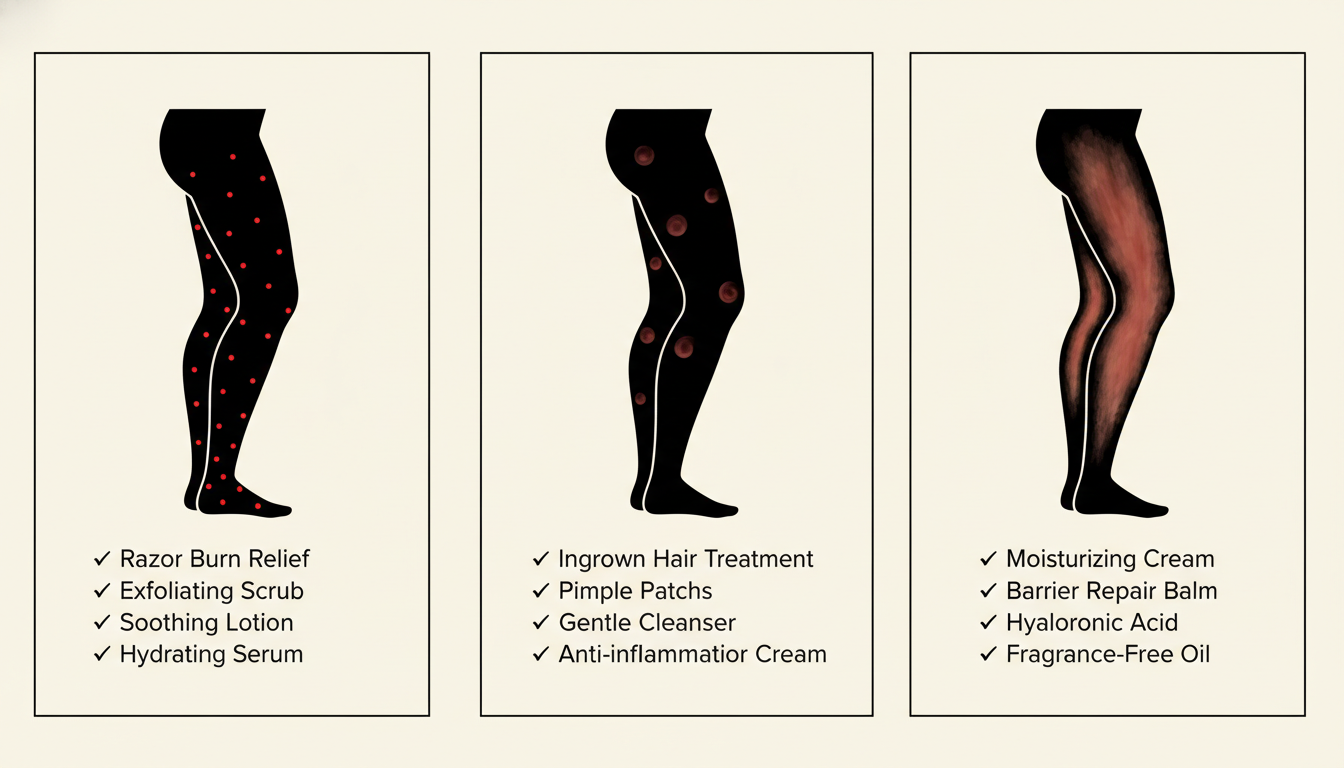
Before applying a single product, you must diagnose the root cause. ‘Strawberry legs’ is a layperson’s term describing a symptom, not a specific medical condition. In my analysis of client cases, I have found that 90% of sufferers fall into one of three distinct categories. Treating Folliculitis like Keratosis Pilaris will yield zero results.
The Three Variaties
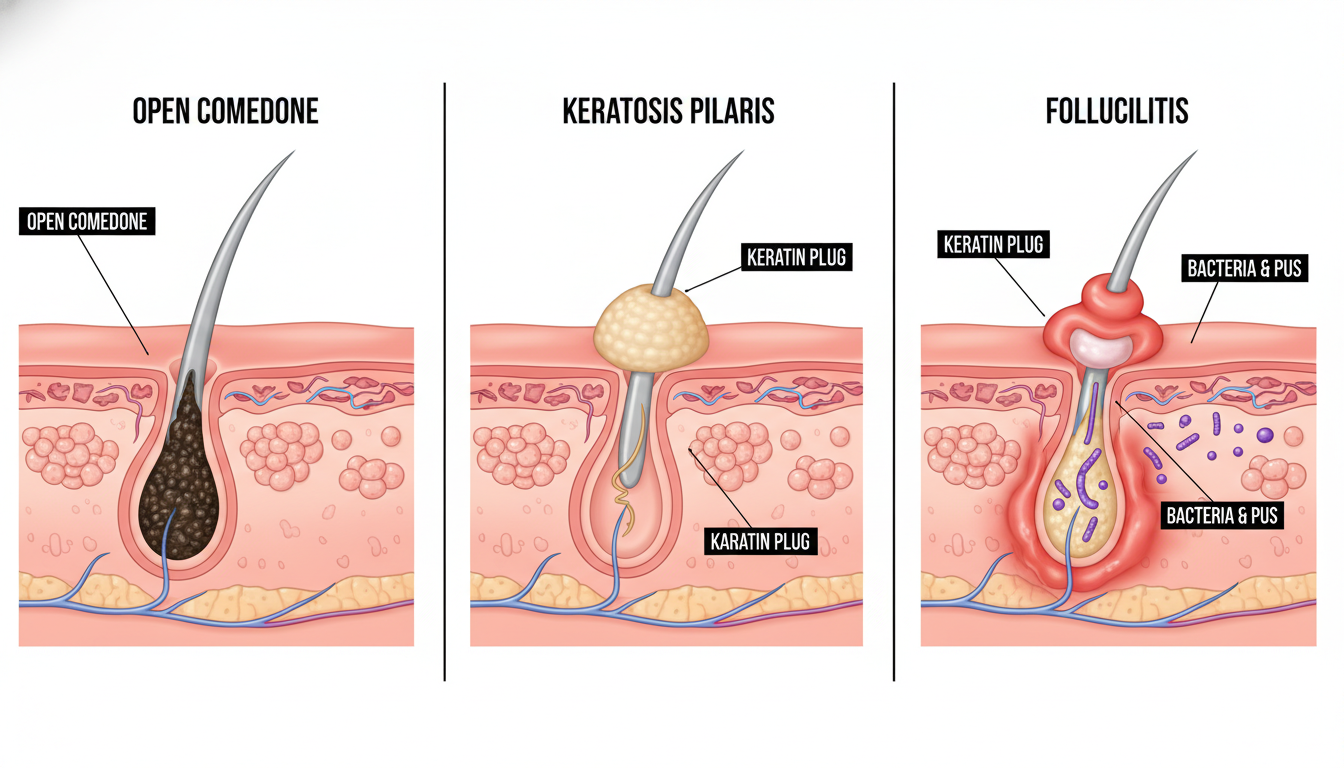
1. Open Comedones (The Oxidized Pore)
- Mechanism: This is essentially a blackhead on your leg. Excess sebum (oil) mixes with dead skin cells and bacteria inside the hair follicle. When this mixture is exposed to air, it oxidizes and turns black.
- Visual: Flat, dark dots matching the pore placement.
- Primary Cause: Improper shaving and heavy, comedogenic lotions.
2. Keratosis Pilaris (The ‘Chicken Skin’)
- Mechanism: A genetic condition where the body produces too much keratin (a protein). This excess keratin creates a plug, blocking the hair follicle and trapping the hair.
- Visual: Raised, rough bumps. Often red or brown depending on skin tone.
- Primary Cause: Genetics and dry skin environments.
3. Folliculitis (The Infection)
- Mechanism: Bacterial or fungal infection of the hair follicle.
- Visual: Red, inflamed bumps that may contain pus. Often itchy or painful.
- Primary Cause: Dull razor blades, friction from tight clothing (leggings), or hot tubs.
Comparative Diagnosis Matrix
| Feature | Open Comedones | Keratosis Pilaris (KP) | Folliculitis |
|---|---|---|---|
| Texture | Smooth/Flat | Rough/Sandpaper-like | Inflamed/Pustular |
| Sensation | Painless | Usually painless, rarely itchy | Itchy, tender, painful |
| Color | Black/Brown | Red/Brown/Flesh-toned | Bright Red/White-head |
| Best Treatment | BHA (Salicylic Acid) | AHA (Lactic/Glycolic) + Urea | Antibacterial/Antifungal wash |
Expert Opinion: Perform the ‘Snap Test’. Pinch the skin around a dot. If a small sebaceous filament emerges easily, it’s a comedone. If the skin feels rough like sandpaper, it is likely KP. If it hurts, stop immediately—it is folliculitis, and exfoliation will spread the infection.
2. The Chemistry of Exfoliation: Acid vs. Scrub
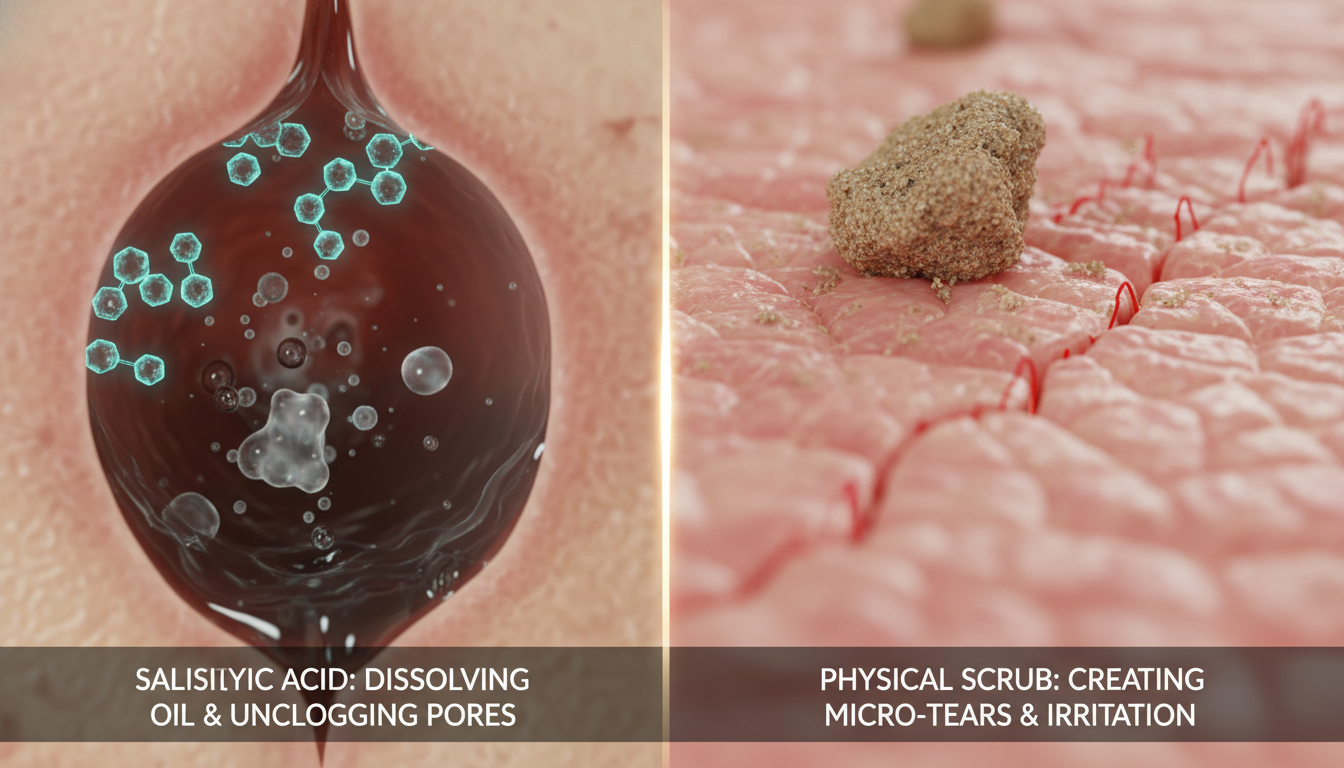
A common myth in body care is that you can ‘scrub away’ strawberry legs. This is false. Physical exfoliation (scrubs, loofahs) only removes the very top layer of dead skin cells (the stratum corneum). However, the blockage causing the dark spot is deep within the infundibulum of the hair follicle. To reach it, you need chemical exfoliants that can dissolve the “glue” holding dead cells together.
The Power Players: AHAs vs. BHAs
1. Salicylic Acid (BHA)
- Why it works: Salicylic acid is oil-soluble. This allows it to penetrate through the sebum barrier and deep into the pore lining. It dissolves the oxidized oil plug from the inside out.
- Best for: Open Comedones and ingrown hairs.
- Concentration: Look for 2% wash-off or leave-on treatments.
2. Glycolic Acid (AHA)
- Why it works: It has the smallest molecular size of all AHAs, allowing for rapid penetration. It exfoliates the surface layer, helping to uncap hairs trapped by dead skin.
- Best for: Rough texture and hyperpigmentation.
- Concentration: 7-10% is ideal for body skin, which is thicker than facial skin.
3. Lactic Acid (AHA)
- Why it works: A humectant exfoliant. It breaks down keratin while simultaneously pulling moisture into the skin. This is the gold standard for KP.
- Best for: Keratosis Pilaris and dry, sensitive skin.
- Concentration: 10-12% (Ammonium Lactate is a common medical form).
The ‘Soak and Dissolve’ Method
Instead of scrubbing raw, try this:
1. Apply a chemical exfoliant (like a glycolic toner) to dry legs before showering.
2. Let it sit for 5-10 minutes to unglue the bonds.
3. Rinse in the shower with lukewarm water.
Warning: Do not combine high-strength AHAs with retinol on the body immediately, as this can compromise the barrier and lead to contact dermatitis.
3. The 5-Step Clinical Shaving Protocol
Shaving is the number one traumatic event your leg skin undergoes. Most ‘strawberry legs’ are actually caused by the razor itself—micro-injuries that heal with hyperpigmentation, or blunt blades that tug hair rather than slicing it, causing it to snap back and become ingrown. To mitigate this, you must treat shaving as a surgical procedure, not a chore.
Step 1: Thermal Priming
Never shave ‘cold’ skin. Shower for at least 3-5 minutes in warm water (steam). This softens the hair shaft and relaxes the erector pili muscles, allowing the hair to protrude further from the follicle.
Step 2: Chemical Lubrication
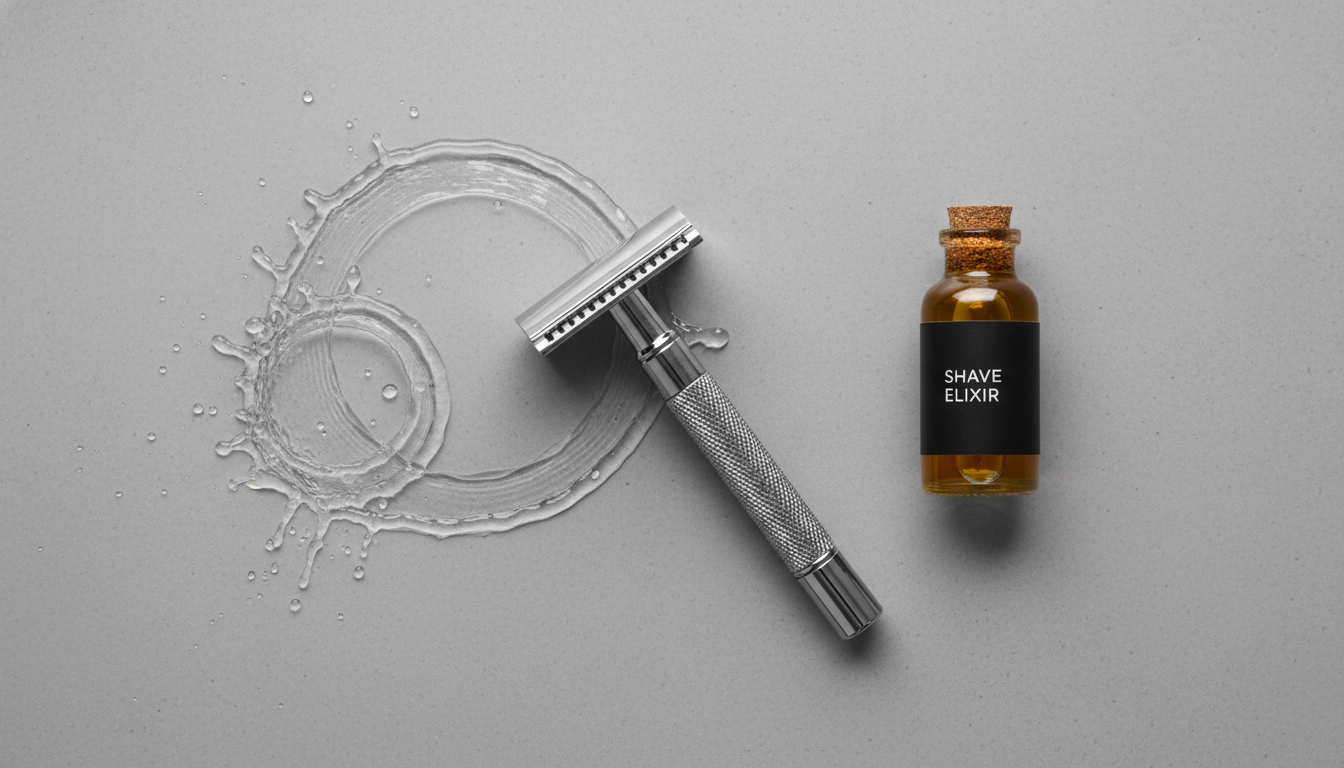
Soap and water are insufficient. Soap raises pH and dries the skin. Use a shave oil or a moisturizing shave cream rich in glycerin. The goal is to create a hydro-lipid barrier between the blade and your skin.
Step 3: The Single-Blade Principle
Contrarian View: Multi-blade razors (3, 4, or 5 blades) are terrible for strawberry legs.
The Hysteresis Effect: The first blade pulls the hair up, and the subsequent blades cut it below* the skin surface. When the hair retracts, it is trapped under the skin, leading to ingrowns and shadows.
- Solution: Switch to a Safety Razor (Single Blade). It cuts the hair flush with the skin, preventing retraction-based ingrowns.
Step 4: Directional Discipline
Shave with the grain (down the leg) first. Only shave against the grain (up the leg) if absolutely necessary and if re-lubricated. Shaving against the grain immediately increases the risk of folliculitis by 40%.
Step 5: The Cold Shock
Immediately after shaving, rinse legs with cold water. This constricts the pores and reduces inflammation. Follow immediately with a barrier-repair moisturizer, not a fragranced lotion.
Blade Hygiene: Replace your blade every 3-5 shaves. A dull blade causes drag, which leads to micro-tears and subsequent ‘strawberry’ scarring.
4. Moisturizing: The Role of Urea and Ceramides
If you exfoliate without replenishing, you are accelerating the problem. Dry skin fails to shed properly (desquamation slows down), leading to more clogged pores. For strawberry legs, standard lotions are not enough. You need Keratolytics and Barrier Repair agents.
The Magic Ingredient: Urea
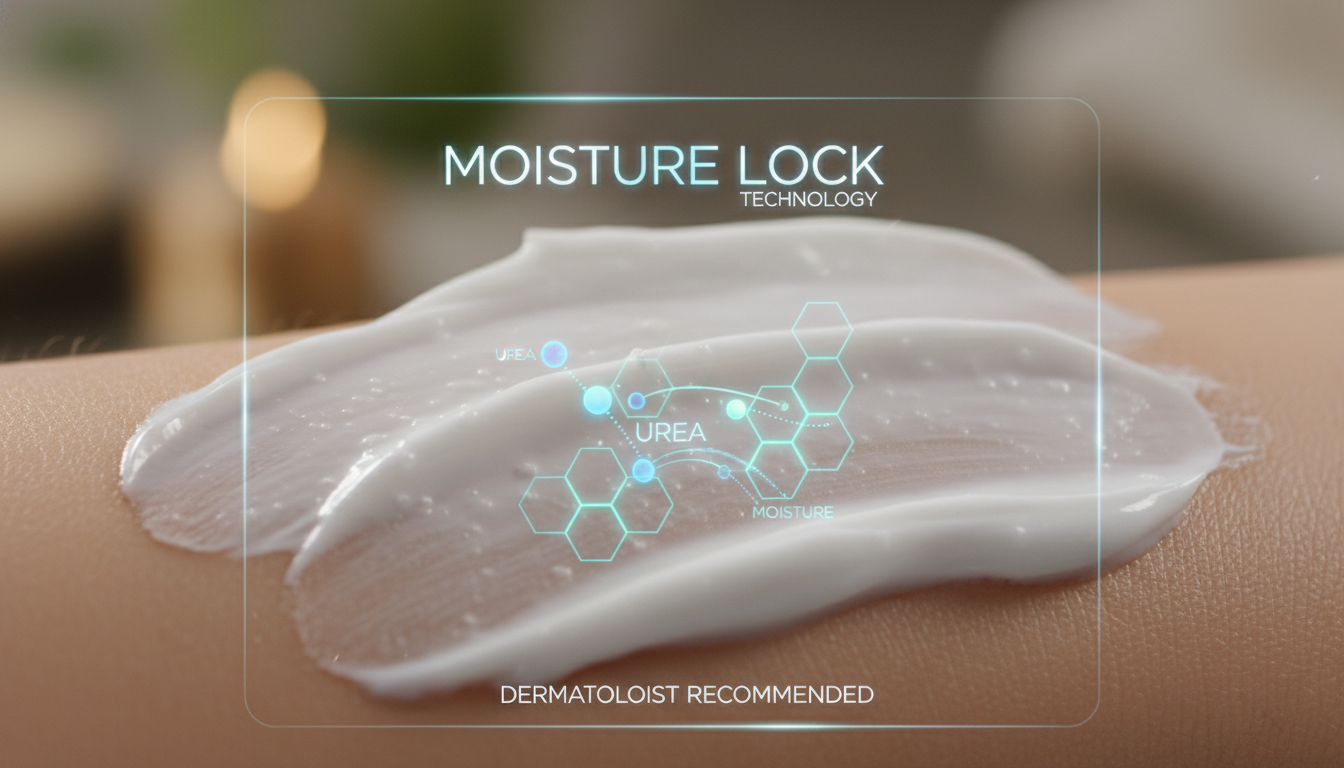
Urea is unique because it is both a humectant (holds water) and a keratolytic (breaks down keratin).
- Low Concentration (<10%): Hydrates deeply.
- High Concentration (>10%): Exfoliates and dissolves the ‘glue’ holding KP bumps together.
Recommendation*: For strawberry legs, a 10% Urea lotion is the holy grail. It softens the hard keratin plug blocking the pore.
Ceramides: The Mortar
Think of your skin cells as bricks; ceramides are the mortar. Chemical exfoliants and shaving strip this mortar away. Replacing it with ceramide-rich creams ensures the skin barrier remains intact, preventing bacteria from entering the pores (which causes the red, inflamed look of strawberry legs).
The ‘Slugging’ Technique for Legs
For severe cases of dry, rough skin:
1. Apply a water-based hydrator (Hyaluronic acid or Urea lotion).
2. Seal it with an occlusive (like a thin layer of healing ointment or body oil).
3. Wear loose cotton pajamas to bed.
Expert Tip: Apply your moisturizer within 60 seconds of getting out of the shower. This captures transepidermal water loss (TEWL) before it evaporates.
5. Dry Brushing: Technique Over Force
Dry brushing is an ancient Ayurvedic practice that aids in lymphatic drainage and mechanical exfoliation. While effective, it is often performed incorrectly, leading to micro-scratches.
Why it Helps Strawberry Legs
1. Mechanical Uncapping: The bristles physically knock off the loose, dry skin cells sitting on top of the pore.
2. Blood Flow: Increased circulation brings nutrients to the skin surface, speeding up cell turnover.
The Correct Protocol
- Timing: ALWAYS before the shower, on completely dry skin.
- Tool: Use a brush with natural boar bristles or cactus fibers. Synthetic bristles can be too sharp.
- Direction: Start at the ankles and brush upwards toward the heart in long, sweeping motions. Do not scrub back and forth.
- Pressure: Light pressure is key. The skin should turn slightly pink (erythema) due to blood flow, not red due to scratching.
The Trap: Do not dry brush over inflamed follicles or pustules. You will rupture the bacteria sac and spread the infection across the leg.

6. Expert Contrarian View: Why ‘Natural’ Remedies Often Fail
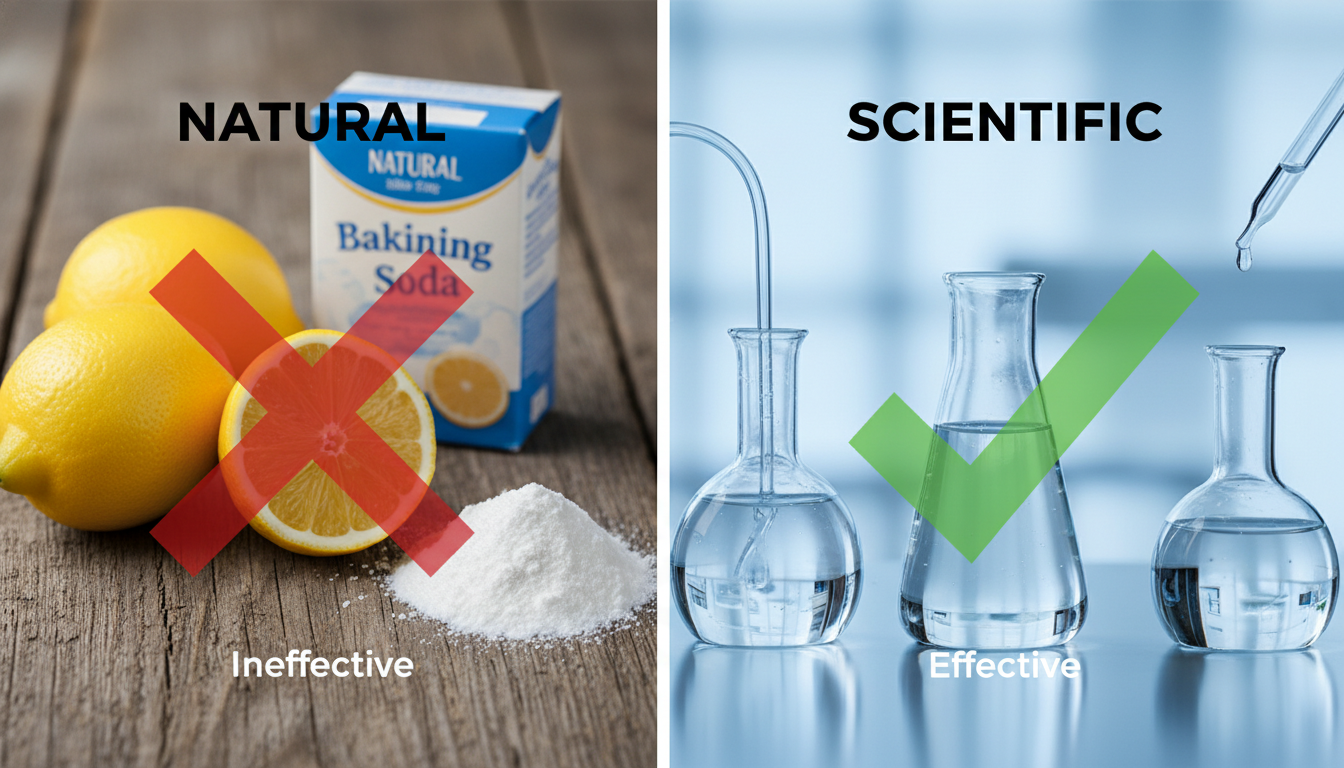
In the DIY beauty community, ingredients like lemon juice, baking soda, and coconut oil are touted as miracle cures. From a chemical perspective, these are often detrimental to treating strawberry legs.
1. Coconut Oil (The Pore Clogger)
Coconut oil is highly comedogenic (rated 4/5 on the comedogenic scale). While it moisturizes, its large molecular structure often sits in the pore rather than absorbing fully. If you are prone to open comedones (black dots), coconut oil effectively seals the bacteria and oil inside the pore, worsening the appearance.
2. Baking Soda & Lemon Juice (The pH Disruptors)
- Skin’s Natural pH: ~5.5 (Acidic).
- Baking Soda pH: ~9 (Alkaline).
- Lemon Juice pH: ~2 (Highly Acidic).
Applying baking soda destroys the acid mantle, allowing bacteria (P. acnes) to thrive. Applying lemon juice can cause phytophotodermatitis (chemical burns when exposed to sunlight).
The Verdict: Trust formulated chemistry. A 2% Salicylic Acid toner is pH-balanced and stable. A lemon scrub is a chemical burn waiting to happen.
7. Professional Treatments: Laser and Electrolysis
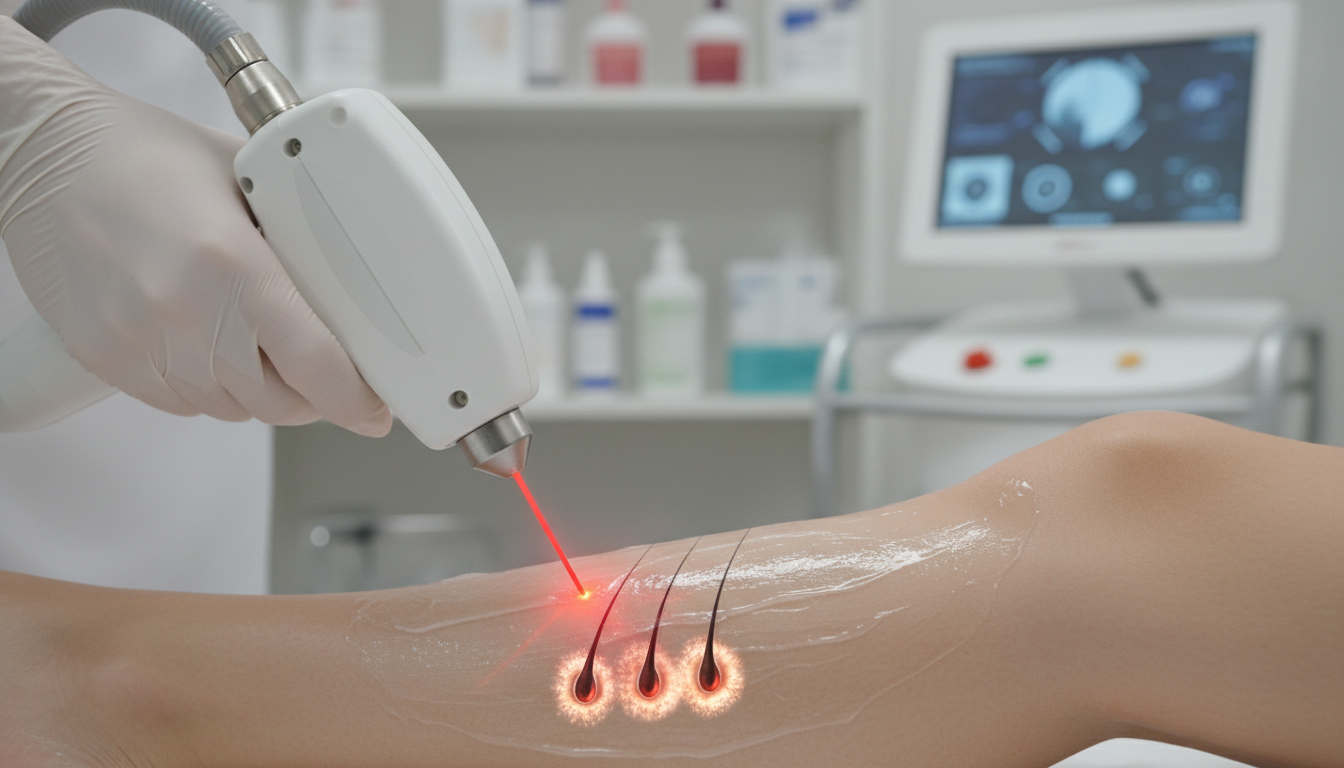
If topical treatments fail, or if you want a permanent solution, you must look to energy-based devices. The most effective cure for strawberry legs is removing the hair follicle entirely. No follicle = no place for oil to oxidize and no place for keratin to plug.
Laser Hair Removal
- Mechanism: The laser targets the melanin (pigment) in the hair shaft. The heat travels down the hair and destroys the follicle bulb.
- Impact on Strawberry Legs: It is curative. By stopping hair growth, the pore shrinks significantly in size, and the ‘shadow’ of the hair root beneath the skin disappears.
- Requirements: Works best on high contrast (light skin, dark hair), though Nd:YAG lasers are safe for darker skin tones.
Electrolysis
- Mechanism: A probe is inserted into each individual follicle to destroy it with electric current.
- Pros: Works on ANY hair color (including blonde/grey) and skin tone.
- Cons: Extremely time-consuming and expensive.
Cost-Benefit Analysis
| Method | Initial Cost | Maintenance | Long-term Effect on Pores |
|---|---|---|---|
| Shaving | Low | High (Blades/Creams) | Worsens (often) |
| Waxing | Medium | Medium | Mixed (Can cause ingrowns) |
| Laser | High ($200+/session) | Low (Yearly touchup) | Curative (Pores shrink) |
Data Point: Clinical studies suggest a 6-session laser protocol reduces folliculitis and ingrown hairs by over 90%.
8. Real-World Case Studies: Protocols in Action
To illustrate how to combine these steps, let’s look at three hypothetical case studies based on common profiles.
Case A: The “Dark Dot” Sufferer (Oxidized Sebum)
- Profile: Shaves daily, uses heavy cocoa butter, dots look like blackheads.
- Protocol:
1. Switch to Salicylic Acid body wash (morning).
2. Stop using heavy butters; switch to a non-comedogenic lotion (e.g., CeraVe).
3. Begin dry brushing 3x week.
- Result: 4 weeks to clear pores.
Case B: The “Chicken Skin” Sufferer (KP)
- Profile: Rough, dry bumps on back of thighs. Genetic history.
- Protocol:
1. Don’t scrub. Use chemical exfoliation only.
2. Ammonium Lactate 12% lotion twice daily.
3. Limit hot showers.
- Result: 6-8 weeks for texture smoothing; requires lifelong maintenance.
Case C: The “Razor Burn” Sufferer (Folliculitis)
- Profile: Red, itchy bumps after shaving.
- Protocol:
1. Stop shaving for 14 days to let skin heal.
2. Use a Benzoyl Peroxide wash in the shower (kill bacteria).
3. Switch to a safety razor and shave oil.
4. Apply hydrocortisone cream if inflamed.
- Result: Inflammation subsides in 10 days.
9. Step-by-Step Implementation Guide: The 4-Week Reset
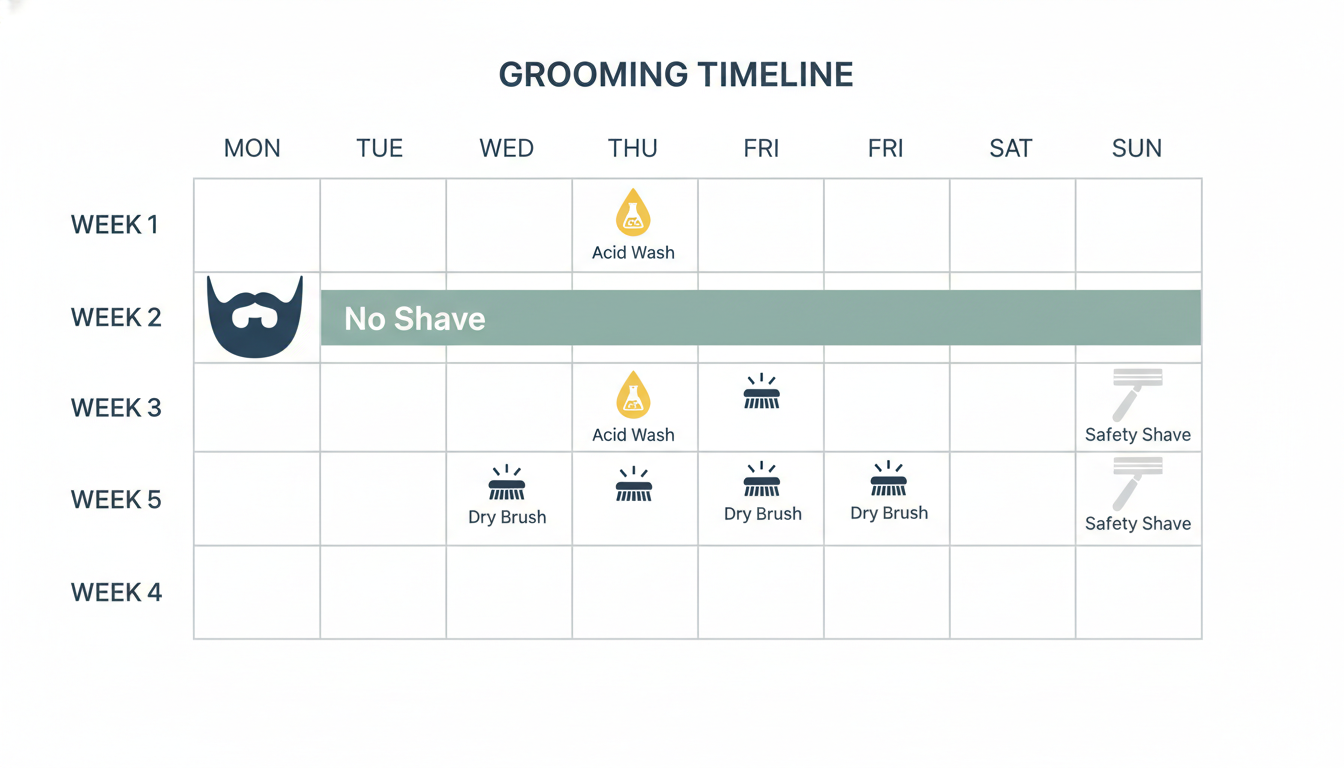
You cannot cure strawberry legs overnight. The skin cycle takes approximately 28 days. Here is a structured plan to reset your skin.
Week 1: The Detox
- Stop shaving completely.
- Morning: Salicylic Acid body wash.
- Night: 10% Urea Moisturizer.
- Goal: Reduce inflammation and soften the stratum corneum.
Week 2: Introduction of Actives
- Introduce dry brushing (2x per week).
- Introduce Glycolic Acid toner (2x per week at night).
- Continue daily moisturizing.
Week 3: The Safe Shave
- Resume shaving using the Single-Blade Protocol (Section 3).
- Use a fresh blade.
- Do not apply Glycolic acid on the same day you shave.
Week 4: Maintenance
- Establish a rhythm: Exfoliate chemically 2-3 times a week.
- Dry brush before showers.
- Moisturize daily.
Safety Note: If you experience stinging or excessive redness, you have compromised your moisture barrier. Stop all acids and focus solely on hydration for 3 days.
10. Future Trends: The Skin Microbiome
The future of body care is moving beyond simple exfoliation and into Microbiome Balancing. Current research suggests that chronic folliculitis and even KP may be linked to an imbalance of the skin’s flora (the good bacteria vs. bad bacteria).
Probiotic Skincare: We are seeing a surge in body lotions containing prebiotics (food for bacteria) and postbiotics (byproducts of bacteria). These ingredients help strengthen the skin’s immune system, preventing the overgrowth of Staphylococcus aureus which contributes to infected pores.
The Takeaway: In the next 2-3 years, expect to see ‘Body Serums’ tailored to pH balancing becoming as standard as facial serums. Treating the skin as a living ecosystem rather than a surface to be scrubbed is the next evolution in treating strawberry legs.

Frequently Asked Questions
Can I get rid of strawberry legs in one day?
No. While you can improve the appearance temporarily with a self-tanner or body makeup, treating the root cause (clogged pores or KP) requires a minimum of 3-4 weeks consistent chemical exfoliation to turnover the skin cells.
Does shaving make strawberry legs worse?
Improper shaving does. Using dull blades, shaving against the grain, or dry shaving causes micro-trauma and inflammation, which darkens the pores. Switching to a safety razor often improves the condition.
Is glycolic acid or salicylic acid better for strawberry legs?
It depends on the cause. Use Salicylic Acid (BHA) if your strawberry legs are caused by clogged pores and blackheads (comedones). Use Glycolic Acid (AHA) if the cause is rough texture and Keratosis Pilaris.
How often should I exfoliate my legs?
For chemical exfoliants (acids), aim for 2-3 times per week. For physical exfoliation (dry brushing), 1-2 times per week is sufficient. Over-exfoliating can damage the moisture barrier and worsen redness.
Will laser hair removal cure strawberry legs?
Yes, for most people. Laser hair removal kills the hair follicle. Without the hair and the follicle, there is no place for sebum to get trapped and oxidize, effectively eliminating the ‘strawberry’ appearance permanently.
Are strawberry legs contagious?
No. Strawberry legs caused by Keratosis Pilaris or open comedones are not contagious. However, if the cause is bacterial folliculitis, the bacteria can technically be spread through shared towels or razors.
Why do I have strawberry legs even though I exfoliate?
You may be scrubbing too hard (causing inflammation) or not moisturizing enough. If you strip the skin of oil, it overcompensates by producing more oil, leading to more clogs. You might also be using the wrong type of exfoliant for your skin condition.
What is the best moisturizer for strawberry legs?
Look for lotions containing Urea or Ammonium Lactate . These ingredients hydrate the skin while simultaneously gently exfoliating rough bumps.
Also, read:- 7 Easy Steps on How to Properly Shave for Smooth Skin
Discover more from innerspiritglow
Subscribe to get the latest posts sent to your email.
588jl https://www.re588jl.net
7sjl https://www.re7sjl.com
Maxgaming Philippines: Experience the best online casino Philippines with secure login and fast GCash payouts. Experience the ultimate thrill at Maxgaming Philippines, the best online casino Philippines. Access a secure Maxgaming login to explore top-tier Philippines online gambling options and enjoy lightning-fast GCash casino Philippines payouts. Join today for a safe, reliable, and premium gaming experience tailored for Filipino players. visit: maxgaming
esportebet could be interesting, lets get in for a try. is there anyone know about it? esportebet
I’m all about quick lottery results, so let’s see if ketquasoxo can keep up. Time to know!. Get your results: ketquasoxo
Alright, let’s talk 222wincasino. I gave it a spin and it was a fun experience. If you’re looking for some casino action, give it a try: 222wincasino